Skip to content


For B2B procurement specialists and engineers, relying on a simple “magnet test” to distinguish between stainless steel grades is a high-stakes gamble that often leads to costly material misclassification and structural failures. Because mechanical stress from cold working can transform non-magnetic 304 into a magnetic material, a manual stick test is an unreliable scientific guide that fails to account for the complex metallurgical realities of the shop floor.
In this technical comparison, we look beyond the magnet to examine the definitive differences between the 400 Series and 300 Series, covering chemical composition, weldability, and strategic cost-optimization. We explore how the 300 series leverages 8–10.5% nickel for premium corrosion resistance and why the nickel-free 400 series offers a strategic advantage for price stability, providing raw material costs that are roughly 50% lower than their austenitic counterparts while delivering superior heat-treatable hardness.
The Magnet Test: Why it’s an Unreliable Guide
The magnet test is unreliable because austenitic 300-series stainless steel can become magnetic through cold working (martensite transformation), while ferritic 400-series grades are naturally magnetic. Professional identification requires calibrated Gaussmeters, pull-force standards like MDFA-101-95, or verified Material Test Certificates (MTCs) to ensure accurate grade classification.
How Microstructure and Cold Work Defeat the Simple Magnet Test
Austenitic stainless steel grades, such as AISI 304 (EN 1.4301) and AISI 316 (EN 1.4401), are characterized by a Face-Centered Cubic (FCC) crystal structure. In their fully annealed condition, these alloys are typically non-magnetic, exhibiting a low relative magnetic permeability (µr ≈ 1.1–1.3). This physical property is the primary reason why many users mistakenly believe that a magnet should never stick to high-quality stainless steel.
However, the “non-magnetic” status of the 300-series is highly dependent on its processing history. Mechanical stress caused by cold working—such as bending, deep drawing, or intense polishing—can trigger a phase transformation where the stable austenite turns into strain-induced martensite. This shift significantly increases the material’s magnetic permeability (often to µr > 10). Consequently, a 304 stainless steel sink, a formed railing tube, or a cold-headed 316 fastener can attract a magnet strongly, even though they remain 300-series alloys by chemical composition.
Conversely, ferritic 400-series grades like AISI 430 (EN 1.4016) possess a Body-Centered Cubic (BCC) microstructure, which makes them inherently ferromagnetic in all conditions. Because a “stick test” cannot differentiate between the natural magnetism of a ferritic 430 part and the strain-induced magnetism of a cold-worked 304 part, it is scientifically impossible to use a common magnet to distinguish between these alloy families on the shop floor.
Quantified Standards: Gaussmeters and Pull-Force Protocols
To overcome the inaccuracies of manual checks, professional engineering practices utilize quantified standards from the Magnet Materials Producers Association (MMPA) and the MDFA-101-95 pull-test specification. These protocols move beyond binary “yes/no” results, using calibrated fixtures to measure the precise pull force required to break a magnetic bond. This provides a repeatable value in Newtons or pounds-force, which is essential for industrial validation and quality control.
For technical field evaluations, field strength measurements are conducted using calibrated Gaussmeters in accordance with ISO 80000-6 conventions. By measuring magnetic flux density in Tesla or Gauss, technicians can determine the actual magnetic signature of a material. This quantitative data helps engineers account for variables such as section thickness and surface geometry, which frequently lead to false positives during a crude manual magnet test.
Ultimately, for B2B procurement and material verification, the only definitive identification method is the review of Material Test Certificates (MTCs) and third-party inspections from organizations like SGS or BV. These certificates verify the actual chemical weight percentages—specifically the 18% Chromium and 8% Nickel balance found in 304 versus the 16-18% Chromium and zero Nickel content of 430. Relying on verified mill data ensures that buyers can confidently select nickel-free alternatives for price stability without the risks of misclassification inherent in the magnet test.
300 vs. 400 Series: Key Differences in Composition
The defining difference lies in nickel content: 300 series alloys contain 8-10.5% nickel to form a corrosion-resistant austenitic structure, while 400 series alloys contain little to no nickel, resulting in a ferritic or martensitic structure that prioritizes hardness and magnetism.
The Role of Nickel: Austenitic vs. Ferritic Structures
300 series stainless steels, such as 304 and 316, incorporate 8-10.5% Nickel (Ni) to stabilize the austenitic grain structure. This significant inclusion of nickel is the primary factor that makes the 300 series non-magnetic and provides it with superior formability and high-temperature stability compared to nickel-free alternatives. By maintaining this structure, the material remains ductile even at cryogenic temperatures.
In contrast, 400 series alloys generally contain no significant nickel, resulting in ferritic or martensitic structures that are naturally magnetic. While the 316 stainless steel grade further modifies the 300-series base by adding 2-3% Molybdenum (Mo) for enhanced resistance to chlorides and acids, the 400 series relies on its chromium and carbon balance to achieve its mechanical properties, sacrificing the universal corrosion resistance provided by a nickel-stabilized matrix.
Chromium and Carbon Ratios: Corrosion vs. Hardness
Both series maintain a minimum of 10.5-11% Chromium (Cr) to ensure passivation and basic stainless properties. However, 300 series alloys typically feature a higher concentration of 16-18% Cr, which provides a robust and self-healing oxide layer. This high chromium content, paired with nickel, ensures the material excels in resisting pitting and crevice corrosion in harsh chemical or marine environments.
The 400 series takes a different approach to composition; grades like 410 and 420 feature higher carbon content, allowing the material to be hardened through heat treatment for high-wear applications like cutlery or industrial valves. While the lack of nickel in the 400 series (such as the 430 grade) makes it more susceptible to rust in humid or acidic environments, it offers a technical advantage in specific industrial settings where it provides better resistance to chloride stress cracking than its 300-series counterparts.
Corrosion Resistance: When to Safely Switch for Cost Savings
Switching from 300 to 400 series is safest in dry, indoor, or low-chloride environments where ‘good’ general corrosion resistance suffices. While 304/316 rely on 8-10% nickel for premium protection, 430 (18-0) and 410 provide significant cost savings for appliances and trim where cosmetic tea-staining is a secondary concern.
| Stainless Series | Corrosion Profile | Recommended Application |
|---|---|---|
| 300 Series (304/316) | Excellent; resistant to pitting and chlorides. | Marine, chemical processing, high-humidity. |
| AISI 430 (Ferritic) | Good; general atmospheric resistance (18-0 Cr). | Kitchen appliances, indoor trim, dry decorative. |
| AISI 410 (Martensitic) | Moderate; focused on hardness and wear. | High-strength screws, fasteners, and tools. |
The Nickel-Free Advantage: Chemical Drivers of Cost and Durability
The primary technical distinction between the 300 and 400 series lies in the nickel content. Austenitic grades like AISI 304 and 316 contain between 8% and 10.5% nickel combined with roughly 18% chromium. This specific chemistry creates a stable austenitic micro-structure that provides excellent resistance to both general corrosion and localized pitting. However, this reliance on nickel makes the 300 series highly susceptible to price volatility driven by the London Metal Exchange (LME) nickel surcharges, often complicating long-term budget forecasting for high-volume manufacturing.
In contrast, the 400 series—specifically ferritic alloys like 430—are essentially “18-0” stainless steels. By eliminating expensive nickel, these grades offer a significantly more affordable and stable price point. While 430 provides “good” resistance in non-aggressive media, it lacks the nickel-driven protection required to fight off chloride-induced crevice corrosion. For engineers, the 400 series serves as a strategic price-stabilizing alternative, provided the service environment does not cross the threshold into aggressive chemical or marine exposure.
Strategic Substitution: Application Thresholds for 410 and 430 Grades
Successful substitution requires identifying the environmental “red lines” where 400 series performance is viable. AISI 430 is the industry standard substitute for 304 in indoor architectural applications, kitchen appliances, and interior trim where humidity is low and chloride exposure is negligible. In these environments, the material maintains its integrity and appearance without the premium cost of an austenitic structure. Similarly, AISI 410 is the preferred choice for high-strength hardware and fasteners where physical hardness and shear strength are prioritized over maximum corrosion resistance.
However, switching becomes technically risky in environments involving de-icing salts, marine air, or acidic chemical processing. In these scenarios, the absence of molybdenum and nickel in the 400 series leads to rapid pitting and structural degradation. Substitution is most viable when minor surface “tea-staining” is either cosmetically acceptable or can be managed through a regular cleaning regimen. By adhering to these application thresholds, facilities can optimize their material spend without compromising the long-term structural integrity of their hardware or components.
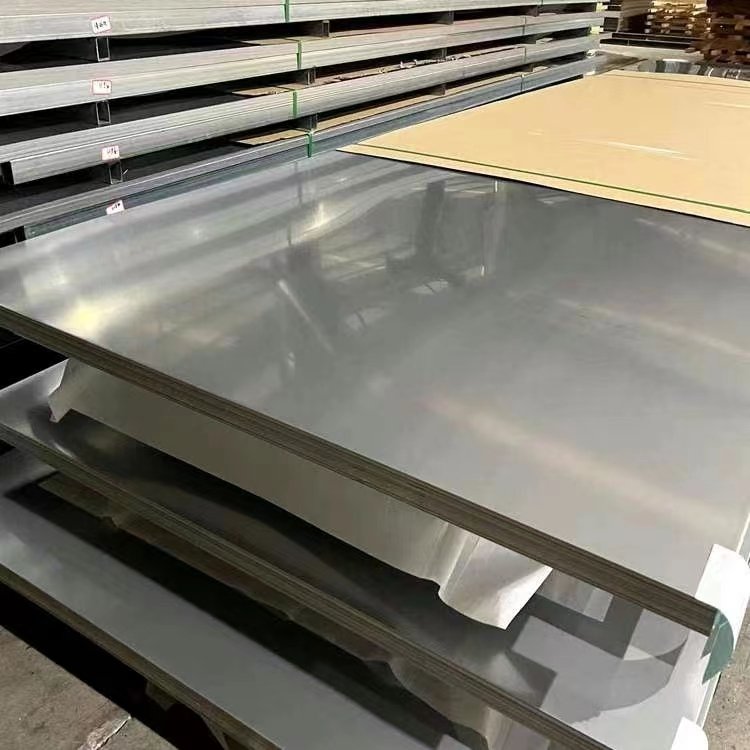
High-Performance Stainless Steel Sheets for Every Application
Price Stability: Why 400 Series is the Strategic Choice for Cost-Optimization
The 400 Series stainless steel offers significant cost-optimization by eliminating expensive nickel, resulting in raw material costs roughly 50% lower than the 300 Series. Its chromium-based composition provides price stability against market volatility while offering superior hardness and heat-treatability for strength-critical applications like fasteners and tools.
| Cost & Performance Metric | 400 Series (e.g., 410/430) | 300 Series (e.g., 304/316) |
|---|---|---|
| Raw Material Cost | ~50% Lower (Nickel-Free) | Benchmark High (Nickel-Reliant) |
| Price Stability | High (Shielded from Nickel Volatility) | Low (Prone to Market Spikes) |
| Mechanical Hardening | Heat-Treatable (Martensitic) | Cold-Working Only |
The Economic Impact of Nickel-Free Composition on Raw Material Costs
The primary driver of the 400 series’ economic advantage is its metallurgical composition. By replacing nickel—one of the most expensive and volatile commodities in the metal market—with a combination of chromium and manganese, the 400 series (specifically Grade 410) achieves a raw material cost that is approximately 50% lower than the ubiquitous 304 stainless steel. This fundamental shift in alloying elements allows manufacturers to produce high-strength components without the premium associated with austenitic structures.
This nickel-free approach provides a vital shield from market volatility. Nickel is notoriously prone to extreme price spikes and supply chain disruptions caused by geopolitical shifts. By eliminating this dependency, the 400 series offers engineers and procurement specialists far more predictable budgeting for large-scale industrial projects. Utilizing factory-direct sourcing through partners like HnL STEEL further maximizes this advantage by removing middleman markups and ensuring transparent pricing.
Performance-to-Price Ratio: Hardness and Strength in Cost-Sensitive Applications
The technical value of the 400 series extends beyond initial cost savings into mechanical efficiency. Unlike 300-grade steels, martensitic 400 series alloys are heat-treatable, allowing them to reach higher yield strength and tensile performance metrics. This makes them the superior choice for fasteners and specialized tools that require high hardness without the energy-intensive and expensive cold-working processes required for austenitic grades.
In applications where extreme corrosion resistance is not the primary requirement—such as internal machinery components, dry structural profiles, or non-chloride environments—the 400 series provides a strategic optimization. Industry data suggests that the 400 series can satisfy 80% of structural needs in these environments at nearly half the material expenditure. To maintain safety and performance standards, it is essential that these materials are verified via Material Test Certificates (MTC) and meet ISO 9001:2015 standards, ensuring that hardness and PSI specifications meet the rigorous demands of industrial use.
Performance in Fabrication: Welding and Forming
The 300 series offers superior weldability and ductile formability due to its austenitic structure and low carbon content (e.g., 304’s 18/8 composition). Conversely, the 400 series provides higher yield strength and post-weld hardness but requires specialized heat treatments to prevent cracking and accommodate lower ductility during forming.
Weldability and Thermal Processing Requirements
The 300 series austenitic stainless steels provide excellent weldability via conventional methods. Grades like Type 304, characterized by an 18% chromium and 8% nickel composition, utilize low carbon content to minimize the risk of intergranular corrosion. To ensure the integrity of fabricated joints, solution annealing is often applied post-welding to restore maximum ductility and corrosion resistance in the structure.
In contrast, 400 series martensitic and ferritic grades, such as 410 and 420, exhibit a significantly higher susceptibility to cracking due to increased carbon levels. Successful fabrication of these alloys often necessitates pre-heating or specific carbon modifications. However, the 400 series allows for superior post-weld hardness through specialized heat treatments, making it a highly functional, nickel-free choice for industrial components requiring high mechanical strength.
Forming Capabilities and Mechanical Trade-offs
The austenitic crystal structure of the 300 series enables exceptionally high tensile elongation. This mechanical property makes it the industry standard for complex bends and deep-drawn parts, as it can undergo significant deformation without premature work hardening. This ductility is a direct result of the high nickel content found in the 300 series, which stabilizes the austenite phase.
Conversely, 400 series alloys possess higher yield strength and hardness than their 300 series counterparts, improving wear resistance at the cost of forming complexity. While standard grades like 430 serve as cost-sensitive alternatives to 304 for rigid structural applications, technical fabrication must account for the lack of nickel. This compositional difference necessitates higher forming pressures and more generous radius management during bending to prevent material failure.
Summary: Beyond the Magnet Test
While the magnet test effectively separates magnetic 400 series (martensitic/ferritic) from non-magnetic 300 series (austenitic), it overlooks critical performance factors. The 300 series offers superior corrosion resistance via nickel addition, whereas the 400 series provides higher hardness and cost-efficiency through higher carbon content and heat-treatability.
The Chemical Divide: Chromium vs. Nickel Composition
The primary metallurgical distinction between these two families is found in their elemental makeup. 300 series stainless steels are defined by an austenitic crystalline structure, maintained through high chromium levels (18–30%) and the addition of nickel. This composition ensures the material remains non-magnetic in its annealed state and provides a robust barrier against oxidation across extreme temperature ranges.
In contrast, 400 series alloys utilize a lower chromium content (typically 11–12%) and omit nickel entirely, favoring higher carbon and manganese. This results in a martensitic or ferritic structure that is strongly magnetic. While the absence of nickel reduces the material’s resistance to pitting in harsh environments, it allows for magnetic utility in applications such as automated sorting or magnetic latches.
Specific grades further refine these capabilities. For example, 316 stainless steel includes molybdenum to enhance chloride resistance, making it suitable for marine environments. Meanwhile, 400 series grades like 430 prioritize cost-effective oxidation resistance for indoor appliances and automotive trim where moderate environmental exposure is expected.
Performance Indicators: Corrosion Resistance vs. Mechanical Hardness
Mechanical properties diverge significantly based on how each series responds to thermal processing. The 400 series, particularly martensitic grades like 410, offers high carbon content which enables the material to be hardened via heat treatment. This results in superior tensile strength and abrasion resistance, characteristics that are essential for high-strength fasteners and cutting tools.
The 300 series, including the ubiquitous 304 (A2) and 316 (A4) grades, cannot be hardened by heat and instead gains strength through cold working. However, what it lacks in heat-treatable hardness, it makes up for in ductility and weldability. Following ISO 3506 standards, these alloys are the industry standard for complex fabrication and applications requiring maximum resilience against crevice corrosion.
Economic considerations often dictate the choice between these materials. Because the 400 series is nickel-free, it is generally less expensive and less susceptible to the market volatility of raw nickel. This makes it a budget-friendly solution for mechanical components and tools where the superior corrosion resistance of the 300 series is not a functional requirement, but high yield strength and hardness are paramount.
Final Thoughts
Choosing between 300 and 400 series stainless steel requires looking past the simple magnet test and understanding the metallurgical requirements of your specific application. While the 300 series remains the premier choice for environments demanding maximum corrosion resistance and superior formability, the 400 series provides a high-performance, cost-effective solution for applications where hardness, magnetic utility, and price stability are the primary drivers.
For B2B procurement and industrial manufacturing, the decision should always be backed by technical documentation rather than manual shop-floor checks. By leveraging the technical strengths of each series—such as the heat-treatability of the 410 grade or the acid resistance of the 316 grade—engineers can optimize their material spend without compromising on quality. Relying on Material Test Certificates (MTCs) and precise grade specifications ensures that your final product meets both the mechanical demands and the budgetary constraints of the modern global market.
Frequently Asked Questions
Is 430 stainless steel as good as 304?
No. While AISI 430 often has a higher yield strength (260 MPa) compared to AISI 304 (205 MPa), it lacks the 8.0–10.5% nickel required for superior corrosion resistance and formability. 304 remains the industry standard for chemical and outdoor service, whereas 430 is a nickel-free grade suited for lower-cost, light-duty applications.
Why is 400 series stainless steel magnetic?
The 400 series is magnetic because of its ferritic or martensitic crystal structure. Unlike the 300 series, which is austenitic and contains high nickel, the 400 series contains 11-27% chromium with very little nickel (≤2.5%), resulting in a body-centered cubic/tetragonal structure that is naturally ferromagnetic.
Does 430 stainless steel rust easily?
430 does not rust in dry indoor or mild environments, but it has significantly lower resistance than 304 in aggressive settings. Due to its 16–18% chromium and 0% nickel composition, it is prone to surface staining and pitting when exposed to chlorides, de-icing salts, or marine atmospheres.
Can you harden 304 stainless steel?
No, 304 stainless steel cannot be hardened by heat treatment because of its stable austenitic structure. Hardening can only be achieved through cold working, which increases its tensile strength and hardness from its typical annealed maximum of ≤215 HB.
Why is 400 series stainless steel cheaper than 300 series?
The price difference is primarily due to nickel content. Because 400 series grades like 410 use little to no nickel, they are significantly less expensive to produce; raw material costs for 304 stainless are often 50% higher than those for 410 stainless.
Which series is better for manufacturing knives?
The 400 series (such as 420 or 440C) is superior for knife blades because it is heat-treatable to a hardness of HRC 50–58, providing essential edge retention. In contrast, 300 series grades like 304 cannot be hardened by heat and are too soft for cutting edges, making them better suited for handles or food-processing equipment.