Skip to content


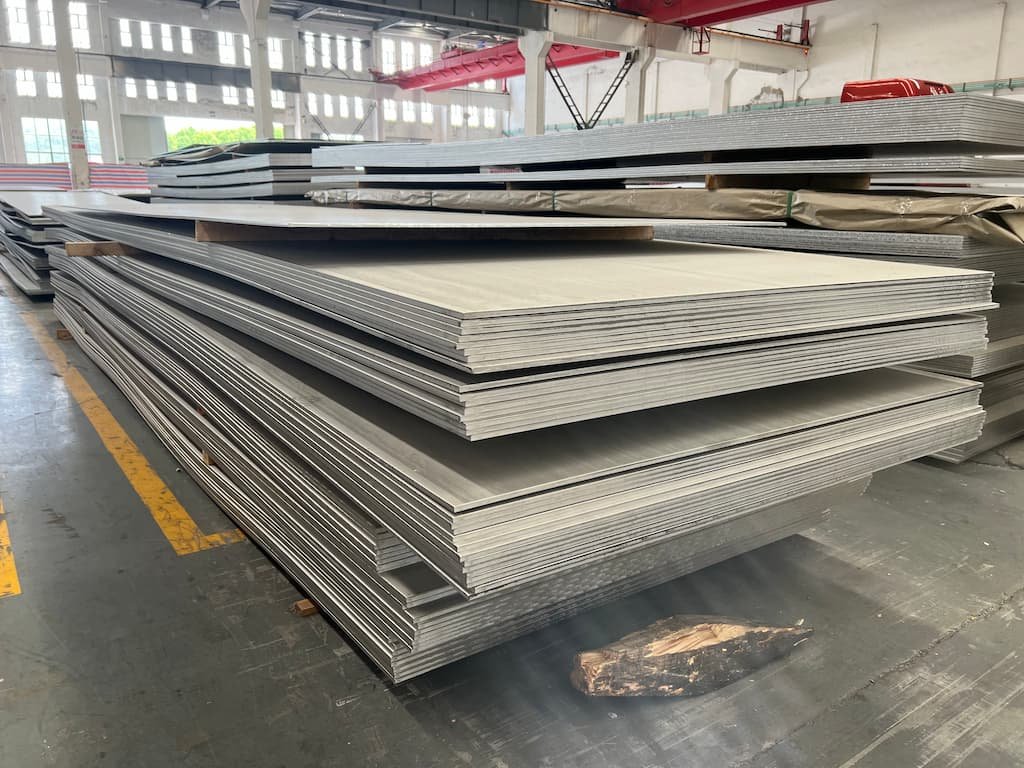
Selecting the correct stainless steel grade often balances upfront costs against long-term structural integrity. While 304 serves as the standard for general indoor applications, it lacks the chemical defense required for harsh environments. A procurement error here can lead to costly tea-staining or structural pitting, especially when projects sit within five miles of a coastline or face exposure to industrial chlorides.
This guide breaks down the critical engineering and commercial differences to help you finalize your material specification. We analyze how the 2-3% Molybdenum content in 316 alters corrosion resistance, compare the typical 20–40% price premium against lifecycle value, and define the exact chemical boundaries that separate a reliable installation from a premature failure.
The Core Difference: Molybdenum Content
The defining difference lies in chemistry: 316 stainless steel contains 2-3% Molybdenum, whereas 304 contains none (0%). This addition significantly enhances resistance to chlorides and salts. While 304 relies on Chromium and Nickel for general protection, the Molybdenum in 316 creates a tougher passive layer, specifically preventing pitting in marine and industrial environments.
Composition Breakdown: 0% vs. 2-3% Molybdenum
Standard 304 stainless steel contains 0% Molybdenum. It relies primarily on a foundation of 17.5-19.5% Chromium and 8.0-10.5% Nickel to provide standard resistance against oxidation. This formulation suffices for general indoor and dry applications but lacks the chemical reinforcement necessary to withstand aggressive localized attacks.
Conversely, 316 stainless steel incorporates 2-3% Molybdenum directly into its alloy matrix. To maintain structural stability with this addition, the composition adjusts Chromium slightly to 16-18% and increases Nickel to 10-14%. Mill Test Certificates (MTC) from suppliers like HnL STEEL strictly verify this specific Molybdenum content to ensure the grade meets UNS S31600 standards.
Performance Impact: Pitting Resistance (PREN)
The addition of Molybdenum translates to measurable performance through the Pitting Resistance Equivalent Number (PREN). In this engineering formula, Molybdenum is weighted 3.3 times (Cr + 3.3Mo), providing a significantly higher defense against localized pitting than Chromium alone can offer.
This added chemistry enables 316 to withstand aggressive chloride environments, such as coastal sea spray or areas treated with de-icing salts. While 304 often suffers from rapid crevice corrosion in these settings, the Molybdenum in 316 ensures the passive oxide layer remains robust. This synergy protects the steel’s structural integrity even when surfaces are scratched or exposed to acidic pollutants.
Corrosion Resistance: Salt & Chlorides
The critical difference lies in Molybdenum. While 304 resists general rust, it is vulnerable to ‘pitting’ in salt environments. 316’s 2-3% Molybdenum content creates a stronger passive film, making it the standard for marine applications, de-icing salts, and chemical processing where chlorides are present.
| Parameter | 304 Stainless Steel | 316 Stainless Steel |
|---|---|---|
| Key Alloy Element | No Molybdenum (~0%) | 2-3% Molybdenum |
| Chloride Resistance | Weak (Prone to Pitting) | Strong (Passive Film Stable) |
| Marine Suitability | Not Recommended | Industry Standard |
| Primary Risk | Tea-staining & Crevice Corrosion | Rare (in extreme conditions only) |
The Molybdenum Mechanism: Pitting & Crevice Corrosion
The chemical science defining why 304 fails in salt involves the stability of its protective layer. 304 stainless steel relies on a passive oxide film formed by approximately 18% chromium. While this film repels fresh water and oxygen, chloride ions (Cl⁻) found in salt and brine aggressively attack it. These ions penetrate microscopic weak points in 304’s oxide layer, causing “pitting corrosion”—the formation of small, deep holes that compromise structural integrity even if the surrounding surface looks clean. This breakdown often occurs in stagnant saltwater, leading to crevice corrosion in gaps where fluids are trapped.
316 stainless steel prevents this failure through the addition of 2-3% Molybdenum. This alloying element chemically reinforces the passive film, making it far more robust against halides. The molybdenum stabilizes the oxide layer, allowing it to reform rapidly even when exposed to high concentrations of chlorides. This prevents the localized breakdown that characterizes pitting, ensuring the metal remains intact in environments that would rapidly corrode 304.
Service Limits: Marine Environments & Chloride Exposure
Designers and engineers must respect the strict application boundaries for these grades. 304 is susceptible to “tea-staining”—a cosmetic brown discoloration—and rapid pitting when used in coastal zones or areas exposed to de-icing salts. We strongly advise against using 304 for exterior applications within 5km of a coastline. Elevated temperatures further accelerate this failure; hot environments containing chlorides will degrade 304 significantly faster than cold ones.
Conversely, 316 stands as the industry default for marine and harsh chemical environments. Its resistance makes it the correct choice for seawater splash zones, offshore structures, marine fasteners, and pharmaceutical equipment subject to aggressive cleaning agents. For HnL STEEL clients, specifying 316 ensures longevity and safety in any project where salt, brine, or chloride-based chemicals are environmental factors.
Mechanical Properties Comparison (Tensile/Yield)
316 stainless steel generally offers higher tensile and yield strength, making it superior for high-stress applications, while 304 provides greater elongation (up to 70%), making it the better choice for complex forming and deep-drawing processes.
Tensile and Yield Strength Benchmarks
316 grade typically exhibits higher ultimate tensile strength (approx. 79,800 psi or 580 MPa max) compared to 304 (73,200 psi), providing better resistance to mechanical failure under load. Yield strength data follows a similar trend, with 316 averaging 34,800 psi versus 31,200 psi for 304, offering superior structural integrity in heavy-duty applications.
The addition of 2-3% Molybdenum in 316 reinforces the crystalline structure, directly contributing to these elevated strength metrics. HnL STEEL verifies these specific load values through Material Test Certificates (MTC) accompanying every batch to ensure compliance with ASTM standards.
Hardness vs. Elongation: Formability Factors
304 stainless steel offers superior elongation properties (up to 70% vs. 60% for 316), making it the preferred choice for deep drawing and complex bending operations. 316 is harder (approx. 80 Rockwell B) than 304 (70 Rockwell B), which improves wear resistance but slightly reduces malleability during fabrication.
Engineers must balance 316’s durability against 304’s ease of forming when selecting materials for parts requiring extensive shaping. Factory-direct sourcing allows for precise specification of temper and hardness levels to match specific fabrication machinery requirements.
High-Performance Stainless Steel Sheets for Every Project

Price Analysis: Is 316 Worth the Cost?
316 stainless steel generally commands a 20–40% price premium over 304, with recent book prices around $1.98/lb compared to $1.40/lb for 304. This increase is driven directly by the 2–3% molybdenum content. While the initial expense is higher, 316 prevents premature failure in salt-heavy environments, offering better long-term value.
The Cost Gap: 304 vs. 316 Pricing Breakdown
Market data consistently indicates a 20–40% price premium for 316 stainless steel over the 304 grade. Specific book prices often show 316L reaching approximately $1.98 per pound, while 304L sits closer to $1.40 per pound. This gap typically translates to a base price increase of $0.20 to $0.21 per pound for 316, though exact figures fluctuate based on form factors like sheet thickness and global raw material availability.
The addition of 2–3% molybdenum drives this cost difference. Sourcing molybdenum is more expensive than the chromium and nickel used in standard austenitic stainless steels, yet this element is non-negotiable for chloride resistance. Manufacturers must pass these raw material costs to the consumer, establishing a higher baseline price for any alloy containing this pitting-resistant element.
ROI Analysis: Long-Term Value and Scrap Recovery
In marine or industrial settings, the upfront investment in 316 eliminates the recurring labor and material costs required to replace corroded 304 panels. A cheaper 304 installation often succumbs to pitting in salt-rich environments, forcing early repairs that exceed the initial savings. We recommend 316 for these aggressive conditions to ensure the material survives its full intended lifecycle without structural compromise.
Residual value at the end of the product lifecycle also distinguishes the two grades. Scrap recovery values favor 316 at roughly $0.78 per pound versus $0.56 per pound for 304. This higher scrap value provides a partial return on the initial investment. In non-corrosive indoor applications, the premium for 316 is rarely recoverable, making 304 the superior economic option where environmental stress is low.
Application Scenarios: Indoor vs. Outdoor
For indoor applications like kitchen appliances and architectural railings, 304 stainless steel is the standard, offering sufficient durability in controlled environments. In contrast, 316 stainless steel is mandatory for outdoor and marine settings; its 2-3% molybdenum content provides a higher PREN (~24), preventing pitting from salt air, de-icing chemicals, and pollutants that rapidly corrode 304.
| Comparison Factor | 304 Stainless (Indoor) | 316 Stainless (Outdoor) |
|---|---|---|
| Alloy Composition | 18% Chromium, 8% Nickel, No Molybdenum | 16-18% Chromium, 10-14% Nickel, 2-3% Molybdenum |
| Pitting Resistance (PREN) | ~19 (Basic Protection) | ~24 (Enhanced Protection) |
| Primary Use Cases | Interior railings, kitchen sinks, appliances | Marine rigging, coastal exteriors, chemical plants |
| Main Limitation | Susceptible to pitting from chlorides/salt | Higher material cost due to alloys |
304 Stainless: The Standard for Indoor & Controlled Environments
304 stainless steel dominates the market for interior applications where humidity levels remain controlled and exposure to corrosive elements is low. This grade serves as the primary choice for indoor handrails, residential appliances, kitchen sinks, and general architectural frameworks. Manufacturers favor 304 for these uses because it delivers excellent corrosion resistance in non-saline environments without incurring the additional expense associated with molybdenum-alloyed grades.
While 304 performs reliably in standard interiors, it has specific limitations. It is not suitable for indoor swimming pools or facilities with heavy chemical usage. The high concentration of airborne chlorides in pool areas attacks the passivation layer of 304, leading to rapid surface pitting and structural degradation despite the lack of direct weather exposure.
316 Stainless: Essential for Outdoor & Marine Exposure
For exterior projects, specifically those within five miles of saltwater or near roadways treated with de-icing salts, 316 stainless steel is the mandatory engineering choice. The inclusion of 2-3% molybdenum boosts its Pitting Resistance Equivalent Number (PREN) to approximately 24, compared to 19 for 304. This chemical advantage prevents “tea staining” and deep pitting, which compromise the aesthetics and safety of outdoor installations.
Longevity drives the specification of 316 for rigging and load-bearing structures in high-pollution or marine sites. In these aggressive environments, standard 304 stainless would degrade rapidly, leading to potential failure. 316 ensures structural integrity over decades of exposure to salt spray and industrial pollutants, justifying its higher initial cost through reduced maintenance and replacement needs.
Visual Differences: Can You Tell Them Apart?
You cannot distinguish 304 and 316 stainless steel by sight alone. Both alloys exhibit an identical silver, metallic finish due to similar Chromium and Nickel content. Differences in appearance usually stem from surface processing (e.g., No. 4 brushed vs. 2B matte) rather than the steel grade itself. Verification requires checking mill markings or chemical testing.

The “Naked Eye” Test: Why They Look Identical
Both grades possess the same density (8.00 g/cm³) and a nearly identical high-chromium oxide passivation layer, resulting in the same silver-grey luster. The addition of 2-3% Molybdenum in 316 does not alter the visible light spectrum reflection, making it visually indistinguishable from the 18% Chromium / 8% Nickel composition found in 304.
No engineering standards, such as ASTM A240 or ISO 15510, define any visual criteria for separating these grades. Without access to chemical analysis or material markings, identifying the specific alloy via visual inspection is impossible.
Impact of Mill Finishes and Processing
Visual variations are typically the result of surface treatments, such as a No. 4 finish (150-220 grit) or a Mirror Polish, rather than the alloy itself. While anecdotal evidence from engineering forums suggests 316 tubing can sometimes appear slightly shinier due to specific polishing interactions, this remains an unreliable method for positive identification.
Since visual inspection fails to differentiate the grades, immediate identification relies on surface stencils (grade markings) or reviewing the Material Test Certificate (MTC) provided by suppliers like HnL STEEL. Relying on appearance alone creates significant risk in applications requiring specific corrosion resistance profiles.
Testing Methods (Moly Spot Test vs. XRF)
For immediate field checks, the Moly Spot Test uses a chemical drop that turns dark blue on 316 stainless steel due to its Molybdenum content. For official verification, XRF (PMI) guns provide a digital elemental analysis essential for certification, though neither method typically detects Carbon levels to distinguish ‘L’ grades.
The Moly Spot Test: Quick & Cost-Effective Screening
The Molybdenum (Moly) Spot Test serves as a rapid, qualitative method for distinguishing standard 304 from 316 stainless steel directly in the field. Installers or inspectors apply a single drop of a specialized chemical reagent onto a clean, ground metal surface. This acid-based solution reacts specifically to Molybdenum, the key alloying element present in Type 316 (approx. 2–3%) but effectively absent in Type 304.
Interpretation relies on a simple visual change. A dark or blue reaction confirms the presence of Molybdenum, identifying the material as 316 stainless steel. Conversely, if the drop remains yellow or shows no darkening, the steel lacks Molybdenum and is identified as 304. While this “yes/no” screening is cost-effective, it provides no numeric data and cannot detect carbon levels required to separate low-carbon variants like 304L or 316L.

XRF Analyzer (PMI): Precision & Certification
Handheld X-ray Fluorescence (XRF) analyzers represent the professional standard for Positive Material Identification (PMI). These devices scan the metal non-destructively to generate a full quantitative elemental readout, including precise percentages of Chromium, Nickel, and Molybdenum. Fabricators and quality assurance teams rely on XRF data to generate accurate Material Test Certificates (MTC) and ensure rigorous compliance with project specifications.
XRF provides the necessary documentation to verify if a sample meets the 2–3% Molybdenum requirement for Type 316. But standard handheld XRF units face limitations regarding light elements; they typically cannot measure Carbon content accurately enough to distinguish 316 from 316L. When projects require verification of Carbon levels below 0.03%, inspectors must use Optical Emission Spectroscopy (OES) or laboratory analysis.
Ordering Tips for Importers
To ensure quality, always specify full ASTM standards (e.g., ASTM A240 for sheets) and UNS designations (S31600) in your purchase orders rather than generic grade names. Always require a Mill Test Certificate (MTC) to verify the 2-3% Molybdenum content in 316 and confirm the material meets the 10-30% price premium justification.
Defining Precise ASTM Standards and Grade Designations
Procurement managers mitigate risk by avoiding generic terms like “304 Quality” or “Standard 316.” These vague descriptions can result in the delivery of “304-like” materials that fail to meet strict mechanical properties. Effective Purchase Orders (POs) explicitly call out the governing standard based on the product form: specify ASTM A240 for plates, sheets, and strips; ASTM A276 for stainless bars; or ASTM A312 for pipes. Using these specific codes forces the supplier to adhere to defined manufacturing and testing protocols.
Include precise Unified Numbering System (UNS) designations to legally bind the supplier to specific chemical composition ranges. For standard 304, use UNS S30400, and for 316, use UNS S31600. This level of detail eliminates ambiguity regarding permissible element variances. Additionally, contracts destined for European markets should clarify regional naming conventions, ensuring that terms like “A4 stainless” map correctly to 316 specifications.
Verifying Compliance via Mill Test Certificates (MTC)
Documentation validates that the received material matches the premium paid for 316 stainless. Require a Material Test Certificate (MTC) for every batch and scrutinize the chemical analysis section. For 316 orders, the MTC must show a Molybdenum content between 2% and 3%. This addition drives the pitting resistance (PREN) required for marine and chloride environments, distinguishing it from cheaper grades.
Nickel content offers another verification point. A compliant 304 sample typically contains 8-10.5% Nickel, whereas 316 generally allows for higher levels, up to 14%. Verifying these percentages confirms the material grade. For large-scale or critical orders, consider mandating third-party inspections from agencies like SGS or BV. These independent audits validate the chemical composition before shipment, ensuring the steel meets the 10-30% cost premium associated with marine-grade alloys.
Final Thoughts
Selecting the right stainless steel grade relies on a clear assessment of environmental exposure. 304 provides a cost-effective, durable solution for indoor architectural features, appliances, and general manufacturing where salt is absent. For coastal zones, marine rigging, or chemical processing, 316 is non-negotiable. Its Molybdenum content provides the necessary armor against pitting, ensuring the material survives where 304 would rapidly degrade.
Precision in ordering ensures long-term performance. We advise clients to strictly specify ASTM standards and review Material Test Certificates to confirm the Molybdenum levels in 316 batches. Specifying 316 reduces maintenance costs in harsh climates, while sticking to 304 preserves budget in controlled interiors. Match the grade to the location to secure the best return on investment.
Frequently Asked Questions
Is 316 stainless steel worth the extra cost over 304?
Yes, for marine or high-chloride environments. While 316 costs 25-40% more than 304 due to the addition of 2-3% molybdenum, this investment prevents rapid corrosion failure in harsh conditions. For general indoor or low-corrosion applications, 304 remains the most cost-effective choice.
Can I use 304 stainless steel outdoors?
It depends on the location. Type 304/304L is suitable for most exterior architecture in non-coastal areas with low pollution. But if the project is within 5-10 miles of the coast or exposed to de-icing salts, Type 316 is the standard recommendation to prevent tea-staining and pitting.
How do you tell 304 from 316 visually?
You cannot distinguish them by eye as they look identical in standard finishes. Reliable identification requires a chemical molybdenum spot test (which turns dark on 316), an XRF analyzer for PMI (Positive Material Identification), or checking the Mill Test Certificate (MTC) for the 2.0% minimum molybdenum content.
Is 316 considered food grade?
Yes. Both 304 and 316 are widely accepted as food-grade under FDA and 3-A Sanitary Standards. 316 is specifically preferred for processing acidic foods, dairy, or pharmaceuticals because it resists pitting from strong cleaning chemicals better than 304.
Does 304 stainless steel rust in saltwater?
Yes. 304 is susceptible to pitting and crevice corrosion when exposed to chlorides found in saltwater. Research indicates a corrosion rate of approximately 0.0076 mm/year in marine atmospheres, making it unsuitable for submerged or direct splash zones compared to 316.