Skip to content


For B2B procurement managers and industrial engineers, the relentless volatility of the London Metal Exchange is more than a market trend—it’s a direct threat to manufacturing margins. Because nickel accounts for 50–60% of the total material cost of 300-series stainless steel, raw material fluctuations drive nearly 70% of finished goods’ price swings. Transitioning to 400 Series Economics (VS_Guide) allows organizations to bypass these aggressive surcharges, leveraging a structural 40% cost advantage over 304-series equivalents while stabilizing long-term procurement budgets.
This article provides a comprehensive cost analysis and technical roadmap for making the switch, highlighting how the 400 series offers superior mechanical benchmarks like tensile strengths up to 124,000 PSI. We will explore the fundamental chemistry differences between nickel and chromium-based alloys, identify high-volume applications in automotive and HVAC sectors, and outline a three-staged approach for mapping your nickel exposure to achieve long-term price stability through 2030.
The Impact of Nickel Volatility on 300 Series Pricing
Nickel is the primary price driver for 300-series stainless, accounting for 50–60% of its total material cost. Because grades like 304 and 316 contain 8–14% nickel, raw material volatility drives 60–70% of their price swings. Every $1,000/ton move in LME nickel typically shifts production costs by $80–100/ton.
Nickel’s Structural Role in 300-Series Material Costs
Austenitic 300-series grades carry a structurally high nickel load that defines their economic profile. Typical compositions range from 8–10.5% nickel for AISI 304 to 10–14% for AISI 316. According to data from the CRU Group, nickel alone represents approximately 50–60% of the total material cost component for these grades, making the 300-series uniquely sensitive to fluctuations in the London Metal Exchange (LME) compared to other alloy groups.
This dependence translates directly into market volatility. Raw materials, led predominantly by nickel cycles, are responsible for 60–70% of total stainless price volatility. This is clearly illustrated when comparing different series; for instance, 400-series grades like 430, which lack nickel content, often trade at only 30–35% of the scrap value of 304, as they are not subject to the same aggressive raw material cost escalations.
Quantifying Price Elasticity and Market Response
The cost relationship between nickel and finished stainless steel is highly quantifiable. A US$1,000/ton movement in LME nickel prices shifts the production cost of 304 stainless by approximately US$80–100/ton. This pass-through sensitivity is visible in secondary markets as well; during a notable 26.4% weekly spike in LME nickel, 304 stainless scrap prices in Pittsburgh rose by 18–20%, showing how quickly raw material changes penetrate the supply chain.
Major global producers, including NSSC and Outokumpu, manage this volatility by frequently adjusting list prices or narrowing transaction discounts. While finished goods like cold-rolled coil exhibit a more damped response than raw scrap, the coupling remains significant; historical data shows that a 20% rise in nickel prices typically results in a 7% increase in transaction prices for finished coil. This requires buyers to closely monitor nickel guidance to anticipate shifts in 300-series procurement costs.
300 Series vs. 400 Series: A Direct Cost Comparison
The 300 series is consistently more expensive than the 400 series, with a typical price premium of approximately 50%. This gap is primarily due to the high nickel content in 300 series grades like 304 and 316, whereas the 400 series (e.g., 410, 430) relies on chromium, making it a more cost-effective solution for environments with lower corrosion risk.
| Economic Factor | 300 Series (Austenitic) | 400 Series (Martensitic/Ferritic) |
|---|---|---|
| Raw Material Cost | Premium (~50% higher than 410) | Baseline (Lower per-kg pricing) |
| Primary Cost Driver | High Nickel + Chromium (+ Molybdenum) | Chromium-based (No/Minimal Nickel) |
| Price Volatility | High (Fluctuates with Nickel markets) | Low (Stable Commodity Pricing) |
| Manufacturing Benefit | Cold-working required for strength | Heat-treatable for hardening |
Alloy Chemistry as the Primary Cost Driver (Nickel vs. Chromium)
The fundamental price disparity between the two series is rooted in their chemical composition. The 300 series, encompassing austenitic grades like AISI 304 and 316, requires significant amounts of nickel to stabilize its crystal structure. In the case of 316, the addition of molybdenum further drives up the cost. Because nickel is a highly volatile and expensive commodity, these grades command a systematic premium in the global market.
Conversely, the 400 series—including martensitic and ferritic grades such as AISI 410 and 430—is primarily chromium-based with no or minimal nickel content. This “nickel avoidance” allows the 400 series to offer a far more stable price point, which is essential for high-volume manufacturing. HnL STEEL leverages factory-direct sourcing from major mills like Tisco and Baosteel to further minimize the cost delta for bulk procurement, ensuring clients receive the most competitive pricing for large-scale industrial projects.
Raw Material Deltas and Manufacturing Economics
Direct cost comparisons reveal a stark economic gap: raw 304 stainless steel is approximately 50% more expensive than 410 stainless steel. This material surcharge is reflected across various product segments. In the fastener and wire mesh industries, 300-series components consistently command higher prices than their 400-series equivalents. For instance, woven wire products made from 300 series mesh are explicitly noted as the most expensive option due to the underlying alloy surcharges associated with nickel-heavy grades.
Beyond the material price, manufacturing flexibility also impacts the total lifecycle cost. The 400 series is heat-treatable, allowing parts to be hardened through thermal processes. This makes it a more cost-effective choice for wear-resistant machinery parts that do not require the extreme corrosion resistance of the 300 series. Because the 300 series is not heat-treatable, achieving higher strength levels often requires expensive cold-working processes, adding further labor and energy costs to the final production cycle.
Quality vs. Cost: Why 400 Series is Not “Cheap Steel”
400 Series stainless steel is a high-performance engineering material, not a ‘budget’ alternative. While it costs less due to minimal nickel content, its martensitic structure allows for heat-induced hardening and tensile strengths up to 124,000 PSI—significantly higher than 304 or 316 grades. It is specifically designed for high-wear, high-strength environments where austenitic grades often fail.
The Economic Advantage of Nickel-Free Martensitic Structure
By eliminating high nickel content and capping it at a maximum of 2.5%, 400 series alloys significantly reduce price volatility compared to the 300 series. This reduction in material cost does not compromise oxidation resistance, as the series maintains 11-27% chromium to protect against environmental degradation.
The martensitic crystalline structure is the primary driver of its mechanical superiority, enabling hardening via heat treatment processes such as quenching and tempering. This capability allows engineers to tailor the material’s hardness, a process that is physically impossible for non-hardenable austenitic grades like 304 or 316.
Furthermore, these alloys demonstrate an increased resistance to chloride stress corrosion cracking. This makes the 400 series a technically superior choice for specific industrial atmospheres where austenitic steels might succumb to stress-induced failure despite their higher nickel content.
HnL Steel leverages factory-direct sourcing to further optimize the cost-to-performance ratio for large-scale fabrication projects. By bypassing middle-market markups, industrial clients can secure high-tensile martensitic steel that meets rigorous performance benchmarks while remaining economically viable.
Superior Mechanical Benchmarks: 400 Series vs. 300 Series Data
Technical data comparisons highlight the significant strength-to-weight advantages of the 400 series. For example, 416 Stainless Steel reaches a tensile strength of 124,000 PSI, which nearly doubles the 70,000 PSI typical of standard 304L stainless steel.
Yield strength performance follows a similar trajectory. Grade 416 offers up to 110,000 PSI yield strength, drastically outperforming the 25,000-30,000 PSI range common in 300 series alloys. This allows for the design of thinner, lighter components that can withstand higher mechanical loads.
Regarding thermal durability, these grades retain their mechanical integrity at service temperatures up to 1100°F. They are also engineered to resist scaling up to 1400°F during intermittent use, making them highly effective for high-heat industrial applications where other stainless steels might lose structural stability.
Machinability and wear resistance represent the final tier of the 400 series advantage. Grade 416 features the highest machinability rating of any stainless steel grade, significantly reducing fabrication time and tool wear for complex components such as gears, valves, and precision fasteners.
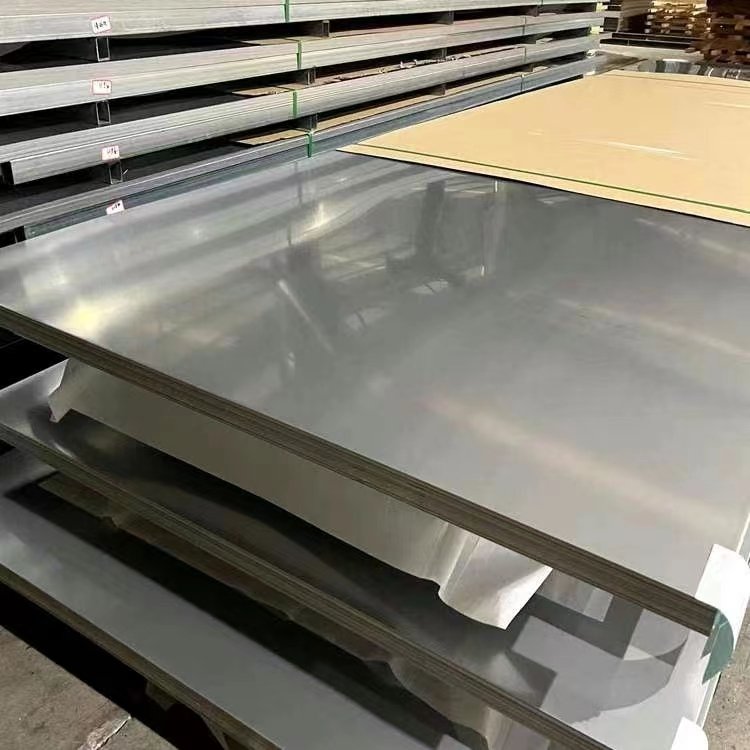
High-Performance Stainless Steel Sheets Tailored to Your Project
Key Applications for 400 Series Cost-Optimization
The 400 Series provides a 40% cost advantage over 300-series equivalents by eliminating nickel, making it the primary choice for high-volume automotive exhaust systems (Grade 409), kitchen appliances (Grade 430), and precision industrial tools (Grades 410/420). Emerging applications in green energy, such as PEM electrolyzer plates, further demonstrate its role in lightweighting and economic efficiency.
| Alloy Grade | Primary Application | Cost/Performance Driver |
|---|---|---|
| Grade 409 | Automotive Exhaust Systems | USD 600/ton discount vs. 304; Titanium-stabilized. |
| Grade 430 | Appliances & HVAC | Bright finish; nickel-free hedge against volatility. |
| Grade 410/420 | Turbines & Precision Tools | 40 HRC hardness via quench-and-temper treatment. |
| Grade 446 | PEM Electrolyzer Plates | 50% weight reduction compared to traditional materials. |
High-Volume Automotive and HVAC Systems
Grade 409 remains the cornerstone of the automotive sector, commanding a 40.12% market share as of 2024. Its dominance in catalytic converter shells and muffler bodies is driven by titanium stabilization, which prevents intergranular corrosion in the heat-affected zones of welds. Economically, Grade 409 offered a significant USD 600/ton discount compared to Grade 304 in Q2-2025, enabling mass-market OEMs to maintain thin margins without sacrificing structural integrity during high-volume production cycles.
Furthermore, industrial manufacturers such as SAIC Motor have increased Grade 430 usage by 15% to hedge against nickel price volatility, which currently oscillates between USD 15,000 and 16,000 per ton. This shift is mirrored in the HVAC industry, where Grade 430 is increasingly specified for ductwork and air management systems. The alloy’s bright finish and reliable resistance to atmospheric corrosion provide a superior lifecycle value proposition in non-marine environments compared to traditional galvanized alternatives.
Precision Engineering and Industrial Energy Components
For specialized industrial applications, martensitic grades like 410 and 420 provide essential mechanical properties that ferritic grades cannot match. These alloys achieve a hardness of up to 40 HRC through precise quench-and-temper heat treatments, making them the industry standard for turbine blades and industrial knives. Additionally, Grade 416 and 416HT are frequently selected for pumps, valves, and gears due to their superior machinability ratings, which significantly reduce tool wear and production cycle times according to Nickel Institute guidelines.
Technological advancements are also opening new markets in green energy and infrastructure. High-chromium Grade 446 foil (0.6 mm) is being deployed in PEM electrolyzer bipolar plates, reducing component weight by 50% while maintaining the necessary oxidation resistance for hydrogen production. In heavy infrastructure, 400-series alloys are increasingly replacing galvanized carbon steel for rail and desalination projects. While these alloys carry a marginal price premium over carbon steel, they offer vastly improved salt-spray life cycles and over 90% scrap recycling ratios, aligning with modern ESG and carbon compliance mandates.
How to Transition Your Material Sourcing Strategy
Transitioning sourcing involves a three-staged approach: first, mapping nickel exposure (304/316 grades) across all SKUs; second, modeling technical feasibility for 400-series alternatives (like 430, 441, or 444) under ASTM A240 standards; and finally, integrating these changes into procurement through LCA-based ROI calculations and supplier qualification.
Strategic Mapping: Identifying Nickel-Exposure and Transition Levers
To initiate a material sourcing shift, organizations should utilize the “Face it, Map it, Shape it” framework derived from transition planning primers such as those from ERM and the Japan TCFD Consortium. This structured approach begins by identifying the enterprise’s exposure to 300-series price volatility, which is primarily driven by nickel surcharges. By categorizing the value chain into these distinct phases, procurement teams can move from acknowledging risk to actively redesigning their material inputs.
The mapping phase requires a comprehensive cataloging of existing usage for AISI 304 (18Cr–8Ni) and AISI 316 (17Cr–10Ni–2Mo) stainless steel, organized by product SKU, total tonnage, and specific part function. This granular data allows engineers to determine where nickel-free substitutions—specifically ferritic 400-series alloys like AISI 430, 441, or 444—can act as primary mitigation levers. Identifying these applications is critical for reducing reliance on constrained alloying metals such as nickel, chromium, and molybdenum, which are treated as high-risk materials in global energy transition reports.
Success in the “Shape it” phase is driven by defining clear metrics and targets. Organizations must establish key performance indicators, such as the total percentage of material spend under new specifications and the share of suppliers successfully meeting transition criteria. This phase also includes performing initial value-chain impact mapping to ensure that material switches align with broader corporate sustainability goals and resource availability, effectively treating alloy shifts as “material-criticality levers” rather than simple cost reductions.
Technical Validation: ASTM A240 Compliance and Economic Modeling
Transitioning from austenitic to ferritic grades necessitates rigorous technical validation to ensure product performance. Engineering teams must conduct grade-level comparisons, typically mapping the AISI 304 baseline to 430 or 441, and AISI 316 to 444 for increased corrosion resistance. All substitutions must be governed by ASTM A240/A240M standards for plate, sheet, and strip to verify that chemical composition, mechanical properties, and tolerances meet the required application thresholds for pressure vessels or general industrial use.
Beyond mechanical compliance, a robust transition strategy requires quantitative ROI modeling. This financial assessment must account for changes in CAPEX and OPEX, while specifically highlighting the savings generated by avoided nickel surcharges. Furthermore, potential carbon costs and environmental impacts should be calculated via Life Cycle Assessment (LCA), aligning the material switch with TCFD and ISSB climate reporting frameworks. This ensures that the sourcing strategy is not only cost-effective but also resilient to evolving carbon accounting standards.
The final implementation stage involves the qualification of new 400-series sources from top-tier global mills, such as Tisco or Baosteel. Procurement departments must ensure that these suppliers provide full Material Test Certificates (MTC) to guarantee traceability and consistency in mechanical properties. These revised material specifications are then embedded into procurement contracts, utilizing the BSR Supplier Transformation Framework or similar guides to document material efficiency and formalize the substitution as a core element of the supplier climate action roadmap.
Conclusion: Achieving Long-Term Price Stability with the 400 Series
Long-term price stability with the 400 series is achieved through a nickel-independent chemistry that yields a structural 40% cost discount compared to 304 stainless. By utilizing grades like 409 and 430, manufacturers can hedge against LME volatility and secure predictable multi-year supply contracts through the 2030 forecast horizon.
The Structural Cost Advantage of Nickel-Independent Chemistry
The fundamental price stability of the 400 series is engineered into its chemical composition. Unlike the 300 series, which relies on 8–10% nickel, ferritic grades like 409 and 430 are categorized as “straight-chromium” alloys. Grade 409 typically contains 10.50–11.75% chromium with nickel capped at ≤0.5%, while Grade 430 increases chromium to 16.00–18.00% with nickel at ≤0.75%. This chemistry profile eliminates the primary driver of stainless steel price volatility: the London Metal Exchange (LME) nickel market.
With nickel currently trading between 15,000 and 16,000 USD/t, the melt cost of austenitic grades remains highly sensitive to geopolitical and supply chain disruptions. By contrast, the 400 series melt cost is insulated from these spikes, providing a structural hedge that allows manufacturers to maintain consistent input costs. Technical design guidelines from the Nickel Institute and Jindal Stainless position these alloys specifically for cost-sensitive structural performance where the premium corrosion margin of nickel is not required.
Strategic Implementation: Multi-Year Hedging and Market Forecasts to 2030
Quantifiable market data supports the transition to 400 series alloys as a core procurement strategy. As of Q2-2025, market assessments show a headline cost discount of approximately 600 USD/t for 409-type sheet versus 304 sheet in spot terms. This represents a per-ton savings of roughly 40%, a margin that allows automotive and appliance OEMs to eliminate the risk of finished-goods price swings that frequently plague nickel-heavy portfolios.
Looking toward 2030, the global 400 series market is projected to expand from 3.23 million metric tons (Mt) in 2025 to 4.09 Mt, supported by a 4.82% CAGR. Grade 409, which held a 40.12% market share in 2024, is expected to reach 1.69 Mt by the end of the decade. This deep liquidity and growing global capacity enable manufacturers to move beyond spot buying and formalize multi-year supply contracts (2025–2027) to lock in price floors and ensure long-term budget predictability across infrastructure and transport projects.
Final Thoughts
The switch to 400-series stainless steel represents a strategic pivot from high-volatility austenitic grades to stable, performance-oriented ferritic and martensitic alloys. By eliminating the heavy reliance on nickel—the primary driver of 300-series price swings—manufacturers can capture a structural cost advantage of approximately 40% to 50% without sacrificing mechanical integrity. Whether utilizing the high-tensile strength of heat-treatable martensitic grades or the oxidation resistance of ferritic options like 409 and 430, the 400 series proves that economic efficiency and engineering excellence can coexist when the material chemistry is correctly aligned with the application’s environment.
As global market forecasts through 2030 predict continued demand for lightweighting and cost-predictable manufacturing, the 400 series stands as the most resilient hedge against LME fluctuations. Companies that proactively map their nickel exposure and transition to chromium-based alternatives position themselves to secure favorable multi-year supply contracts and improved long-term ROI. Embracing the 400 series is more than a simple material substitution; it is a critical evolution in procurement strategy designed to ensure supply chain stability and profitability in an increasingly volatile global metal market.
Frequently Asked Questions
Is 430 stainless as good as 304?
No, 304 is generally superior due to its 8-10.5% nickel content, which 430 lacks. This alloying difference gives 304 better corrosion resistance, higher yield strength (205 MPa min), and greater hardness (201 BHN vs. 183 BHN) for most industrial applications.
Why is 400 series stainless steel magnetic?
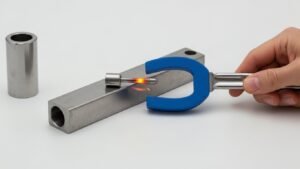
The 400 series is magnetic because of its ferritic or martensitic microstructure, which is ferromagnetic. Unlike the austenitic structure of the 300 series, 400-series steels have a high relative magnetic permeability (µᵣ ≈ 500–2000), causing them to attract and retain magnets.
Does 430 stainless steel rust easily?
Not in mild environments. Grade 430 offers good resistance to fresh water, organic acids, and nitric acid, especially when highly polished. However, it is more susceptible to pitting in saltwater or chloride environments compared to 304 or 316 grades.
Can you harden 304 stainless steel?
AISI 304 cannot be hardened by heat treatment. It can only be hardened through cold working processes such as rolling, drawing, or forming. While its annealed hardness is typically ≤ 215 HB Brinell, cold work can significantly increase its tensile strength beyond the standard 500–700 MPa range.
Why is 400 series cheaper than 300 series?
The cost difference is driven by nickel content. 400 series grades contain little to no nickel (≤0.75%), whereas 304 contains ~8–10.5%. Because nickel is a major cost driver, 400 series raw materials are roughly 30–50% cheaper; specifically, 304 is approximately 50% more expensive than 410 stainless.
Which 400 series grade is best for knives?
Grade 440C is the industry standard for high-quality knives. It contains 0.95-1.20% carbon and 16-18% chromium, allowing it to reach a hardness of 58-60 HRC, which provides the best balance of edge retention and corrosion resistance for cutlery.