Skip to content


In the world of industrial infrastructure, the term “rust-proof” is a costly misconception that often hides the reality of localized failure and systemic downtime. For B2B procurement and engineering teams, failing to account for specific environmental triggers—such as operating temperatures exceeding 50–60°C—can lead to rapid stress corrosion cracking even when the material surface appears pristine. Achieving true corrosion resistance requires a shift from general material assumptions to precise, data-driven alloy selection that protects your long-term assets and operational bottom line.
This guide provides a technical roadmap for navigating material selection in harsh environments, exploring the microscopic mechanics of the self-healing chromium-oxide passive layer and its limitations in high-chloride settings. We will analyze critical performance metrics like the Pitting Resistance Equivalent Number (PREN), compare the mechanical advantages of 316L versus Duplex 2205 (which provides a yield strength up to 550 MPa), and detail the ISO 9223 standards necessary to engineer for a 50-to-75-year maintenance-free lifecycle.
The Myth of the “Rust-Proof” Material
Stainless steel is not universally ‘rust-proof’ but rather ‘corrosion-resistant.’ Its protection depends on a thin, self-healing chromium-oxide film (requiring ≥10.5% Cr). When exposed to high chlorides, stagnant liquids, or temperatures above 50–60°C, this layer can fail, leading to localized pitting or stress corrosion cracking.
The Passive Layer: How Chromium-Oxide Film Functions
The fundamental corrosion resistance of stainless steel relies on the formation of a passive chromium-oxide film. This microscopic barrier forms spontaneously when the chromium content of the iron alloy reaches at least 10.5% to 12% by weight. Unlike the flaky iron oxide (rust) found on carbon steel, this chromium-oxide layer is tenacious, non-porous, and prevents further oxidation of the underlying metal substrate.
A critical feature of this layer is that it is “self-healing” in the presence of oxygen. If the surface is scratched or mechanically damaged, the exposed chromium reacts with ambient oxygen to reform the protective film immediately. However, this protection is not absolute. The layer can be destabilized by environments with very low pH, exposure to high-velocity abrasive particles, or chemical depletion. In benign or controlled environments, 304 stainless steel can exhibit corrosion rates as low as 0.02 mpy (mils per year), which often creates the illusion of the material being truly rust-proof, though it is technically just maintaining a stable state of passivity.
Environmental Limits and Localized Failure Modes
Technical performance data indicates that austenitic grades, such as 304 and 316, face significant environmental limits. These alloys are particularly susceptible to stress corrosion cracking (SCC) in chloride-rich environments once operating temperatures exceed 50–60 °C. At these temperatures, the combination of tensile stress and localized chemical attack can cause rapid, catastrophic failure even if the general surface of the material appears unaffected.
Localized failure also occurs through pitting and crevice corrosion. These mechanisms are triggered when the alloy’s chemistry—specifically its Chromium, Molybdenum, and Nitrogen levels—is insufficient to resist chloride ions. This resistance is often measured via the Pitting Resistance Equivalent Number (PREN). Pitting occurs on open surfaces, while crevice corrosion initiates in stagnant gaps under gaskets, deposits, or lap joints where oxygen is limited, preventing the passive film from reforming.
Furthermore, stainless steel can undergo sensitization during welding or high-heat exposure within the 425–860 °C range. In this state, chromium carbides precipitate at the grain boundaries, depleting the surrounding area of chromium and making the metal vulnerable to intergranular corrosion. To mitigate this, engineers specify “L-grades” like 304L or 316L, which restrict Carbon content to ≤0.03%. For extreme chemical environments, such as sulfuric acid concentrations above 10%, standard 316 stainless will fail, requiring an upgrade to more robust alloys like 904L or Duplex 2205.
Primary Corrosion Mechanisms in Industrial Environments
Industrial corrosion is driven by electrochemical cells formed in the presence of electrolytes and humidity (>60%). Major mechanisms include uniform atmospheric attack, chloride-induced pitting and crevice corrosion in stainless steels, and galvanic coupling. These are quantified using ISO 9223 standards, which classify environments from C1 to CX based on first-year metal loss.
Uniform and Localized Degradation Mechanisms
Uniform atmospheric corrosion of carbon and weathering steels is primarily driven by relative humidity exceeding 60% and the presence of airborne SO2 and NOx contaminants. This electrochemical process results in a relatively even loss of metal across the entire exposed surface, which is managed through calculated corrosion allowances and protective coating systems.
Localized pitting and crevice corrosion represent a severe threat to passive alloys, such as 304 and 316L stainless steels. These mechanisms are typically triggered by exposure to chlorides or stagnant process brines. In pitting, the breakdown of the chromium-rich passive film at discrete sites creates small anodic pits; within these pits, hydrolysis lowers the pH and concentrates chlorides, making the corrosion self-sustaining and capable of rapid penetration.
Galvanic corrosion occurs at dissimilar metal junctions where an electrolyte is present. The severity of the attack is governed by the potential difference between the metals and the anode-to-cathode area ratio. A small anodic area coupled with a large cathodic area—such as carbon steel fasteners in a large stainless steel assembly—causes extremely high current density and accelerated failure of the less noble material.
Stress Corrosion Cracking (SCC) poses a critical risk for austenitic stainless steels in hot chloride environments or high-strength steels exposed to H2S. This mechanism leads to sudden brittle fracture under tensile stress without significant prior wall loss. Prevention strategies include environment control and the application of stress-relief heat treatments to minimize residual stresses from welding or forming.
Industrial Standards and Corrosivity Classifications
The ISO 9223 standard provides a technical framework for classifying atmospheric corrosivity based on first-year metal loss. Categories range from C1 (very low, ≤10 µm/year) to CX (extreme, >1,500–5,500 µm/year). These classifications are fundamental for material selection and determining the required durability of protective coatings in various industrial microclimates.
For the protection of sensitive electronic hardware and control rooms, the ISA S71.04-1985 standard defines gas corrosivity classes from G1 to GX. This rating system focuses on the corrosion risk to copper tracks and silver components on printed circuit boards, ensuring the reliability of automation systems in environments contaminated with reactive gases.
Intergranular corrosion occurs when austenitic stainless steels are sensitized in the 500–800 °C range, leading to chromium carbide precipitation at grain boundaries. To mitigate this, industrial specifications often mandate the use of low-carbon ‘L’ grades, such as 316L, or stabilized alloys containing Titanium or Niobium, which prevent the depletion of chromium near the grain boundaries.
Microbiologically Influenced Corrosion (MIC) is frequently monitored in stagnant water systems and buried infrastructure. Sulfate-reducing bacteria and other microbes colonize metallic surfaces, forming biofilms that accelerate pitting on carbon steel. Control involves the use of biocides, regular pigging of pipelines, and maintaining fluid velocities to prevent the establishment of microbial colonies.
Quantifying Resistance: PREN Values and Technical Specifications
The Pitting Resistance Equivalent Number (PREN) is a mathematical calculation—typically %Cr + 3.3 x %Mo + 16 x %N—used to rank the pitting corrosion resistance of stainless steels in chloride-rich environments. Higher values indicate superior protection, with scores above 40 signifying suitability for extreme conditions like seawater or sour gas service.
| Stainless Steel Grade | Material Classification | Typical PREN Value |
|---|---|---|
| 304 / 304L | General Purpose Austenitic | 19 |
| 316 / 316L | Standard Marine Austenitic | 24 |
| Duplex 2205 | Dual-Phase High Strength | 36 |
| Super Duplex 2507 | Offshore / Oil & Gas Grade | 41 |
| 254 SMO | High Chloride (6% Moly) | 43 |
| 1.4529 (A8-80) | Ultra-Corrosion Resistant | 47 |
The PREN Formula: Calculating Localized Corrosion Resistance
The Pitting Resistance Equivalent Number (PREN) provides a standardized mathematical framework for quantifying the localized corrosion resistance of various stainless steel alloys. For most ferritic and austenitic grades, the industry standard calculation is PREN = %Cr + 3.3 x %Mo + 16 x %N. This formula highlights the critical role of Chromium in forming the primary passive film, while Molybdenum is weighted 3.3 times more heavily due to its superior ability to stabilize that film against breakdown by aggressive chloride ions.
In the case of duplex stainless steels, the formula is modified to PREN = %Cr + 3.3 x %Mo + 30 x %N. The increased coefficient for Nitrogen (30 instead of 16) reflects the element’s significantly higher efficacy in dual-phase microstructures, where it accelerates the repassivation of localized pits. Furthermore, for specialized super alloys containing Tungsten (W), the formula is adjusted to PREN = %Cr + 3.3 x (%Mo + 0.5 x %W) + 16 x %N to account for the synergistic protection offered by tungsten in preventing crevice and pitting attacks.
Grade Benchmarks and Critical Industry Thresholds
Evaluating material suitability often begins with comparing grade benchmarks against environmental demands. Standard 304 stainless steel, with a PREN of approximately 19, is limited to general-purpose applications with minimal chloride exposure. In contrast, 316 stainless steel (PREN 24) offers medium resistance suitable for many coastal environments, yet it remains vulnerable to crevice corrosion in warm, stagnant seawater. For higher mechanical strength and improved resistance, Duplex 2205 (PREN 36) serves as the bridge between standard grades and high-performance super alloys.
For extreme environments, a PREN > 40 is established as the critical threshold for full resistance to pitting and crevice corrosion in seawater. This benchmark is typically met by Super Duplex 2507 (PREN 41) and 254 SMO (PREN 43). Regulatory compliance standards, including NACE MR0175/ISO 15156 for sour service (H2S) and Norsok M-650 for offshore applications, mandate these high PREN values to ensure long-term structural integrity. HnL STEEL ensures these performance metrics are strictly verified through detailed Material Test Certificates (MTC) and adherence to ISO 9001:2015 standards, guaranteeing reliability in critical infrastructure projects.
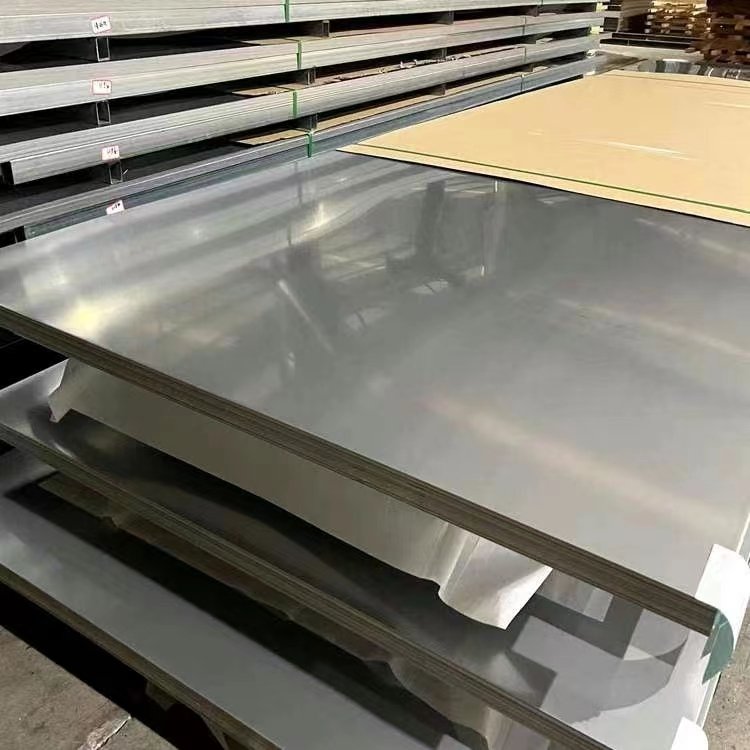
High-Performance Stainless Steel Sheets for Any Project
Material Selection: Comparing 316L vs. Duplex Stainless Steel
316L is a standard austenitic grade (PREN 24–26) ideal for coastal and mild chloride settings, while Duplex 2205 (PREN 35–37) offers nearly double the yield strength and superior resistance to stress corrosion cracking (SCC) and pitting for aggressive offshore or chemical processing applications.
| Technical Property | 316L Stainless Steel | Duplex 2205 (S32205) |
|---|---|---|
| Microstructure | Fully Austenitic | 50% Austenite / 50% Ferrite |
| Yield Strength | 200–250 MPa | 450–550 MPa |
| PREN (Pitting Resistance) | 24–26 | 35–37 |
| Tensile Strength | ~515 MPa | ≥620 MPa |
| Elongation (Ductility) | ~40% | 25–30% |
Microstructure and Corrosion Resistance Profiles
The fundamental difference between these materials lies in their atomic arrangement. 316L features a fully austenitic microstructure, providing excellent general corrosion resistance and weldability. In contrast, Duplex grades like S32205 maintain a balanced dual-phase microstructure consisting of approximately 50% austenitic and 50% ferritic phases. This metallurgical synergy allows Duplex to inherit the corrosion resistance of austenite and the high strength and stress resistance of ferrite.
Localized corrosion resistance is quantified by the Pitting Resistance Equivalent Number (PREN). Duplex 2205 achieves a PREN of 35–37, significantly outperforming the 24–26 range of 316L. This makes Duplex the superior choice for high-chloride environments where pitting and crevice corrosion are primary concerns. Furthermore, while 316L is notoriously susceptible to chloride-induced stress corrosion cracking (SCC), the ferritic phase in Duplex provides inherent resistance to this failure mode, even at elevated temperatures.
To achieve these enhanced profiles, Duplex utilizes a more complex chemical composition. It incorporates higher levels of Chromium (Cr), Molybdenum (Mo), and Nitrogen (N) compared to 316L. These elements work together to stabilize the dual-phase structure and provide a robust passive film that protects the underlying metal in aggressive chemical processing or marine settings.
Mechanical Specifications and Industrial Use Cases
From a structural engineering perspective, Duplex 2205 offers a massive advantage in load-bearing capacity. It exhibits a yield strength of 450–550 MPa, which is roughly double that of 316L. This high strength-to-weight ratio allows for “down-gauging”—using thinner material sections for pressure vessels, piping, and tanks without sacrificing safety or integrity. This often offsets the higher material cost per kilogram by reducing the total weight of the structure.
However, the increased strength of Duplex comes with a trade-off in formability. 316L retains higher ductility, with typical elongation values of around 40%, compared to the 25–30% found in Duplex. This makes 316L significantly easier to cold-work and form into complex architectural or industrial shapes. For applications involving extreme fabrication or very tight bends, the austenitic properties of 316L remain highly advantageous.
The selection between these two grades is ultimately driven by the severity of the operating environment. 316L is the industry standard for food processing, pharmaceutical cleanrooms, and coastal hardware. Duplex 2205 is the requisite choice for more demanding industrial applications, including desalination plants, offshore oil and gas platforms, and high-pressure chemical reactors where 316L would face rapid degradation or catastrophic stress-related failure.
Operational Factors: pH, Temperature, and Chloride Concentration
Corrosion resistance is not static; it depends on the interaction of chloride levels, temperature, and pH. While alkaline environments (pH >12) can stabilize passive films even at high chloride concentrations, rising temperatures and acidic conditions (pH <7) drastically lower the threshold for pitting and stress corrosion cracking (SCC), particularly in austenitic stainless steels.
The Synergistic Effect of pH on Chloride Thresholds
The acidity or alkalinity of an environment serves as the primary arbiter of the critical chloride concentration required for depassivation. In highly alkaline environments, such as fresh concrete pore solutions with a pH of 12.5, the passive films on stainless alloys are exceptionally robust. Research indicates that AISI 316 and Duplex 2205 can maintain passivity at chloride concentrations as high as 2.0 M (≈71,000 ppm) and 3.5 M (≈124,000 ppm), respectively. This stability is characterized by low corrosion current densities (i_corr < 0.05 µA/cm²) and negligible material loss, effectively rendering the steel immune to chloride-induced attack at room temperature.
However, this protective mechanism is highly sensitive to pH fluctuations. As the environment shifts toward neutral or carbonated levels (pH 9.0), the allowable chloride threshold for these high-performance alloys decreases significantly. Carbon steels, such as HRB400 and HRB500, are even more susceptible to these changes; even in high-pH environments, they can depassivate at chloride levels as low as 350 to 1,800 ppm. In potable-like water systems where pH typically ranges from 6.5 to 9, pitting and crevice corrosion on stainless surfaces generally only manifest when chloride levels exceed 6,000 ppm, provided that temperatures remain low and the surface remains fully submerged.
Temperature Limits and Chloride Stress-Corrosion Cracking (SCC)
Temperature acts as a thermal catalyst that accelerates depassivation and facilitates localized attack. According to guidelines from the Specialty Steel Industry of North America (SSINA), chloride stress-corrosion cracking (SCC) in austenitic grades like 304L and 316L is rarely observed below 60°C. Despite this, failures have been documented at levels as low as 10 ppm Cl⁻ in specific industrial contexts—most notably where evaporation occurs at wet/dry interfaces or on heat-rejection surfaces, leading to localized chloride concentrations that far exceed bulk water measurements.
Engineering standards for specialized equipment, such as Alfa Laval plate heat exchangers, provide stringent operational boundaries to prevent crevice corrosion. For SS316 components in environments with a pH of 7–9, the maximum allowable chloride concentration is approximately 300–400 ppm at 50°C, but this limit is slashed to 100–200 ppm as the operating temperature reaches 80°C. The Nickel Institute further notes that Type 304 stainless is generally satisfactory for long-term service in water with chlorides below 200 ppm, whereas levels up to 1,000 ppm are deemed only marginally satisfactory and are highly dependent on maintaining moderate temperatures.
For the most demanding applications, such as sour-service environments in the oil and gas sector, the interaction of temperature and chemistry is governed by international standards like ISO 15156 / NACE MR0175. These standards define safe-use envelopes for Duplex 2205 and super-duplex alloys by evaluating the simultaneous impact of chloride content, H₂S partial pressure, and in-situ pH. In these scenarios, lowering the pH or increasing the temperature shifts the alloy into an active-passive transition region, drastically reducing the threshold stress required to initiate cracking and requiring a shift to higher-alloyed materials to ensure structural integrity.
Conclusion: Engineering for Long-Term Reliability
Long-term reliability is achieved by moving beyond generic material labels to performance-based engineering. This involves setting 50-to-75-year design lives, adhering to ISO 13823 lifecycle standards, and validating materials through specific metrics like ≤0.05 mm/year corrosion rates or 1,000-hour ASTM B117 salt spray benchmarks.
Lifecycle Design Frameworks and Service Life Targets
Engineering for long-term corrosion reliability relies on prescriptive design standards rather than subjective material assessments. By adopting AASHTO LRFD frameworks, engineers can target a 75-year service life for bridge structures and a 50-year maintenance-free design life for drainage and culvert systems. Central to this methodology is the utilization of ISO 13823, which establishes a comprehensive “corrosion control engineering life cycle.” This standard integrates corrosion management from the earliest conceptual design phases through to decommissioning, ensuring that structural integrity is not compromised by environmental degradation over time.
For reinforced concrete in aggressive environments, such as high-sulfate soils exceeding 2,000 ppm, durability is dictated by rigorous mix design parameters. This includes the mandatory use of Type V cement, a maximum water-to-cement (w/c) ratio of 0.45, and a minimum compressive strength (f’c) of 4,500 psi. Furthermore, cost-benefit analyses from agencies like TxDOT indicate that high-durability reinforcement—including stainless steel, Glass Fiber Reinforced Polymer (GFRP), and low-carbon chromium (LCCR)—typically adds only a 2–4% premium to the total structure cost while drastically extending the time-to-corrosion initiation and overall service life.
Performance-Based Testing and Material Validation
Material validation requires specific, quantitative metrics to verify longevity. In the oil and gas industry, Corrosion Resistant Alloys (CRAs) like duplex and super duplex are selected based on a hard acceptance criterion of ≤0.05 mm/year (2 mils/year) for generalized corrosion in specific service environment diagrams. To correlate laboratory results with field performance, NASA-STD-6012A provides a data-driven bridge, requiring 60 days of ASTM G85 A5 cyclic testing to represent every three months of expected seacoast exposure, with total durations often reaching up to 240 days for year-long environmental validation.
Surface protection systems are similarly held to rigorous thickness and performance benchmarks. Hot-Dip Galvanized (HDG) coatings applied to construction fasteners can reach thicknesses of 127 µm, enabling them to achieve between 1,000 and 1,500 hours of ASTM B117 salt spray performance without the appearance of red rust. In electrical infrastructure, strict adherence to UL 6 and NEC 300.6 for zinc-coated and organically coated conduits ensures that raceways remain functional in harsh industrial environments. These standards collectively ensure that long-term reliability is a product of measurable corrosion rates, verified coating thicknesses, and validated test durations.
Final Thoughts
The ultimate verdict for industrial engineers is that stainless steel is not a universal “set-and-forget” solution, but a precision tool that must be matched to its specific chemical and thermal environment. Success in harsh applications depends on moving beyond generic grade labels to a data-driven assessment of the passive layer’s stability. By leveraging technical metrics like PREN values and understanding the specific failure thresholds for chloride-induced pitting and stress corrosion cracking, organizations can transition from reactive maintenance to proactive material selection that guarantees performance in even the most aggressive microclimates.
The long-term implication for B2B stakeholders is that the true cost of corrosion is measured in lifecycle reliability rather than initial procurement. Implementing rigorous validation frameworks—such as ISO 13823 for design life and ASTM testing for environmental correlation—ensures that critical infrastructure remains functional for its intended 50-to-75-year lifespan. By prioritizing high-performance alloys like Duplex 2205 or Super Duplex for extreme environments and insisting on strict MTC verification, engineers can secure structural integrity, reduce total cost of ownership, and eliminate the risk of catastrophic material failure in high-stakes industrial operations.
Frequently Asked Questions
Why is my stainless steel rusting despite its name?
Stainless steel rusts when its protective chromium-oxide passive layer is locally destroyed or surface chromium content drops below 12%. Common triggers include chloride exposure (salt/pool water), iron contamination, or heat-affected zones from welding between 900–1,550°F (480–840°C) that deplete the protective layer.
What is PREN and how does it relate to corrosion resistance?
PREN (Pitting Resistance Equivalent Number) is a metric used to compare pitting resistance based on chemical composition (Cr, Mo, N). Steels with a PREN >32 are considered seawater resistant, while high-performance duplex steels for hydrogen sulfide environments typically require a PREN ≥40.
How can I prevent galvanic corrosion between dissimilar metals?
To stop galvanic corrosion, select materials with a corrosion rate not exceeding 0.009 mil/year in immersed conditions. Effective methods include inserting 3-4 mm thick non-conductive PTFE barriers, applying sacrificial coatings to the cathodic member, or ensuring the cathode area is smaller than the anode area.
Is 304 stainless steel resistant to salt water?
No, 304 stainless steel is not recommended for seawater or chloride-containing media. With a PREN value of only 17.5-21.1, it lacks the molybdenum required to prevent pitting and crevice corrosion in marine environments, unlike 316 stainless steel.
What is passivation and why is it necessary?
Passivation is a chemical treatment (governed by ASTM A967 or AMS 2700) using nitric or citric acid to remove free iron and surface contaminants. This process restores the chromium oxide (Cr2O3) passive layer, typically less than 0.000001 inches thick, which is essential for long-term corrosion resistance.
Can industrial chemicals actually dissolve stainless steel?
Yes. Concentrated industrial chemicals such as hydrochloric acid (HCl), sulfuric acid (H₂SO₄), and hydrofluoric acid (HF) cause rapid corrosion attack. For example, 316L is rated as ‘Severe Effect – Not Recommended’ for use with concentrated hydrochloric acid (20–100%), as it will effectively dissolve the material.