Skip to content


For B2B fabricators, the margin between a high-performance stainless steel component and a failed, rusting joint often comes down to precise thermal management and metallurgical integrity. Because stainless steel possesses a thermal expansion coefficient 50% higher than mild steel, improper technique leads to immediate warping and sensitization, compromising both structural life and client trust.
This guide outlines the technical best practices for welding stainless steel, from optimizing pulse parameters for 16-gauge sheets to selecting micro-TIG power sources capable of 5–1200 A outputs. We also examine essential post-weld care, including ASTM A967 passivation and adherence to AWS D1.6 standards, to help your shop maintain the precision required for high-stakes industrial applications.
Understanding Stainless Steel Metallurgy for Fabricators
Fabrication success depends on the metal’s crystalline structure—primarily austenitic, ferritic, or martensitic. Austenitic 300-series grades are preferred for their ductility, while metallurgical risks like sensitization (chromium depletion) during welding are managed using low-carbon ‘L’ grades or stabilized alloys to maintain corrosion resistance.
Main Alloy Families and Their Fabricability Characteristics
The primary metallurgical categories in stainless steel fabrication are defined by their crystalline structures, with austenitic 300-series alloys like 304 and 316 being the most prevalent. These grades offer superior ductility, making them ideal for cutting, crimping, and bending, though they possess significantly higher yield strengths and work hardening rates compared to standard carbon steel. Fabricators must account for this rapid hardening by adjusting tool pressures and speeds to prevent glazed surfaces or premature tool wear during shop operations.
Ferritic and martensitic variants present distinct mechanical behaviors; while ferritic grades such as 1.4509 and 1.4521 (containing 2% Molybdenum) are generally harder, they remain highly fabricable, especially when stabilized with Niobium or Titanium additions to improve weldability. Martensitic grades, containing 11-17% Chromium and up to 0.4% Carbon, are reserved for specialized high-strength applications where hardness is paramount. However, fabricators should note that free-machining resulfurized grades like 303 are prone to splitting under longitudinal deformation or heavy flattening.
Chemical Stabilization and Corrosion Standards (EN 10088/EN 1090)
Ensuring weld integrity requires a rigorous approach to sensitization mitigation. During the welding process, standard stainless steels can suffer from chromium carbide precipitation at grain boundaries, leading to chromium depletion and subsequent intergranular corrosion. To prevent this, fabricators utilize low-carbon “L” grades such as 316L and 1.4307, or stabilized alloys like 1.4571, which incorporate Titanium (Ti) or Niobium (Nb) to tie up carbon and preserve the material’s chemical stability after heat exposure.
Selection for corrosive environments is further guided by the Pitting Resistance Equivalent (PRE) metric, a calculated value based on Chromium, Molybdenum, and Nitrogen content that predicts resistance to pitting and crevice attack. Strict adherence to regulatory standards is essential for structural longevity; EN 10088 defines precise material compositions, while EN 1090 governs the technical requirements for fabrication, erection, and welding. Following these standards, alongside post-weld passivation to restore the passive chromium oxide layer, is critical for preventing localized corrosion in weld zones.
Why Stainless Steel Welds Rust and How to Prevent It
Stainless steel welds rust due to sensitization—where chromium is depleted between 425–815°C—or surface contamination like embedded iron and heat tint. Prevention involves using low-carbon ‘L’ grades (C ≤ 0.03%), stabilized alloys (321/347), or duplex grades, followed by post-weld passivation according to ASTM A380 standards.
| Corrosion Mechanism | Technical Cause | Prevention / Standard |
|---|---|---|
| Sensitization (Weld Decay) | Cr-carbide formation at 425–815°C | Use “L” Grades (C ≤ 0.03%) |
| Surface Rust Spots | Embedded free iron from tools | ASTM A380 Passivation |
| Pitting Initiation | Heat tint oxides on weld bead | Mechanical/Chemical cleaning |
| Intergranular Attack | Chromium depletion in the HAZ | Stabilized Grades (321/347) |
Metallurgical Causes: Sensitization and Surface Contamination
Stainless steel welds rust primarily because the welding thermal cycle and fabrication practices locally destroy or weaken the alloy’s passive chromium-oxide (Cr₂O₃) film. In austenitic grades like Type 304 and 316, holding the Heat Affected Zone (HAZ) between 425–815°C allows carbon to combine with chromium at grain boundaries, forming chromium carbides. This depletion of chromium below the threshold necessary to maintain a passive film results in “weld decay” and intergranular corrosion, making the joint susceptible to rapid oxidation in service.
Beyond bulk metallurgy, surface conditions play a critical role. Technical data indicates that new stainless fabrications showing rust spots at or near welds are nearly always the result of embedded free iron. This contamination originates from carbon-steel tools, wire brushes, or grinding dust. Additionally, the presence of heat tint oxides—discolorations formed during welding—reduces local corrosion resistance and acts as an initiation site for pitting and crevice corrosion. Furthermore, Type 304 has a thermal expansion coefficient 50% higher than mild steel, which can lead to distortion and the formation of crevices that harbor corrosive agents.
Prevention Strategies: Alloy Selection and ASTM A380 Standards
Effective prevention begins with strategic alloy selection to minimize carbide precipitation in the HAZ. Utilizing low-carbon “L” grades, such as 304L or 316L (where carbon is limited to ≤ 0.03 wt%), significantly reduces the risk of sensitization. Alternatively, stabilized grades like 321 (titanium-stabilized) or 347 (niobium-stabilized) can be employed; these alloys bind carbon with Ti or Nb, keeping chromium in solid solution and maintaining the protective oxide layer even after multiple thermal cycles.
For aggressive environments involving high chloride concentrations, engineers often specify duplex alloys (22% Cr) or super duplex (25% Cr), which are inherently resistant to intergranular corrosion and pitting. Regardless of the alloy used, post-weld treatment is mandatory for maximum durability. Fabricators must execute cleaning and passivation according to ASTM A380 standards. This process involves the chemical removal of embedded iron and heat tint, followed by a passivation treatment that accelerates the re-formation of a robust, uniform chromium-oxide layer on the weld bead and adjacent surfaces.
Essential Equipment for Precision Welding
Precision welding of stainless steel requires a specialized hardware stack centered on micro-TIG power sources capable of 5–1200 A outputs, high-purity Argon 4.6 shielding gas, and precision fixturing that enables dimensional tolerances as tight as ±0.003 inches.
High-Precision Power Sources and Pulse Control
Precision stainless steel welding demands power sources with exceptional low-end stability, typically offering an output current range from 5 A to 1200 A. For thin-gauge materials, micro-TIG units are essential to provide the necessary control over arc energy, preventing the burn-through common with standard industrial equipment. Medium-frequency inverter systems (MFDC) operating at 1 kHz–10 kHz further enhance stability, focusing the arc to reduce the heat-affected zone (HAZ) and maintain the metallurgical properties of the alloy.
Advanced pulse duration control is the primary mechanism for managing heat input during high-accuracy joins. Operators utilize pulse adjustments between 0.1 and 34 ms with 1–100% strength modulation to precisely tune the weld bead. These systems often feature high-speed spot-weld sequences up to 3.3 Hz and maintain industrial safety standards through CE mark and GS certifications. Modern precision units are also designed for high efficiency, typically consuming 1000 VA during active welding and as little as 15 W in standby mode.
Ancillary Precision Tools and Atmospheric Shielding
Atmospheric purity is critical in stainless steel applications to prevent oxidation and post-weld corrosion. The process requires ultra-pure Argon (Grade 4.6, > 99.9%) shielding gas delivered at approximately 2 L/min. To ensure the weld zone is fully protected, industrial systems from manufacturers like Lampert or Sunke integrate automated gas pre-flow, which purges the environment before arc ignition. This is complemented by the use of non-consumable tungsten electrodes, specifically sized between 0.6 and 1.3 mm, to maintain a focused arc on materials ranging from 0.1 to 2 mm in thickness.
The mechanical side of precision welding relies on rigid-bed fixturing and digital weld lathes to achieve strict dimensional tolerances. Properly equipped cells can maintain length tolerances of ±0.003 inches (±0.076 mm) and angular accuracy within 0.5°. For high-volume production, closed-loop monitoring systems are employed to track current and voltage in real time, ensuring that every weld cycle remains consistent. This hardware configuration allows for the creation of extremely fine weld seams, often reaching thicknesses as low as 0.020 inches (0.5 mm).
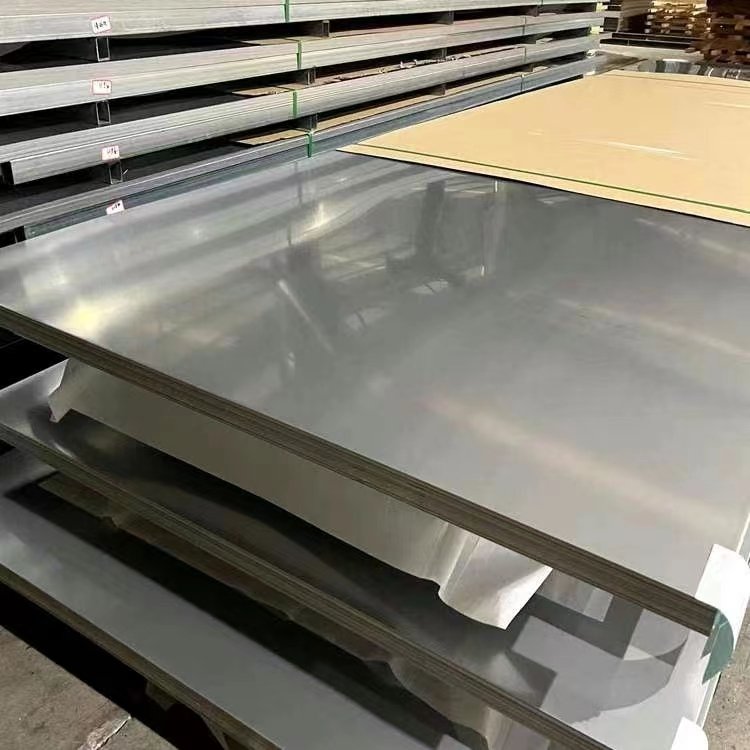
High-Performance Stainless Steel Sheets for Any Industry
Optimizing Pulse Parameters for Thin-Gauge Sheets
Optimizing pulse parameters for thin-gauge stainless steel—specifically 16 ga (1.5mm) 304 sheets—requires balancing peak amperage and pulse frequency to manage total heat input. By employing settings between 1–10 PPS and 40–60% duty cycles, fabricators can prevent warping and burn-through while achieving consistent penetration and high-quality aesthetic beads.
| Joint Configuration | Pulse Frequency (PPS) | Key Pulse Parameters |
|---|---|---|
| Autogenous Outside Corner (16 ga) | 1 PPS | 30% Duty Cycle, 5% Background Current |
| Lap Joint Optimization (16 ga) | 2 PPS | 50% Pulse Width, 20% Background, 69A Peak |
| Filler Addition (16 ga) | 10 PPS | 75% Peak / 25% Background, 55–60A Peak |
| Precision Edge Work (0.030″) | 39 PPS | 50% Pulse Width, 30% Background Current |
Heat Management Principles for Thin Stainless Sheets
A fundamental rule of thumb for welding thin-gauge stainless steel is establishing a base current of approximately 1 ampere per 0.001 inch of material thickness. For standard 16-gauge (0.060″) 304 stainless steel, this translates to a non-pulsed baseline of 60A. When configuring pulse settings, it is essential to set the peak amperage higher than this baseline to maintain sufficient average heat input, as the current spends a significant portion of the cycle at a much lower background level.
The pulse-on-time, or duty cycle, serves as the primary window for controlling penetration depth versus heat accumulation. A recommended starting range of 40–60% peak time is ideal for 16-gauge applications, providing enough time at peak current to achieve fusion without overheating the surrounding base metal. High duty cycles increase total heat input and the risk of distortion, whereas lower duty cycles provide more cooling time for the heat-affected zone.
Utilizing low-frequency thermal control, specifically between 1 and 2 pulses per second (PPS), is a highly effective strategy for autogenous joints where no filler metal is used. This low frequency allows the weld puddle to momentarily “freeze” or solidify between peaks, which is critical for preventing burn-through on thin sheets. This technique also helps the operator maintain a consistent travel speed and rhythm, resulting in a stack-of-dimes aesthetic on outside corners and lap joints.
Proven Pulse Settings for 16-Gauge (1.5mm) Applications
Field applications for 16-gauge stainless steel demonstrate that joint geometry dictates specific pulse envelopes. For autogenous outside corners, a setting of 1 PPS with a very low 5% background current and 30% duty cycle is proven to minimize distortion on 304 stainless. In contrast, lap joint optimization often requires 2 PPS with a 20% background current and 50% pulse width, utilizing a slightly higher main amperage of 69A to ensure consistent penetration through the overlapping sheets.
When filler metal addition is necessary, increasing the frequency to 10 PPS with a 75% peak and 25% background split offers a more stable environment for wire placement. Using 55–60A peak current with a 1/16″ tungsten and a #8 gas cup ensures the arc remains concentrated. For even thinner materials, such as 0.030″ stock, settings like 39 PPS with 30% background current help stabilize the arc on delicate edges, preventing the material from burning away before a bead can be established.
Advanced industrial machines allow for high-frequency pulsing exceeding 100 PPS, often reaching up to 500 PPS. These settings provide a significantly stiffer arc and deeper penetration profile, which is advantageous for automated or high-speed manual travel on narrow joints. By concentrating the arc energy, high-frequency pulsing reduces the width of the heat-affected zone, which is paramount when working with extremely thin stainless steel where thermal expansion and warping are primary concerns.
Post-Weld Passivation and Surface Care
Post-weld passivation is a critical chemical process that removes free iron and surface contaminants from stainless steel (e.g., 304/316) to restore its natural 1-3 nm chromium oxide layer. By adhering to ASTM A967 standards, this treatment prevents rust and ensures the material’s integrity in corrosive environments.
The Science of Passivation: Restoring the Chromium Oxide Layer
Welding, grinding, and machining processes inevitably introduce free iron contaminants that disrupt the passive film of stainless steel, creating sites for localized corrosion or “weld-area rust.” Passivation addresses this by using nitric or citric acid to selectively remove surface iron while promoting the formation of a protective, chromium-enriched oxide layer. This transparent barrier, typically measuring between 1 and 3 nanometers thick, is the primary mechanism that keeps the alloy inert.
This treatment is particularly essential for 304 and 316 stainless steel grades to ensure the material remains resistant to oxidation in chloride-rich or aggressive industrial settings. While natural air passivation does occur over a 24-48 hour window after the metal is exposed to oxygen, chemical immersion is required in professional fabrication to ensure complete contaminant removal and surface uniformity that natural exposure cannot guarantee.
Technical Specifications and ASTM A967 Verification
Standardized passivation requires strict adherence to ASTM A967 and AMS 2700 protocols. These specifications often mandate immersion times of 20 to 30 minutes in acid baths, frequently heated to 120-140°F to catalyze the reaction. Chemical solutions typically involve nitric acid (often with sodium dichromate) or biodegradable citric acid concentrations, depending on the specific requirements of the project and the alloy being treated.
To confirm the success of the process, the passive layer must be verified through rigorous testing. Standardized methods include salt spray, high-humidity, copper sulfate, or potassium ferricyanide-nitric acid tests to detect any remaining free iron. For modern workshops, electrolytic cleaning systems like the TIG Brush offer a highly effective alternative, achieving 100% passivation and immediate surface restoration without the safety hazards associated with traditional pickling pastes or heavy bulk acids.
Conclusion: Maintaining Quality Standards in B2B Fabrication
Maintaining B2B quality standards requires strict adherence to international codes like AWS D1.6 and ASME Section IX, alongside precise metallurgical control—specifically maintaining delta-ferrite levels between 5-15% and heat input at 25 kJ/in. This rigor, combined with ISO 9001:2015 certifications and non-destructive testing, ensures long-term structural integrity and corrosion resistance.
Adherence to International Welding Codes and Certifications
Professional stainless steel fabrication for B2B applications is fundamentally rooted in compliance with global standards, specifically the AWS D1.6 Structural Welding Code and ASME Section IX. These codes establish the necessary benchmarks for material qualifications and the validation of welding procedures, ensuring that every weldment can withstand its intended design stress. To maintain absolute transparency and quality, the procurement process requires Material Test Certificates (MTC) for all orders, providing full traceability for stainless steel sourced from top-tier mills such as Tisco and Baosteel.
Furthermore, the integration of ISO 9001:2015 quality management systems ensures that fabrication workflows are consistent and documented. For high-integrity industrial projects, optional third-party inspections conducted by agencies like SGS or BV offer an additional layer of verification. These practices align with NRC Safety Guide 31 and ABS fabrication rules, guaranteeing that the finished products meet the stringent safety functions required in heavy industrial and maritime environments.
Technical Parameter Control and Nondestructive Testing
The technical performance of a weld is largely determined by metallurgical precision, particularly the management of delta-ferrite content. In common austenitic grades like 304L, maintaining delta-ferrite levels between 5% and 15% is essential to minimize microfissuring and prevent elemental segregation. This is achieved through controlled heat input, typically limited to approximately 25 kJ/in, which prevents sensitization and protects the integrity of the material, especially in thin-gauge sheets prone to warping or rust in the heat-affected zone.
To verify the absence of internal defects, fabricators employ rigorous Nondestructive Testing (NDT) methodologies. Radiographic Testing (RT) and Ultrasonic Examination (UT) are standard protocols used to detect internal flaws and ensure the material meets defect-free specifications. For projects involving high-stress or corrosive environments, the use of duplex grades like 2205—featuring 22 wt.% Chromium—is validated through these testing methods to ensure superior resistance to chloride stress corrosion cracking and long-term durability.
Final Thoughts
Mastering precision stainless steel welding is not merely a matter of technical skill but a comprehensive integration of metallurgical science and advanced hardware control. By strictly managing heat input through optimized pulse parameters and adhering to rigorous post-weld passivation protocols, fabricators can eliminate the structural risks of sensitization and surface oxidation. This holistic approach ensures that every joint—whether on thin-gauge 16 ga sheets or complex structural components—consistently maintains the high aesthetic and mechanical standards required in precision-driven B2B sectors.
Ultimately, the transition from standard fabrication to high-precision welding excellence offers significant long-term ROI through reduced rework and enhanced product longevity in corrosive environments. Aligning shop operations with international standards like AWS D1.6 and ASTM A380 does not just fulfill a contractual obligation; it builds a foundation of reliability that is critical for mission-critical applications in medical, aerospace, and food processing industries. In a competitive B2B landscape, the ability to deliver documented, defect-free stainless fabrications remains the ultimate differentiator for professional welding partners.
Frequently Asked Questions
What is the best welder for stainless steel?
TIG (GTAW) and MIG (GMAW) are the industry standards. TIG is preferred for thin-gauge sheets under 5 mm for precise heat control, while MIG is efficient for thicknesses up to 9.5 mm using argon-rich gas (98% Ar/2% CO2) and ER308L wire.
Why does stainless steel warp during the welding process?
Stainless steel warps because it has a 50% higher coefficient of thermal expansion and lower thermal conductivity compared to mild steel. This concentrates heat in the weld zone, leading to uneven expansion and high thermal stresses upon cooling.
Is back-purging required for stainless steel?
Yes, back-purging is essential when welding stainless steel pipe to prevent ‘sugaring’ and oxidation. The root side should be purged with argon at approximately 40 CFH until oxygen levels are at or below 5000 ppm.
Why does my stainless steel weld turn black?
A black weld indicates high-temperature oxidation. This typically happens when travel speeds are too fast (30-60 cm/min), causing the weld to lose shielding gas coverage while still red-hot, or from insufficient gas flow and chromium depletion.
Can you weld stainless steel to carbon steel?
Yes, carbon steel can be joined to austenitic stainless steel using a 309L filler metal to avoid brittle martensite formation. For carbon steel thicker than 30mm or with >0.2% carbon, a preheat of 150°C is required.
What are the specific uses for 308L filler metal?
ER308L filler is used for welding austenitic grades such as 304L, 321, and 347. Its low carbon content (maximum 0.03%) is critical for reducing the risk of intergranular corrosion and carbide precipitation in the weld.