Skip to content


Procurement teams are currently navigating one of the most volatile stainless steel markets in decades, where geopolitical shifts and raw material constraints have turned sourcing into a high-stakes balancing act. With 33% of organizations already reporting delayed orders due to trade barriers and new tariffs projected to cost U.S. industry an additional $22.4 billion, the traditional approach to purchasing is no longer enough to protect your production continuity.
This guide provides a strategic roadmap for managing these vulnerabilities, moving beyond the myth of “on-demand” delivery to address the reality of 4-to-12-week production cycles. We will analyze the impact of Indonesian nickel quotas and South African logistical bottlenecks on price floors, explore quantified risk-scoring frameworks, and outline how to implement technical verifications like Positive Material Identification (PMI) to ensure your supply chain remains resilient through 2025.
Market Overview: Why the Stainless Steel Supply Chain is Volatile
Stainless steel supply chain volatility is primarily driven by raw material ‘pulse’ spikes in nickel and chrome, geopolitical tariff upheavals, and significant inventory imbalances. Currently, 33% of organizations have delayed orders due to trade barriers, while erratic raw material quotas in Indonesia and logistical bottlenecks in South Africa create high price floors despite fluctuating demand.
Raw Material Flux: Indonesian Nickel and South African Chrome Constraints
The global stainless steel market is currently experiencing significant pricing pressure due to upstream constraints in primary raw materials. In Indonesia, RKAB (Work Plan and Budget) quota shortages have triggered “pulse-like” spikes in ferronickel costs. These erratic surges create unpredictable cost bases for mills, a trend that is projected to continue throughout 2025. Because Indonesia is a central hub for global nickel supply, these local regulatory hurdles have immediate and sharp impacts on finished steel pricing worldwide.
Furthermore, South African ferrochrome prices remain stubbornly elevated due to a combination of chronic logistical bottlenecks and rising electricity costs. These structural challenges prevent a downward correction in stainless steel prices even during periods of lower demand, effectively flooring the market at a higher price point. In response to these fluctuating input costs, many mills are shifting their production strategy to prioritize higher-margin specialty grades over standard grades, often timing maintenance cycles to coincide with seasonal demand weakness to manage overhead.
Geopolitical Tariffs and Strategic Inventory Imbalances
Geopolitical volatility and shifting trade policies have become major deterrents for procurement, with 1 in 3 organizations (33%) reporting that they have paused or delayed stainless steel orders in response to tariff upheavals. This climate of uncertainty has led to a regional divergence in supply chain strategies. North American firms are increasingly opting to lock in long-term fixed prices to hedge against price swings, while European organizations are focusing on building excess inventory to serve as a buffer against potential logistical disruptions and trade-related delays.
Inventory management remains a critical point of instability as of Q2 2025. Current data indicates that in-plant inventories at mills and stocks within distribution channels are holding at levels above the historical optimal. Despite targeted production cuts, mill shipping rates continue to exceed actual consumption, exacerbating the imbalance between supply and demand. While end-user stocks remain lean, they are currently insufficient to trigger a rapid restocking phase, leaving the market in a state of delicate equilibrium where pricing is sensitive to even minor logistical or geopolitical shifts.
Critical Risks: Geopolitical Shifts, Tariffs, and Force Majeure
Geopolitical volatility and new trade protections have forced 1 in 3 organizations to pause steel orders as of 2025. With tariffs projected to cost U.S. industry $22.4 billion, companies are reclassifying political upheaval as force majeure events and aggressively diversifying supply chains to avoid single-region exposure.
| Risk Classification | Key 2025 Data Metric | Strategic Mitigation |
|---|---|---|
| Financial / Tariff | USD 22.4 Billion additional industry cost | Multi-year price locking (North America) |
| Operational / Supply | 33% of organizations pausing orders | Strategic inventory buffers (Europe) |
| Strategic / Sourcing | 30% of firms switching suppliers | Sourcing region diversification |
Identifying Geopolitical and Policy-Driven Supply Chain Friction
Geopolitical shifts and protectionist trade policies have transcended simple market fluctuations to become primary determinants of steel procurement strategy. As of early 2025, approximately 30% of global organizations have already switched stainless steel suppliers in direct response to shifting trade conditions and rapid-fire tariff rounds. These tensions manifest as logistical friction, characterized by significant port delays, increased freight rates, and potential maritime blockades that threaten the transit of iron ore and finished steel slabs.
The legal landscape is shifting concurrently, with risk auditors now classifying political upheaval and trade embargoes as plausible force-majeure-type events. This reclassification allows for the legal interruption of mill contracts and long-term offtake agreements that were previously considered secure. Consequently, regional procurement tactics have bifurcated: North American buyers are increasingly locking in multi-year price contracts as a volatility hedge, while European counterparts are prioritizing the maintenance of substantial inventory buffers to mitigate sudden supply shocks.
Measuring the Fiscal Impact and Risk Classifications of New Tariffs
The financial toll of new tariffs on imported steel and aluminum is projected to extract USD 22.4 billion in additional charges from U.S. industry, placing extreme pressure on infrastructure, construction, and heavy machinery budgets. A 2025 survey of senior decision-makers representing USD 430 billion in revenue indicates that over 50% are actively re-evaluating their entire sourcing strategy due to this tariff volatility. This strategic pivot occurs against a backdrop of a weakened global market, with S&P Global projecting only a marginal recovery in 2026, meaning these fiscal shocks are hitting the industry during a period of heightened vulnerability.
To manage these multifaceted threats, risk advisors at firms such as KPMG and AuditBoard have established a four-quadrant framework for steel risk assessment. These categories include Strategic risk (focusing on sourcing concentration), Operational risk (addressing lead times and port congestion), Financial risk (managing cost inflation), and Compliance risk (navigating the “blizzard” of shifting tariff codes and sanctions). By categorizing threats in this manner, organizations can better protect production continuity through the reconfiguration of supply chains and the establishment of strategic reserves for raw materials like coking coal and iron ore.
The Reality of Lead Times: Why “Two Days” is a Myth
In the steel industry, ‘two-day’ delivery is an impossibility for non-stock items because production cycles involve multi-stage processes—including melting, rolling, and cooling—that require advance scheduling. Real-world lead times typically range from 4 to 12 weeks, depending on mill capacity utilization and product complexity.
The Production Cycle: Why Industrial Steel Cannot Be ‘On-Demand’
Industrial steel production is governed by rigid mechanical and economic constraints that preclude “on-demand” fulfillment. Steel mills operate on intensive advance scheduling to manage furnace capacity, typically requiring utilization rates above 80% to maintain economic viability. This means that a production run for a specific grade or thickness is often planned weeks or months in advance; once the “heat” is scheduled, new orders must wait for the next available cycle in the production queue.
The physical manufacturing sequence is a multi-stage process involving raw material procurement, melting in electric arc or basic oxygen furnaces, continuous casting, and subsequent hot or cold rolling. For specialty alloys such as the 300 or 400 series stainless steels, scheduling is even more restrictive. These materials require specific “melt shops” that may only run a few times per year. When combined with logistics and service center processing, mill-direct orders for flat products require a minimum of 4 to 12 weeks during periods of high demand.
Data-Driven Benchmarks: Average Lead Times by Material Category
Recent industry data highlights the significant lead times across various steel categories. Hot Rolled Coil (HRC) and Cold Rolled Coil (CRC) currently average between 5.0 and 7.8 weeks, with HRC recently hitting its longest lead times since 2001. Products requiring additional chemical or protective treatments, such as Hot Dip Galvanized (HDG) steel, push lead times further to an average of 7.7 to 8.1 weeks due to the secondary coating stages involved.
Specialty products and tubing variants face the most extreme delays. While structural tubing (2 to 4 weeks) represents the fastest end of the spectrum, high-precision Drawn Over Mandrel (DOM) tubing can range from 4 to 6 weeks for standard runs to as much as 25 weeks for specific variants. Specialty alloys and nickel-based titanium products often face delays of 8 to 20+ weeks before the rerolling process even begins. Even standard steel plates require a minimum of 4 weeks, with complex sizes and structural tubing representing the absolute floor for non-stocked industrial steel procurement.
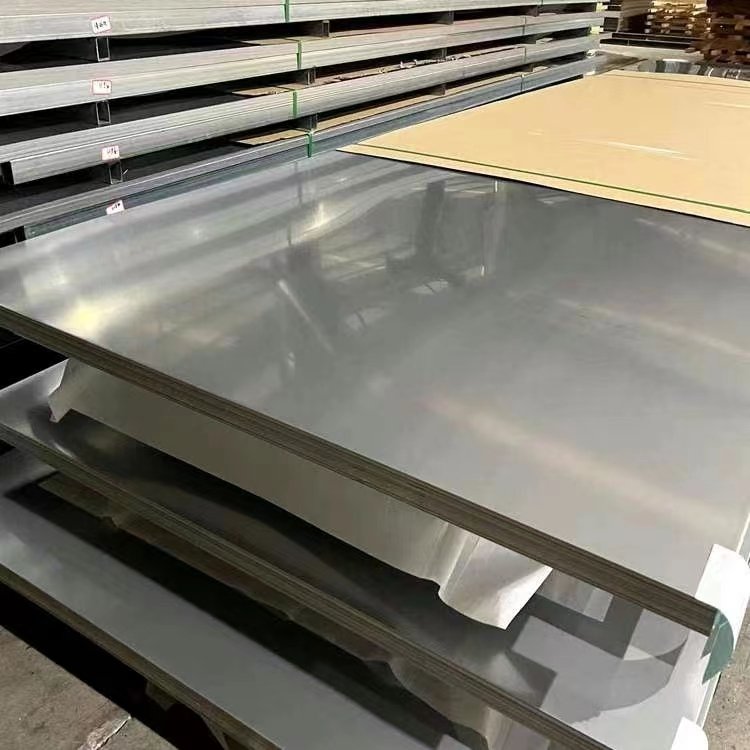
High-Performance Stainless Steel Sheets for Every Industry
Risk Mitigation: Diversification and Strategic Partnerships
Risk mitigation in the steel supply chain involves moving from reactive procurement to quantified systems, utilizing 1–3 commodity risk scoring for criticality and likelihood. By diversifying sourcing regions and ports of entry while implementing technical verification like Positive Material Identification (PMI), buyers ensure resilience against force majeure events and material grade inconsistencies.
| Mitigation Pillar | Strategic Approach | Technical Control |
|---|---|---|
| Risk Assessment | 1–3 Commodity Risk Scoring | Criticality & Likelihood Metrics |
| Supply Continuity | Regional & Port Diversification | Contractual “Utilization Triggers” |
| Material Integrity | Positive Material Identification (PMI) | ASNT SNT-TC-1A Level III Oversight |
| Partner Validation | AI-Driven Stress Testing | ResponsibleSteel / DR Gating |
Quantified Risk Scoring and Regional Diversification
The transition from reactive procurement to a quantified risk framework is essential for maintaining continuity in the steel supply chain. Industry leaders utilize a 1–3 commodity risk scoring system that assesses materials based on criticality, impact severity, and likelihood. This data-driven approach allows procurement teams to prioritize mitigation capital—such as higher inventory buffers or dual-sourcing investments—precisely where vulnerabilities are highest, ensuring that raw material flow remains uninterrupted during market volatility.
Regional diversification serves as a primary physical safeguard against force majeure events and logistics bottlenecks. By diversifying sourcing regions and selecting multiple ports of entry, buyers can bypass localized disruptions such as extreme weather, regional energy shortages, or port-specific labor strikes. These strategies are operationalized through secondary supplier contracts featuring “utilization triggers,” which automatically activate alternative shipping routes and backup supply when inventory levels fall below predetermined safety thresholds, supported by rapid notification protocols to senior leadership.
Technical Verification and Strategic Partner Gating
Technical verification at the point of receipt is a non-negotiable component of a resilient supply chain. Advanced procurement operations implement Positive Material Identification (PMI) using handheld X-ray fluorescence (XRF) analyzers, such as the Niton XL2 GOLDD, as a mandatory firewall. This program ensures material integrity by verifying the chemical composition of incoming heat before it enters production. To maintain high standards, these verification programs are governed by NDT qualification standards, specifically ASNT SNT-TC-1A Level III, which creates a robust digital chain of custody back to the original melt.
Strategic partnerships are increasingly defined by shared risk tooling and rigorous gating criteria rather than price alone. Organizations now apply AI-driven stress testing to evaluate supplier capacity and price volatility against specific disruptions, such as tariff changes or fluctuating energy availability. To qualify as a strategic partner, suppliers must meet mandatory requirements for documented disaster-recovery (DR) plans and ESG compliance, often evidenced by ResponsibleSteel certification. This structured gating ensures that the supply chain is composed of partners capable of maintaining stability through both economic and environmental shifts.
Conclusion: Building a Resilient Supply Chain
A resilient steel supply chain integrates regionalized sourcing, diversified secondary suppliers, and standards-backed governance like ResponsibleSteel V2.1.1. By utilizing inventory buffers tied to KPI triggers and leveraging domestic sourcing to reduce tariff exposure, companies move from reactive expediting to proactive, auditable risk management.
Strategic De-Risking Through Regionalization and Multi-Sourcing
Modern industrial supply chains are transitioning away from global dependency toward localized and diversified sourcing models to mitigate volatility. By implementing dual or secondary sourcing for critical raw materials, manufacturers ensure operational continuity even during force majeure events. This regionalization strategy, exemplified by U.S. Steel’s sourcing model, prioritizes supply bases within closer geographic proximity to minimize logistical risks and significantly improve response times when international transit networks are compromised.
Further resilience is gained by leveraging domestic sourcing and “Buy America” alignment, which effectively reduces exposure to geopolitical chokepoints and tariff fluctuations. By shortening transit lanes and diversifying ports of entry, companies gain the operational flexibility required to adjust raw-material mixes or capacity when specific ore qualities or metallics are disrupted. This structural shift moves the supply chain from a fragile just-in-time model to a robust framework capable of absorbing regional and global stressors.
Codified Risk Controls and Standards-Backed Governance
Technical supply chain integrity is now codified through international standards like the ResponsibleSteel International Production Standard V2.1.1. This comprehensive framework integrates 13 principles and over 500 requirements covering GHG emissions, labor, and biodiversity. For procurement teams, sourcing from sites that achieve at least Progress Level 1 provides a verifiable third-party marker of upstream governance, allowing buyers to de-risk material sourcing without the burden of building proprietary audit programs.
In addition to ethical governance, resilient chains utilize inventory buffers tied to specific supplier KPIs and automatic replenishment triggers that activate when stock falls below pre-set thresholds. Integrating these buffers with ISO 9001:2015 quality management systems and Material Test Certificates (MTC) ensures full upstream traceability and quality assurance. When combined with real-time logistics visibility and predictive analytics, these data-driven controls allow organizations to accelerate recovery from network stressors like port congestion, transforming risk management into a measurable and auditable schema.
Final Thoughts
Navigating the stainless steel market in 2025 requires moving beyond transactional buying toward a holistic, quantified risk-management framework. The convergence of Indonesian nickel quotas, South African logistical hurdles, and a $22.4 billion tariff burden has made historical price stability a relic of the past. To maintain production continuity, procurement teams must treat lead times as rigid structural constraints rather than negotiable timelines, prioritizing supply chain resilience through regional diversification and mandatory technical verification protocols like Positive Material Identification (PMI).
Ultimately, the divide between successful and struggling organizations will be defined by their ability to shorten supply lines and adopt standards-backed governance like ResponsibleSteel. As geopolitical friction continues to reclassify trade upheavals as force majeure events, the strategy of relying on single-source global dependencies is no longer viable. Buyers who leverage domestic buffers, dual-sourcing triggers, and AI-driven stress testing will transform their supply chains from vulnerable cost centers into robust, auditable strategic assets capable of absorbing global market shocks.
Frequently Asked Questions
How long is the typical lead time for steel mill orders?
Industry standard lead times for common products like hot-rolled coil (HRC), cold-rolled, and coated sheet generally range from 4 to 6 weeks, with HRC averaging approximately 4.5 weeks. For specialty alloys, custom re-rolls, or complex plate orders, lead times can extend to 8–20 weeks or more depending on mill schedules.
How are stainless steel prices calculated and set?
Stainless prices are composed of a base price determined by alloy content (nickel, chromium, molybdenum) and production factors, plus a fluctuating monthly surcharge. For context, Grade 304 cold-rolled sheet (1.5mm 2B finish) is currently priced between USD 3.20–3.85/kg on an FOB basis in major markets like Asia and Europe.
What primary factors affect the supply and availability of Grade 316 stainless steel?
Supply is dictated by raw material availability, particularly molybdenum and nickel, and the logistical challenges of small-batch production. While mill melts typically require 50–100 tonnes, specialized orders (such as nuclear-grade 316L) often only require 5–20 tonnes, creating supply gaps. High reliance on scrap—averaging 94% of the melt—also makes production vulnerable to scrap supply chain disruptions.
How can I effectively vet a new steel supplier for quality assurance?
You should require a current ISO 9001:2015 certification and a mandatory Mill Test Certificate (MTC/MTR) for every heat and batch. Verify that chemical compositions and mechanical properties (such as yield strength of 250–350 MPa for structural grades) meet ASTM, EN, or JIS standards. For high-risk orders, utilize third-party inspections (SGS/BV) and PMI spectrometry to prevent material downgrading.
What is an alloy surcharge and why is it added to my invoice?
The alloy surcharge (AS) is a price supplement added to the base price of stainless steel to offset the volatile costs of alloying elements like nickel and chromium. These charges fluctuate monthly; for example, surcharges can range from $1,382/tonne for Grade 304L to over $2,653/tonne for Grade 316Ti depending on current market averages.
What strategies can be used to lower international shipping costs for steel?
To minimize costs per ton, prioritize larger vessel classes such as Panamax (60,000–80,000 DWT), which are 20–25% cheaper than smaller Handymax vessels. Additionally, densifying scrap can reduce stowage volume by 15–20%. Aim for all-in ocean freight targets of USD 25–35/ton on long-haul routes through volume negotiation and optimized chartering.