Skip to content


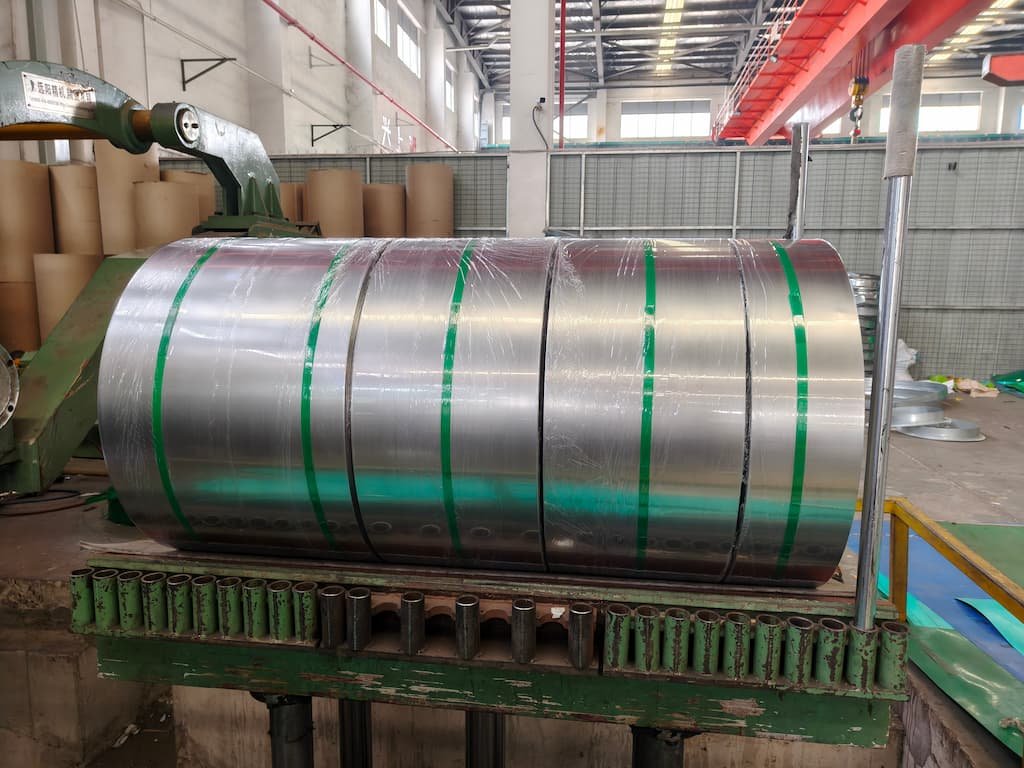
Engineers and procurement managers face significant risks when sourcing stainless steel sheet metal without a clear understanding of global manufacturing tolerances. Inconsistent material thickness or incorrect chemical composition can stall automated production lines and compromise the structural integrity of pressure vessels or aerospace components. Selecting the right specifications ensures that raw materials remain consistent across different mills and survive demanding conversion processes like precision punching and forming.
This guide explores the technical framework provided by ASTM A480 and ASTM A240, detailing how these standards control dimensional accuracy and mechanical properties. We analyze the transition from non-linear gauge systems to metric measurements—where a 16 gauge sheet corresponds to 1.52 mm—and examine quality assurance protocols like the 36-inch straightedge method for verifying plate flatness. You will also find a breakdown of standard surface finishes, from industrial No. 1 mill treatments to high-reflectivity No. 8 mirror surfaces.
Top 4 Industrial Standards for Stainless Steel Sheet and Plate
Quick Comparison: Top Picks
| Manufacturer | Location | Core Strength | Verdict |
|---|---|---|---|
| HnL STEEL | Wuxi, China (Global Shipping) | Stainless Steel Sheets & Plates, Carbon Steel, and Laser Cutting | Premier factory-direct partner with engineer-led quality control and transparent pricing. |
| ASTM A240 | Global Standard | Chromium and chromium-nickel stainless steel plate, sheet, and strip | The critical international benchmark for material properties in pressure vessel manufacturing. |
| ASTM A480 | Global Standard | Flatness and thickness tolerance specifications | The essential authority on dimensional accuracy and strict flatness measurement protocols. |
| EN 10088-2 | Global Standard | Corrosion-resisting stainless steel flat products | Optimized for European regulatory compliance with comprehensive corrosion resistance tiers. |
| ISO 9445 | Global Standard | Tolerance limits for cold-rolled stainless steel | The definitive international standard for high-precision cold-rolled material deviations. |
HnL STEEL
HnL STEEL serves as a direct link between global industrial buyers and the stainless steel manufacturing center of Wuxi. They act as both a manufacturer and a factory-direct partner, which helps remove the extra costs and communication hurdles typically associated with trading intermediaries. The team focuses on sourcing materials directly from established mills, ensuring that every batch of ISO-certified metal meets the specific physical and chemical standards required for heavy-duty industrial applications.
The company uses an engineer-led approach to manage production, covering everything from material selection to precision laser cutting and custom fabrication. This level of technical involvement reduces sourcing risks by providing clients with full Mill Test Certificates and accommodating third-party inspections. This process helps ensure that final products adhere strictly to design specifications for engineering projects in sectors such as oil, gas, and automotive manufacturing.
At a Glance:
- 📍 Location: Wuxi, China (Global Shipping)
- 🏭 Core Strength: Stainless Steel Sheets & Plates, Carbon Steel, Galvanized Steel, and Precision Laser Cutting Services
- 🌍 Key Markets: Construction & Engineering, Oil & Gas, Automotive, and Mining sectors worldwide
Why We Picked Them:
| ✅ The Wins | ⚠️ Trade-offs |
|---|---|
|
|
ASTM A240
ASTM A240 acts as the foundational blueprint for manufacturers producing stainless steel plates, sheets, and strips. Engineers and procurement teams rely on this document to ensure that raw materials possess the necessary chemical balance to withstand high-stress environments. By defining strict limits for chromium and nickel content, the standard provides a predictable framework for sourcing materials that meet global safety and performance expectations in heavy industry.
The standard governs more than just chemical makeup; it dictates the mechanical properties and specific heat treatment processes required for each steel grade. Manufacturers must align their factory output with these metrics to guarantee structural integrity, particularly when fabricating pressure vessels where material failure is not an option. Following these guidelines reduces risk during the construction phase and ensures that the finished metal retains its corrosion resistance and strength under varying temperatures.
At a Glance:
- 📍 Location: Global Standard
- 🏭 Core Strength: Chromium and chromium-nickel stainless steel plate, sheet, and strip
- 🌍 Key Markets: Pressure vessel manufacturing, industrial quality control, and general engineering
Why We Picked Them:
| ✅ The Wins | ⚠️ Trade-offs |
|---|---|
|
|
ASTM A480
ASTM A480 serves as the foundational rulebook for anyone dealing with flat-rolled stainless steel plate, sheet, and strip. It acts as a universal reference point that manufacturers, engineers, and quality inspectors use to ensure raw materials meet specific physical criteria before production begins. By setting standardized benchmarks for chemical composition and mechanical properties, the standard ensures that a piece of stainless steel sourced in one part of the world performs identically to one sourced elsewhere. This consistency helps procurement teams avoid the risks of buying sub-standard materials that could compromise the integrity of finished products.
The standard goes beyond simple material grades by enforcing strict tolerances for physical dimensions like thickness, width, and length. Metal fabricators rely on these precise measurements to calibrate their machinery and minimize scrap during the cutting process. One specific technical requirement involves the protocols for measuring flatness, where inspectors use a 36-inch straightedge on concave surfaces to verify compliance. These rigorous measurement rules demand a high level of expertise from auditing teams, but they provide the necessary framework to maintain tight factory control and reduce structural risks in heavy-duty industrial applications.
At a Glance:
- 📍 Location: Global Standard
- 🏭 Core Strength: Flatness and thickness tolerance specifications for plate, sheet, and strip
- 🌍 Key Markets: Mill production, metal fabrication, and dimensional accuracy auditing
Why We Picked Them:
| ✅ The Wins | ⚠️ Trade-offs |
|---|---|
|
|
EN 10088-2
EN 10088-2 serves as the primary European benchmark for stainless steel flat products, including sheets, plates, and strips. It provides a unified framework for manufacturers and buyers to ensure that materials meet specific corrosion resistance requirements. This standard is essential for engineers and procurement teams working on infrastructure or industrial projects within the European Union, as it guarantees that the steel used can withstand harsh chemical environments and outdoor exposure.
The standard goes beyond simple material classification by detailing chemical compositions, mechanical properties, and strict dimensional tolerances. By following these guidelines, factories maintain high levels of quality control, which reduces the risk of material failure in critical applications like chemical processing plants. Users benefit from a transparent system where every batch of steel is tested against rigorous performance metrics, ensuring consistency across different suppliers in the global supply chain.
At a Glance:
- 📍 Location: Global Standard
- 🏭 Core Strength: Corrosion-resisting steel sheet, plate, and strip
- 🌍 Key Markets: European construction, chemical processing, and corrosion-resistant applications
Why We Picked Them:
| ✅ The Wins | ⚠️ Trade-offs |
|---|---|
|
|
ISO 9445
ISO 9445 provides the essential framework for dimensioning cold-rolled stainless steel products across global supply chains. It specifically addresses the needs of high-precision manufacturing sectors that rely on tight tolerances to maintain the integrity of their final assemblies. Engineers and procurement teams use these guidelines to specify exact requirements for sheets and strips, ensuring that every batch of material meets the rigorous demands of specialized industrial applications.
Beyond basic measurements, the documentation details specific limits for flatness and edge camber, which are vital for automated production environments. These technical specifications help plants maintain tight control over their manufacturing processes and reduce the risk of equipment jams or product failures caused by inconsistent material thickness. The standard creates a reliable baseline for quality control, allowing stainless steel processors to deliver products that align perfectly with international engineering expectations.
At a Glance:
- 📍 Location: Global Standard
- 🏭 Core Strength: Tolerance limits for cold-rolled stainless steel sheet and strip
- 🌍 Key Markets: High-precision manufacturing and cold-rolled steel processing
Why We Picked Them:
| ✅ The Wins | ⚠️ Trade-offs |
|---|---|
|
|
Overview of Industrial Stainless Steel Standards
Industrial stainless steel standards like ASTM A480 and ASTM A240 provide the technical framework for dimensional accuracy and chemical integrity in global manufacturing. These specifications define the tolerances for thickness, flatness, and mechanical properties that ensure material consistency for critical applications in aerospace, pressure vessels, and precision fabrication.
Core ASTM Standards for Dimensional and Chemical Control
ASTM A480 / A480M establishes the primary dimensional requirements for flat-rolled stainless steel. This standard identifies specific tolerances for thickness, width, length, and flatness across sheet, strip, and plate products. It acts as the anchor for dimensional control, ensuring that material ordered to a specific gauge or millimetre thickness remains within predictable physical limits.
While A480 handles dimensions, ASTM A240 / A240M defines the chemical composition and mechanical properties. This standard covers common industrial grades such as 304L, 316L, and 2205 duplex stainless steel, setting requirements for yield strength, tensile strength, and elongation. Procurement teams use these standards together to guarantee both the fit and the performance of the raw material.
Suppliers like HnL STEEL use these standards to verify material integrity from major mills such as Tisco and Baosteel. Adhering to these global protocols facilitates seamless QA inspections and ensures that the material survives demanding conversion processes like punching and forming. Using nominal thickness and ASTM tolerance tables eliminates gauge confusion and improves the accuracy of project estimating.
Specialized Specifications for Aerospace and Cold-Worked Materials
ASTM A666 governs the mechanical requirements and flatness baselines for austenitic stainless steel supplied in annealed or cold-worked conditions. This standard is particularly relevant for thin sheet and strip used in enclosures, brackets, and formed components. It provides fabricators with a baseline for inspecting coil-derived material, where residual stresses from the rolling process might otherwise affect part quality.
Aerospace-specific applications often require even tighter control, leading to the use of AMS 2242. This specification provides dimensional tolerances for sheet and strip that frequently align with or exceed standard ASTM A480 requirements. Although the tolerance tables in AMS 2242 differ in structure from ASTM, they result in similar high-precision levels tailored for the strict inspection regimes of the aviation industry.
These standards remain essential for precision fabrication tasks, including laser cutting and automated bending. Material consistency directly affects how the steel reacts to heat and mechanical force. By selecting material that meets these specialized specs, shops reduce the risk of warping during secondary processing and ensure that the final part geometry matches the original CAD design.
Plate Flatness Verification and the 36-Inch Rule
Industrial flatness checks rely on the 36-inch straightedge method to identify deviations in mill plate. Inspection teams place a straightedge on the concave side of the plate and measure the maximum gap between the surface and the edge. This method provides a standardized way to quantify “out-of-flat” conditions across any 36-inch segment of the material, ensuring the product meets the criteria defined in ASTM A480 Table A2.20.
Permitted gap tolerances typically range from 6.35 mm to 11.11 mm depending on the nominal thickness of the plate. For high-strength grades with a minimum yield of 35 ksi, such as certain duplex alloys, inspectors apply a 1.5x multiplier to these allowances. This adjustment accounts for the higher internal stresses inherent in high-yield materials, which make absolute flatness more difficult to achieve during the rolling process.
Accurate verification ensures mill plates meet these flatness standards before they reach secondary processing stages like shearing, bending, or surface polishing. If a plate exceeds these tolerances, it may require additional leveling or tensioning before it can be used safely in structural platework or pressure vessel construction. Proper documentation on the Material Test Certificate (MTC) confirms that the batch complies with these critical physical parameters.
Understanding Stainless Steel Gauge vs. Metric Thickness Charts
Stainless steel gauge is a non-linear numbering system where lower values indicate thicker material. Because these values are material-specific and do not correlate directly to universal metric increments, engineers utilize conversion charts and reference ASTM A480 standards to determine exact nominal thicknesses and allowable manufacturing tolerances for fabrication.
The Non-Linear Nature of Stainless Steel Gauge Systems
Gauge numbers function as a historical numbering system where lower numbers indicate thicker sheets and higher numbers represent thinner material. This inverse relationship means that an 11 gauge sheet is significantly thicker and heavier than a 22 gauge sheet. Understanding this distinction prevents errors during material selection, as the numbers do not follow a simple additive logic found in standard metric measurements.
Stainless steel gauge is not a universal measurement and does not correlate directly to specific inch or millimetre increments without a metal-specific reference chart. While the term “gauge” appears in descriptions for aluminum and carbon steel, the actual decimal thickness for those metals differs from the stainless steel equivalent. Fabricators treat gauge values as nominal labels that require verification against precise metric dimensions for engineering and CAD modeling to ensure accurate fitment in complex assemblies.
Standard Metric Conversion Values for Common Stainless Gauges
Standard architectural and fabrication projects often use 16 gauge (1.52 mm) and 18 gauge (1.22 mm) to achieve a balance of strength and weight. These specific thicknesses provide the durability required for commercial kitchen equipment, panels, and enclosures. Thinner decorative applications might utilize 20 gauge (0.91 mm) for easier forming, while structural components frequently require 11 gauge (3.05 mm) or thicker to maintain load-bearing integrity.
Actual millimetre values can vary slightly between different mills, so checking the specific supplier table ensures accuracy for tight-tolerance parts. Manufacturing variations can lead to small differences in the final rolled thickness. Checking the material test report or the supplier’s published gauge table allows designers to account for these variations during the planning phases of a project.
Material-Specific Charts and ASTM A480 Tolerance Requirements
Gauge charts remain material-specific; an 18 gauge stainless sheet is thicker than 18 gauge aluminum but differs from 18 gauge carbon steel. This discrepancy exists because different metals were historically measured using different wire and sheet standards. Using a generic gauge chart instead of one specifically designed for stainless steel leads to incorrect weight calculations and potential structural failure in precision applications.
ASTM A480 establishes the global standard for thickness and flatness tolerances for flat-rolled stainless steel products. This standard provides the permissible variations that mills must adhere to during production. Quality control teams use the nominal gauge thickness as a baseline to apply the plus or minus limits defined by ASTM A480 during material inspection, ensuring that the delivered sheets meet the required engineering specifications.
Durable Stainless Steel Solutions for Every Industry
Classification of Standard Surface Finishes (No. 1 to No. 8)
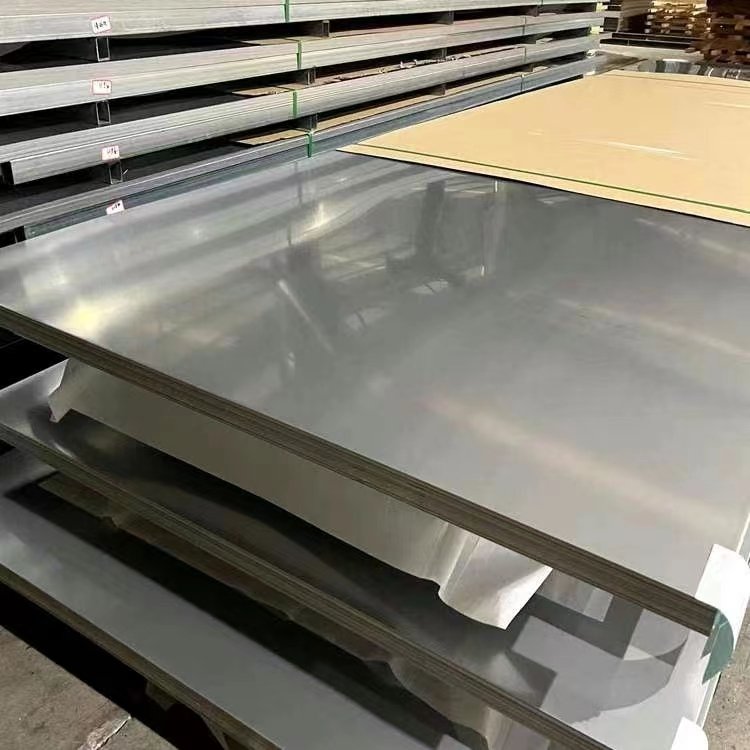
Stainless steel surface finishes range from industrial mill treatments like No. 1 and 2B to high-reflectivity mirror surfaces like No. 8. These designations, defined by ASTM A480, standardize the appearance and texture of the metal based on the processing method, from hot-rolling to intensive mechanical buffing.
Standard Mill Finishes for Industrial Utility
No. 1 finish provides a dull, non-reflective surface through hot-rolling and pickling, making it suitable for structural components and furnace parts where aesthetics are not a priority. No. 2D finish offers a cold-rolled, matte appearance that retains lubricants effectively, which is ideal for deep-drawn industrial components and parts requiring later painting. No. 2B finish serves as the standard commercial mill finish with a smooth, moderately reflective surface used for general fabrication and food processing enclosures.
Mechanically Polished Satin and Brushed Textures
No. 3 finish creates an intermediate linear texture using 80–100 grit abrasives, often utilized for industrial panels or as a base for finer mechanical polishing stages. No. 4 satin finish uses 120–150 grit abrasives to produce the unidirectional linear texture found on commercial kitchen equipment, restaurant counters, and appliances. No. 6 dull satin finish reduces gloss through Tampico brushing or fine-grit polishing, providing a refined, low-glare look for elevator interiors and architectural trim.
High Luster and Mirror Reflective Surfaces
Bright Annealed (BA) finish achieves mirror-like reflectivity directly from the mill by using a controlled-atmosphere furnace to prevent scale formation on the cold-rolled surface. No. 7 finish involves fine grinding and buffing to create a high-luster surface where very fine directional grit lines remain visible, suitable for ornamental architectural accents. No. 8 mirror finish represents the highest degree of reflectivity defined by ASTM A480, using successive buffing steps to remove nearly all grit lines for high-end cladding and signage.
Quality Assurance: How to Verify a Material Test Certificate (MTC)
Verifying a Material Test Certificate (MTC) involves a systematic audit of traceability, chemistry, and physical tolerances. Inspectors must match the unique heat number to physical material tags, validate chemical percentages against ASTM A240 standards, and measure flatness using the 36-inch rule defined in ASTM A480 to ensure the mill report reflects the actual material received.
| Thickness Range | Measurement Tool | Max Flatness Deviation |
|---|---|---|
| Under 6.35 mm | 36-inch Straightedge | ≤ 11.11 mm |
| 6.35 mm to 12.7 mm | 36-inch Straightedge | ≤ 7.94 mm |
| 12.7 mm and Over | 36-inch Straightedge | ≤ 6.35 mm |
Document Authenticity and Traceability Verification
The heat number acts as the primary batch identifier. We confirm that this code appears on the certificate, the material packaging tags, and the surface of the steel itself. Verification requires checking the document for essential details including the specific steel grade, exact dimensions, and total quantity. The certificate should explicitly cite compliance with ASTM A240 for material properties and ASTM A480 for dimensional tolerances. Digital security features like QR codes or holograms allow us to contact the mill directly to validate the document if any data appears inconsistent.
Validation of Chemical Composition and Mechanical Limits
We compare the chemical elements listed in the report against 2026 ASTM specifications. For Type 304 stainless steel, the chromium content must stay within the 18–20% range, while nickel should measure between 8–10.5%. Mechanical property results also require a cross-reference against minimum standards. A standard 304 sheet must show at least 75 ksi tensile strength and 30 ksi yield strength. We check that the laboratory used standard protocols like ASTM E8 for tension testing to guarantee that the data reflects accurate performance characteristics.
Physical Compliance and Dimensional Tolerance Testing
Measuring the material in the shop provides a necessary check against the mill’s reported dimensions. We use the 36-inch rule per ASTM A480 to measure flatness, placing a straightedge on the concave side of the sheet to identify any gaps. For sheets thinner than 6.35 mm, a maximum deviation of 11.11 mm is permitted. We prioritize decimal thickness measurements over historically used gauge charts to verify that the material remains within the allowed +/- 0.25 mm range for common 12.7 mm plates. High-value orders often undergo independent Positive Material Identification (PMI) using XRF guns to add a final layer of quality assurance.
Frequently Asked Questions
What is the difference between stainless steel sheet and plate?
Thickness defines the distinction. In the 2026 steel market, the industry classifies material under 6 mm (approximately 1/4 inch) as sheet and material 6 mm and thicker as plate. Mills typically cold-roll sheet for a smooth finish and supply it in coils, whereas they usually hot-roll plate for structural applications.
What are the standard sizes for stainless steel sheets?
Common industry dimensions include 48″ x 96″, 48″ x 120″, and 60″ x 120″. Suppliers widely offer standard widths of 36″, 48″, and 60″ with lengths up to 144″. Specific architectural or industrial projects often require custom sizing to meet unique specifications.
How do I calculate the weight of a stainless steel sheet?
For metric measurements, multiply Length (m) x Width (m) x Thickness (mm) x 8 to calculate the weight in kilograms. For imperial units, use Length (in) x Width (in) x Thickness (in) x 0.290 to find the weight in pounds. These formulas provide theoretical weights based on standard density.
Is 16 gauge thicker than 18 gauge?
Yes. Metal gauge uses an inverse scale where a lower number represents a thicker material. A 16 gauge sheet measures approximately 1.59 mm (0.0625 in), while an 18 gauge sheet is thinner at about 1.27 mm (0.050 in).
What is a mill edge?
A mill edge refers to the natural, untrimmed side of a metal sheet produced during the rolling process. It often features slight irregularities or burrs. This contrasts with a slit edge, where the manufacturer trims the material to specific widths for a uniform, smooth finish.
Why are some stainless steel sheets not perfectly flat?
Residual stresses from rolling, annealing, and cooling naturally cause minor deviations. Industry standards like ASTM A480 define acceptable flatness tolerances. For applications requiring extreme precision in 2026, engineers specify stretcher-leveled or temper-passed material to ensure the flat surface needed for laser cutting.
Final Thoughts
Adhering to ASTM and AMS protocols ensures that every sheet or plate meets the chemical and physical requirements of modern engineering. These benchmarks provide a shared language for suppliers and fabricators, guaranteeing that material from different mills performs consistently. Relying on verified data from Material Test Certificates helps teams predict how stainless steel reacts during laser cutting and forming processes.
Maintaining strict compliance with thickness and flatness tolerances directly impacts the long-term durability of finished products. Precise material selection cuts down on secondary processing costs and prevents structural failures in high-pressure environments. Engineers who prioritize these industrial standards build safer, more efficient systems that stand up to the rigorous demands of the aerospace, food service, and construction industries.