Skip to content


For architects and commercial developers, selecting materials that harmonize high-end aesthetics with a service life of 80 to over 100 years is a critical engineering priority. In modern design, stainless steel serves as more than just a decorative accent; it is a high-performance alloy requiring at least 10.5% chromium to ensure the self-healing corrosion resistance necessary for long-term structural integrity in diverse environments.
This article provides a technical roadmap for utilizing SS in architecture, detailing the performance differences between standard austenitic grades like 304/316 and high-strength Duplex 2205. We explore the industry-standard surface finishes, such as the No. 4 Brushed finish (maintaining a precise Ra of 0.5 µm), and examine the structural codes—including ANSI/AISC 370 and Eurocode 3—required to manage wind loads and reflective glare in high-density urban projects.
Introduction to Stainless Steel in Modern Architecture
Stainless steel in modern architecture is defined by a low-carbon steel alloy containing at least 10.5% chromium. Primarily utilizing austenitic grades like 304 and 316, these materials offer superior corrosion resistance and aesthetic versatility, governed by strict ASTM and AISC standards for structural and surface performance.
Core Composition and Primary Architectural Grades
The technical performance of stainless steel in architectural applications is fundamentally determined by its chemical metallurgy, specifically the requirement of at least 10.5% chromium by weight. This chromium content facilitates the formation of a passivating chromium oxide layer, which provides the material’s signature corrosion resistance and self-healing properties. In contemporary construction, the industry relies heavily on austenitic 300-series alloys. Grade 304/304L is the most prevalent selection for general-purpose interior and exterior elements, offering a robust balance of durability and ease of fabrication for panels, trim, and hardware.
In environments subject to high chloride exposure, such as coastal regions or urban areas utilizing de-icing salts, marine-grade 316/316L is the engineering standard. This alloy typically incorporates 18% chromium, 10% nickel, and 2% molybdenum, where the molybdenum addition specifically targets pitting and crevice corrosion resistance. For projects requiring high load-bearing capacity and reduced section thickness, Duplex 2205 has emerged as a high-performance alternative. Duplex stainless steels provide significantly higher yield strength than standard austenitic grades and improved resistance to stress-corrosion cracking, making them ideal for structural facade mullions and heavy-duty tension systems.
Technical Standards and Structural Design Codes
Structural and aesthetic quality in stainless steel projects is maintained through strict adherence to international product standards. Architectural sheet and plate materials are typically specified under ASTM A240 for chemical and mechanical properties, while ASTM A480 governs the dimensional tolerances, mill finishes, and critical flatness requirements necessary to prevent visual “oil-canning” on large facade panels. For structural applications, engineers must utilize dedicated codes such as ANSI/AISC 370 in the United States or Eurocode 3 Part 1.4 in Europe. These codes account for the unique non-linear stress-strain behavior and buckling characteristics of stainless steel, which differ significantly from traditional carbon steel.
Modern fabrication also leverages ASTM A1069-19 for laser-welded architectural profiles, enabling the production of sharp-cornered square tubes and bespoke tees with full-penetration welds up to 1 inch (25.4 mm) thick. Furthermore, surface performance is increasingly codified; for exterior longevity, technical specifications often require a surface roughness of Ra ≤ 0.5 μm (20 μin) to minimize the accumulation of corrosive contaminants. All structural joining must be performed under AWS D1.6 (Structural Welding Code – Stainless Steel), as the use of carbon steel codes like AWS D1.1 is strictly prohibited due to the risk of metallurgical contamination and accelerated corrosion at the weld sites.
Top Architectural Finishes for Stainless Steel
Architectural stainless steel is primarily categorized by its surface texture, with the No. 4 Brushed finish (100-180 grit, Ra 0.5 µm) being the industry standard for its low reflectivity and durability. Finishes range from dull mill-produced No. 2D to high-reflectivity No. 8 mirror polishes, all governed by ASTM A480 and EN 10088-2 standards to ensure visual uniformity.
| Finish Designation | Grit / Process | Technical Standards / Ra |
|---|---|---|
| No. 4 Brushed | 100-180 Grit Abrasives | Ra 0.5 µm ± 0.1 µm; ASTM A480 |
| No. 3 Intermediate | 50-80 Grit Abrasives | Ra ≤ 1.0 µm; Semi-polished |
| No. 6 Satin | #200 Grit Buffing | Low-reflectivity; Softer appearance |
| No. 8 Mirror | Fine Polishing/Buffing | True mirror; Crevice-free surface |
| No. 2D Mill | Cold-rolled & Annealed | Dull, non-reflective substrate |

Standard Brushed and Satin Finishes (No. 3, No. 4, and No. 6)
The No. 4 finish stands as the benchmark for architectural applications, specifically for wall panels, elevator interiors, and high-traffic cladding. This directional finish is achieved through mechanical polishing with 100-180 grit abrasives, resulting in a lustrous grain that effectively diffuses light to minimize glare. To ensure consistency across large-scale projects, technical specifications typically mandate a quantitative roughness (Ra) of 0.5 µm ± 0.1 µm. This precise control over the micro-texture not only ensures visual uniformity but also serves the functional purpose of hiding fingerprints and minor scratches encountered in public environments.
For projects requiring a more muted aesthetic, the No. 6 satin finish offers a softer, buffed appearance. This is produced by treating a No. 4 base with a #200 grit greaseless compound, reducing reflectivity below that of standard brushed surfaces. When fabricating these materials, maintaining grain continuity is paramount. Engineers specify the use of 80-180 grit string wheels, often up to 8 inches in width, to blend structural welds into the original mill finish. This technique ensures that the heat-affected zones of a weld do not create a visual “break” in the texture, preserving the streamlined appearance of the architectural element.
Reflective Polishes and Mill Standards (No. 8, 2D, and ASTM A480)
At the opposite end of the spectrum is the No. 8 mirror polish, which represents the highest level of mechanical reflectivity. Beyond its aesthetic “true” mirror effect, this finish provides superior corrosion resistance by removing microscopic surface crevices where contaminants and chlorides might otherwise accumulate. In architectural facades, the specification of a No. 8 finish requires careful attention to the substrate. Cold-rolled mill finishes like No. 2D (dull and non-reflective) or No. 2B (bright annealed) serve as the primary bases, but only meticulous multi-stage polishing can achieve the defect-free surface required for high-visibility mirror applications.
Global standardization is critical to preventing texture mismatches in modern construction. Finish designations are strictly governed by ASTM A480 in the United States and EN 10088 Part 2 in Europe, ensuring that a “No. 4” finish from one supplier matches another. Furthermore, specifying the lay direction according to ASME Y14.36M is essential to avoid “checkerboarding,” where adjacent panels reflect light at different angles. Advanced specifications also include waviness tolerances to mitigate “oil canning”—a common visual distortion in thin-gauge panels—ensuring that the finished facade maintains a flat, high-performance appearance under varying environmental loads.
Primary Structural Uses in Modern Design
Stainless steel, specifically grades 304 and 316, is a primary material for high-visibility structural elements such as façade grids, canopies, and pedestrian bridges. It is favored for its high strength-to-weight ratio and is designed under specific standards like EN 1993-1-4 to ensure durability against wind loads and environmental corrosion.
| Structural Application | Common Section Types | Engineering Compliance |
|---|---|---|
| Building Façades & Canopies | HSS, I-Beams, and Channels | AS/NZS 1170.2 / ASCE 7 |
| Primary Load-Bearing Frames | Hot-rolled & Welded Plate Girders | EN 1993-1-4 (Eurocode 3) |
| Glazed Assembly Supports | Slender Stainless Sections | L/240 – L/360 Deflection Limits |
Core Load-Bearing Elements and Material Selection
The utilization of austenitic grades 304 and 316 represents the dominant choice for structural façades, canopies, and roofing support systems in modern architecture. These grades offer the necessary mechanical strength and ductility required for exposed load-bearing members while providing exceptional corrosion resistance in diverse environments. Structural sections typically employed include hot-rolled or welded I-beams, channels, and Hollow Structural Sections (HSS), which are integrated into primary framing systems. Because stainless steel possesses a high strength-to-weight ratio, engineers can design slender members that minimize visual obstruction in large glazed assemblies, effectively supporting heavy glass panes while maintaining a minimalist aesthetic.
For heavy primary framing where high-end aesthetic finishes are required alongside structural performance, the integration of plate girders is common. These elements are often selected for atria roofs and pedestrian bridges where the material remains visible to the public. The ability to use diverse structural sections allows architects to achieve complex geometries without sacrificing the load-bearing capacity required for safety and longevity.
Engineering Standards and Serviceability Requirements
Structural design for stainless steel members is governed by specialized codes, most notably EN 1993-1-4 (Eurocode 3), which provides specific rules for buckling, stiffness, and stress-strain behavior unique to the material compared to carbon steel. For façade and canopy structures exposed to the elements, wind-load compliance is calculated using rigorous national standards such as AS/NZS 1170.2, EN 1991-1-4, or ASCE 7. These standards specify pressures based on wind speed, building geometry, and exposure, ensuring the structural grid can withstand local environmental pressures.
Serviceability limits are strictly enforced to ensure the integrity of architectural finishes; deflection is generally capped between L/240 and L/360 for members supporting glazing or other sensitive finishes. Additionally, the selection of surface finishes such as 2B, No. 4 brushed, or bead-blasted is critical not only for corrosion performance but also for managing reflective glare. Smoother finishes demonstrate better resistance to contaminants, while brushed finishes help control reflectivity in high-traffic areas or educational environments.
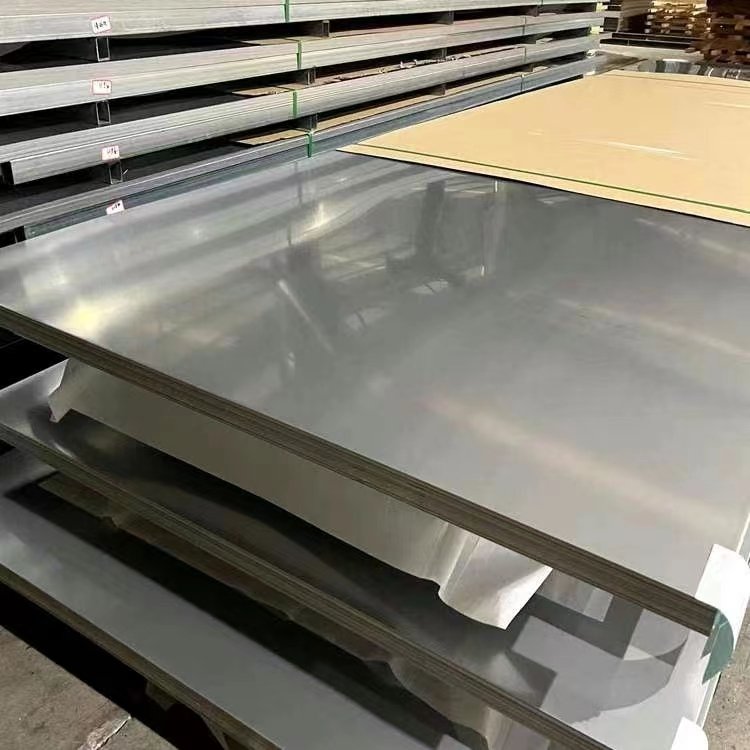
High-Performance Stainless Steel Sheets for Any Environment
Managing Technical Challenges: Reflective Glare and Wind Load
Architectural stainless steel must maintain specular reflectance below 15% to prevent disability glare in sensitive traffic and education zones. Following EN12464 standards, designers target a Unified Glare Rating (UGR) below 19 and utilize textured finishes or matte treatments to ensure safety and comfort in high-density urban environments.
Mitigating Disability Glare through Surface Reflectance Thresholds
To maintain public safety and prevent vision impairment, architectural cladding must adhere to strict specular reflectance limits. Specifically, specular light reflectance should be kept below 15% at normal incidence (90°) for stainless steel facades to avoid disability glare among road and rail users. This threshold is critical in dense urban environments where reflective surfaces can momentarily blind drivers or transit operators, leading to significant safety risks.
Specialized assessments are mandatory for buildings exceeding four storeys, particularly when utilizing “linished” stainless steel or other high-gloss finishes. In these high-density contexts, designers must prioritize the evaluation of glossy materials to mitigate the impact of concentrated light beams. By identifying sensitive receptors—such as adjacent educational facilities or major transit corridors—early in the design phase, projects can avoid permit delays and costly retrofits.
Strategic design adjustments play a vital role in light redirection. Utilizing non-tilted surfaces on lower storeys helps minimize the redirection of glare toward ground-level receptors. Furthermore, implementing specific building form adjustments, such as managing concave geometries or utilizing matte-textured finishes, allows for the diffusion of light rather than the reflection of intense, concentrated solar energy.
Compliance Metrics: UGR Ratings and LEED Luminance Standards
Quantitative performance is verified through standardized metrics such as the Unified Glare Rating (UGR). According to EN12464 standards, designers should target a UGR of less than 19 for educational and office environments to ensure occupant comfort. Additionally, LEED glare control requirements mandate that fixture luminance remain under 7,000 candela/m² within occupied spaces, ensuring that internal lighting and external reflections do not compromise productivity or health.
Effective facade engineering requires a balance between the Solar Heat Gain Coefficient (SHGC) and Visible Transmittance (VT). By optimizing these variables, high-performance glazing and stainless steel systems can manage thermal loads while maintaining sufficient daylight harvesting. This technical equilibrium is essential for meeting energy efficiency targets without exacerbating glare issues in the surrounding urban fabric.
Finally, material selection must be grounded in ISO and ASTM standards to ensure long-term durability. These standards provide the framework for verifying corrosion resistance and predictable optical properties over the building’s lifecycle. Surface treatments that offer both matte aesthetics and high durability are preferred, as they provide a stable technical response to environmental stressors while adhering to the reflectance mandates required for urban safety.
Sustainability and Long-Term Durability
Sustainable architecture prioritizes high-performance standards like LEED and ASHRAE 189.1 to ensure long-term durability. Key metrics include reducing Energy Use Intensity (EUI) to 23 kBtu/sf*yr through airtight envelopes and high R-value insulation (R-30), while utilizing durable materials like precast concrete to minimize lifecycle maintenance and environmental impact.
High-Performance Green Building Standards and Certifications
Regulatory frameworks and certification systems provide the necessary benchmarks for measuring the environmental success and durability of modern architectural projects. LEED certification serves as a primary global standard, utilizing a rigorous credit-based system to quantify energy savings, water efficiency, and CO2 emissions reduction. By focusing on renewable energy and low-emission materials, LEED ensures that facilities meet high-level sustainability goals from the design phase through occupancy.
In addition to LEED, adherence to ANSI/ASHRAE/USGBC/IES Standard 189.1-2017 establishes code-enforceable minimum requirements for high-performance green buildings. This standard covers site sustainability, water use efficiency, and indoor environmental quality. Furthermore, localized frameworks such as Protocol Itaca implement specific energy-efficient indices and U-value limits tailored to climatic zones, while UNESCO Green School Standards integrate climate-proof building operations to ensure sustained performance in educational contexts.
Technical Metrics for Energy Efficiency and Material Longevity
Achieving structural durability requires a data-driven approach to energy efficiency. A critical metric in this pursuit is Energy Use Intensity (EUI); high-performance facilities aim for a target of 23 kBtu/sf*yr, which is a significant reduction from the 74 kBtu/sf*yr ASHRAE baseline. This performance is largely achieved through geothermal systems and airtight envelopes. Thermal resistance plays an equally important role, with the implementation of R-30 roof insulation and R-15 above-grade wall systems effectively reducing HVAC loads by over 30% compared to standard baselines.
Material selection is paramount for longevity and reducing the environmental footprint of the structure. Leveraging ISO 9001:2015 certified steel and precast concrete reduces embodied carbon while enhancing lifecycle maintainability, particularly in high-traffic environments. These materials are often paired with high-reflectivity cool roofs and daylight harvesters to mitigate glare and wind loads. By combining these technical metrics with prefabricated elements and low-VOC materials, architects can ensure a facility remains resilient, efficient, and healthy for its users over the long term.
Final Thoughts
In summary, stainless steel stands as a cornerstone of modern architectural innovation, offering an unparalleled synergy between structural resilience and aesthetic versatility. By selecting the appropriate metallurgical grades—such as 316L for corrosive environments or Duplex 2205 for high-load applications—and specifying precise finishes like the industry-standard No. 4 brushed texture, designers can achieve both longevity and visual excellence. Adherence to rigorous international standards like ASTM A480 and EN 1993-1-4 ensures that these materials not only meet strict safety and performance codes but also maintain their integrity against environmental challenges like wind load and reflective glare.
Looking forward, the continued integration of stainless steel within green building frameworks like LEED and ASHRAE 189.1 underscores its vital role in sustainable development. Its 100% recyclability and century-long service life provide a clear pathway toward reducing the carbon footprint of the built environment. As architects continue to push the boundaries of high-performance façades and slender structural assemblies, the strategic use of advanced finishes and engineered profiles ensures that modern structures remain as functional and efficient as they are visually iconic, setting the standard for resilient and responsible urban design.
Frequently Asked Questions
Is stainless steel eco-friendly for architectural projects?
While production is energy-intensive, emitting 1.8-3.5 tonnes of CO2 per tonne produced, stainless steel is considered highly sustainable due to its 100% recyclability, high recycled content, and exceptional lifespan which reduces the need for frequent replacements.
What is the best surface finish for stainless steel facades?
The No. 4 (EN 1J-2J) brushed or satin finish is the industry standard for facades. For optimal performance in marine or architectural environments, it should be specified with a surface roughness of Ra ≤ 0.5 μm to maximize corrosion resistance.
How long can an architectural steel facade be expected to last?
A correctly specified and maintained stainless steel cladding system is typically designed for a service life of 80 to over 100 years. This exceeds the standard 50–60 year design life of most other metal cladding materials.
Can architectural stainless steel be colored?
Yes. Stainless steel can be colored via electrochemical processes, powder coating, or PVD coating. PVD is preferred for high-end applications, providing a durable 2-5 μm thick layer. Grade 316L is recommended for the best color consistency across these methods.
What are the benefits of PVD coating on steel components?
Physical Vapor Deposition (PVD) is a vacuum process that deposits a thin (0.5–5 µm) film onto the steel at temperatures between 250–450°C. It produces a dense, hard, and corrosion-resistant finish that is ideal for decorative hardware and high-traffic architectural elements.
Does stainless steel require painting for corrosion protection?
No, architectural stainless steel does not require painting for protection and is normally used bare. If painting is required for aesthetics or glare control, the surface must be abrasive blasted to a 30–50 µm Ra profile to ensure proper coating adhesion.