Skip to content


Cleanroom facility managers and bioprocess engineers often balance upfront cost savings against long-term sterility risks. While 304 stainless steel works for structural components, high-purity environments demand materials that withstand aggressive sterilization without shedding metal ions or harboring biofilms. Choosing the wrong grade or surface finish leads to unplanned downtime and compromised product pathways in pharmaceutical manufacturing.
We examine the technical standards for SS in cleanrooms, focusing on the composition differences that make 316L essential for wetted surfaces. This guide details why 316L requires 2–2.5% molybdenum for pitting resistance and how ASME BPE surface classes, such as SF4 with an Ra ≤ 0.38 µm, facilitate effective microbial control. We also look at the necessity of EN 10204 3.1 material traceability and the role of electropolishing in maintaining high-consequence hygiene standards.
Why Stainless Steel Grade Selection Matters: 304 vs. 316L
316L stainless steel is the preferred material for product-contact surfaces in high-purity environments because its molybdenum content and low carbon levels provide superior resistance to pitting and corrosion. While 304 remains suitable for cleanroom furniture and structural components, 316L is essential for bioprocess equipment subject to aggressive cleaning cycles and high-sterility requirements.
Alloy Composition and Chloride Pitting Resistance
Type 316L contains 2–2.5% molybdenum, an alloying element that provides a significantly higher Pitting Resistance Equivalent Number (PREN) than molybdenum-free 304. This chemical addition offers protection against crevice corrosion in chloride-rich environments and resists aggressive Clean-in-Place (CIP) chemistries such as nitric or phosphoric acid blends. The lower carbon content in 316L, capped at 0.03%, improves weldability and reduces the risk of carbide precipitation during the fabrication of high-purity piping systems. These properties ensure that the material maintains its integrity even after the high-heat cycles of orbital welding.
Surface Finish Standards and Cleanability
ASME BPE standards specify surface finish classes like SF1 and SF4 to guarantee effective microbial control and validatable CIP performance. High-purity 316L tubing meets strict roughness values, such as Ra ≤ 0.51 µm for mechanical polishing and Ra ≤ 0.38 µm for electropolished finishes. Standard 304 materials often lack the surface consistency and borescope inspection certification required for product-contact surfaces in aseptic environments. Controlled finishes on 316L minimize microscopic peaks and valleys where biofilms can anchor, supporting the rigorous sterilization-in-place (SIP) protocols required in pharmaceutical manufacturing.
Risk Management and Long-term Operational Value
Using 316L for high-purity distribution loops and reactors minimizes the risk of rouging and metal ion shedding into sensitive bioprocess streams. While 316L BPE components carry a higher upfront cost, they reduce unplanned downtime and equipment replacement frequency compared to 304 systems. Strategic material allocation involves utilizing 316L for all product-contact zones while reserving 304 for non-critical architectural hardware like cabinets and benches. This risk-based approach ensures that the most durable alloys protect the product pathway while optimizing the overall facility budget.
Understanding Surface Finish (Ra) and Cleanability Standards
Surface roughness (Ra) directly dictates cleanability in pharmaceutical environments. ASME BPE standards define specific finish classes (SF1-SF6) to control microbial risk, requiring precise mechanical or electropolished finishes for product-contact surfaces to ensure effective sanitization and reduce bioburden.
The Impact of Surface Roughness (Ra) on Cleanroom Hygiene
Surface roughness (Ra) measures the arithmetic average height of microscopic peaks and valleys. Lower Ra values improve cleanability and minimize microbial adhesion risks. Engineers specify Ra in microinches (µin) or micrometers (µm) to control bioburden on stainless steel wetted surfaces. Generic 304 2B mill finishes lack controlled Ra and defined anomaly limits, making them unsuitable for pharmaceutical environments where product contact occurs.
Rougher surfaces provide pockets where particles and microorganisms can nestle, shielding them from cleaning agents and steam. By reducing the Ra, manufacturers ensure that Clean-in-Place (CIP) and Sterilize-in-Place (SIP) cycles contact all surface areas uniformly. This level of control is necessary to prevent product hold-up and maintain the high-consequence hygiene standards required in sterile manufacturing.
ASME BPE Surface Finish Classes and Anomaly Control
ASME BPE defines SF1 through SF6 designations to standardize surface preparation for bioprocess piping and equipment. Many industry standards utilize SF1 (mechanically polished to ≤20 µin Ra) and SF4 (mechanically polished plus electropolished to ≤15 µin Ra) for internal surfaces. These designations provide a common language for engineers and fabricators to ensure equipment meets the specific cleanliness requirements of a facility.
Beyond numerical Ra limits, ASME BPE Part SF mandates the removal of surface anomalies like pits, crevices, and inclusions. These defects are often more dangerous than a slightly higher Ra because they create stagnant zones where biofilms can proliferate. Strict acceptance criteria and mandatory inspection methods verify that internal wetted surfaces remain free of these potential harborage sites.
Ra Benchmarks for Sterile Utilities and Steam Systems
Standard limits for sterile boundaries in WFI and clean steam systems require a maximum Ra of 0.89 µm (35 µin). Many critical components now target ≤0.51 µm (20 µin) to exceed these basic requirements. Electropolishing creates ultra-smooth surfaces and improves corrosion resistance by reducing microscopic asperities where residues often accumulate. This electrochemical process removes a thin surface layer, resulting in a featureless finish that resists product hold-up.
Chemical passivation following ASTM A380 protocols ensures that mechanically polished or electropolished stainless steel maintains its integrity. This step restores the protective chromium oxide layer, which is essential for high-purity biopharmaceutical loops. Combining controlled Ra values with proper passivation minimizes the risk of rouging and contamination, ensuring long-term reliability of high-purity distribution systems.
ASME BPE: The Definitive Standard for Bioprocessing Equipment
ASME BPE establishes the global benchmark for high-purity systems by mandating corrosion-resistant alloys like 316L, specific surface roughness (Ra) limits, and validated cleanability. This standard differentiates bioprocessing hardware from generic stainless steel through strict requirements for material traceability, orbital welding, and hygienic design to ensure sterile process integrity.
| Feature | Generic 304 2B Finish | ASME BPE (316L) |
|---|---|---|
| Material Composition | 18% Cr, 8% Ni; no Molybdenum. | 316L with 2–3% Mo for pitting resistance. |
| Surface Roughness (Ra) | Uncontrolled; typically 30–40 µin. | Controlled; SF1 (≤20 µin) to SF4 (≤15 µin). |
| Traceability | Standard mill reports; limited tracking. | Full heat-linked EN 10204 3.1 certification. |
| Cleaning Suitability | Vulnerable to rouging and CIP chemicals. | Validated for repeated CIP/SIP cycles. |
Purpose, Scope, and Material Requirements
ASME BPE serves as the primary regulation for systems that require absolute control over purity and bioburden. While many industrial applications use 304 stainless steel, biopharmaceutical environments demand 316L due to its low carbon content and molybdenum addition. This chemistry prevents intergranular corrosion and provides a high Pitting Resistance Equivalent Number (PREN), which is essential for components exposed to aggressive clean-in-place (CIP) chemicals like sodium hydroxide or nitric acid.
The standard defines the scope for all equipment subject to cleaning and sterilization, including Water for Injection (WFI) loops, clean steam systems, and filtration units. By mandating high-purity, corrosion-resistant alloys, the standard ensures that surfaces do not shed metal ions or particulates into the process stream. This focus on material integrity protects the end-user and aligns with the strict expectations of regulatory bodies like the FDA and EMA.
Surface Finish and Fabrication Quality
Surface quality directly impacts the ability to sanitize equipment effectively. ASME BPE defines seven specific surface finish designations, ranging from SF0 to SF6. These classes set maximum roughness average (Ra) limits, with SF1 requiring a mechanically polished interior of 20 µin Ra or smoother. For more critical product-contact zones, SF4 mandates both mechanical polishing and electropolishing to reach a maximum of 15 µin Ra. These ultra-smooth profiles minimize the microscopic “peaks and valleys” where bacteria and biofilms typically anchor.
Fabrication rules also extend to welding practices. The standard requires orbital welding for tubing to produce uniform, full-penetration joints that lack crevices or undercuts. Post-weld treatments, including chemical passivation and electropolishing, restore the protective chromium oxide layer and ensure a “featureless” surface. Profilometry and visual borescope inspections verify that wetted surfaces meet these validated hygienic standards before the equipment enters service.
Hygienic Design and Regulatory Traceability
Hygienic design prevents the formation of stagnant zones where microbes proliferate. ASME BPE enforces strict geometry rules, such as specific dead-leg dimensions (the ratio of the leg length to the pipe diameter) and mandatory slopes for drainability. These design features ensure that fluids do not remain trapped in the system after a cleaning cycle. Every component, from a simple elbow to a complex bioreactor, must facilitate a self-draining layout to support effective steam-in-place (SIP) operations.
Documentation and traceability form the backbone of GMP compliance. Under the ASME BPE framework, every metallic component requires an EN 10204 3.1 inspection certificate. These documents link the physical hardware to its specific heat batch and chemical analysis results. This level of provenance allows facilities to track every product-contact surface back to its original material source, providing the transparency needed for rigorous quality audits and preventing the use of substandard or fraudulent alloys in high-consequence environments.
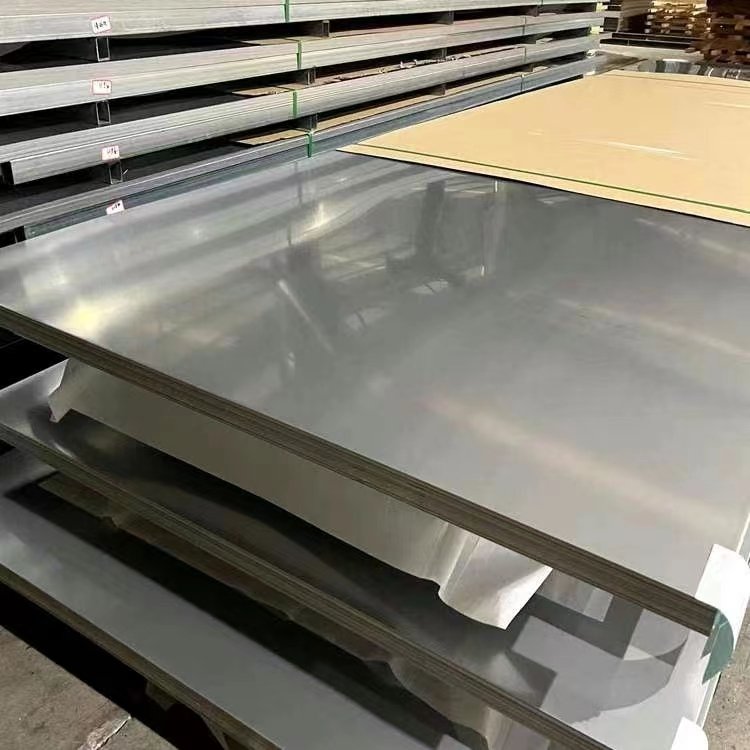
Premium Stainless Steel Sheets Engineered for Performance
Electropolishing and Passivation Requirements for High-Purity Surfaces
ASME BPE standards mandate chemical passivation and electropolishing for high-purity stainless steel to ensure corrosion resistance and validated cleanability. These processes achieve a chromium-to-iron ratio above 1.0 and surface roughness below 15-25 µin, effectively preventing microbial entrapment and rouging in sterile biopharmaceutical environments.
Post-Fabrication Passivation and ASME BPE Standards
ASME BPE E-2.2 requires chemical passivation for all austenitic stainless steel product-contact surfaces after fabrication and welding. Chemical treatments using nitric or citric solutions per ASTM A967 or AMS 2700 restore the protective oxide film and enrich surface chromium levels. Piping, vessels, and sterilizers must undergo this treatment to minimize rouging and contamination risks in bioprocessing environments.
Surface Finish Designations and Electropolishing Limits
ASME BPE defines SF4, SF5, and SF6 classes that explicitly require mechanical polishing followed by electropolishing on wetted interiors. Interior roughness targets for these designations range from Ra ≤ 15 µin (0.38 µm) for SF4 to Ra ≤ 25 µin (0.64 µm) for SF6. Standard 304 2B mill finishes typically measure Ra 30–40 µin, which makes them unsuitable for high-purity product contact without further processing to reach the sanitary threshold.
Chromium-to-Iron Ratios and Surface Chemistry Performance
High-purity surfaces require a minimum chromium-to-iron (Cr/Fe) ratio of 1.0 per ASME BPE, though chemical passivation often pushes this value above 1.5:1. Electropolishing removes micro-asperities to create a featureless surface that resists microbial entrapment and improves cleanability, specifically enhancing clean-in-place and steam-in-place efficacy. While ASTM B912 recognizes electropolishing as a valid passivation method, many pharmaceutical specifications still demand a separate chemical passivation step to maximize the integrity of the corrosion-resistant layer.
The Importance of EN 10204 3.1 Material Traceability
EN 10204 3.1 certification ensures high-consequence cleanroom materials are fully traceable by providing specific chemical and mechanical test results linked to unique heat numbers. This documentation, issued by an independent inspection department, validates that stainless steel alloys meet the rigorous safety and purity standards required for bioprocessing and pressure-retaining systems.
Defining EN 10204 3.1 Compliance in Stainless Steel
A Type 3.1 certificate provides specific chemical analysis and mechanical test results for a unique material batch. Unlike generic declarations of compliance, these documents contain actual data from the specific lot of steel used in production. Independent inspection departments within the manufacturing facility issue these certificates to confirm the material meets exact order specifications and international standards. Standard cleanroom materials like 304 2B stainless steel require this certification level to move beyond general compliance claims and verify specific alloy integrity before installation in sensitive environments.
Linking Heat Numbers to Material Provenance
Full traceability depends on the physical heat number stamped on the material matching the identification data on the certificate. This direct link between the physical asset and its documentation allows engineers to backtrack to the original steel source during audits or failure investigations. By maintaining this connection, facilities can prevent material fraud and the introduction of unverified alloys that might compromise bioprocessing environments. Digital Material Test Reports (MTCs) and rigorous tracking systems now provide a reliable foundation for verifying provenance across the entire supply chain.
Meeting ASME BPE and Pressure System Requirements
ASME BPE standards mandate EN 10204 3.1 certification for wetted parts to maintain bioprocessing integrity and prevent contamination. For pressure-retaining systems, 3.1 documentation is necessary to verify that materials can withstand operational stresses and satisfy safety regulations. Cleanroom designers use these certificates alongside Positive Material Identification (PMI) spot checks to ensure alloy consistency across safety-critical or high-consequence systems. This combined approach ensures that every valve, fitting, and tube within the sterile boundary performs as expected under aggressive cleaning and sterilization cycles.
Global Standards Comparison: ASTM, ISO, and DIN Compliance
Global cleanroom operations rely on a harmonized framework of standards, primarily led by the ISO 14644 series for classification and monitoring. Specialized industries integrate additional protocols, such as ASTM E2352 for aerospace hardware and VDI 2083 for German engineering markets, ensuring that particle counts, material integrity, and quality management remain consistent across the international supply chain.
ISO 14644 Series for Cleanroom Classification
ISO 14644-1 serves as the primary international benchmark, defining Classes 1 through 9 based on particle counts per cubic meter. This system allows manufacturers to categorize environments with high precision. For instance, ISO 5 environments limit concentrations to 3,520 particles or fewer at the 0.5 µm threshold to ensure sterility during aseptic processing and high-purity pharmaceutical manufacturing.
Maintaining these standards requires more than initial classification. ISO 14644-2 sets the requirements for continuous monitoring, while ISO 13485 provides specific quality management frameworks for medical device manufacturing. The current 2026 industry landscape relies on these standards to maintain global supply chain consistency across pharmaceuticals, biotechnology, and semiconductor fabrication.
ASTM E2352 and Aerospace Material Testing
ASTM E2352 establishes specific protocols for aerospace cleanrooms, often mandating at least ISO Class 7 or Federal Standard 209 Class 10,000 for sensitive hardware. Aerospace applications for spacecraft components and precision optics require the strict contamination controls outlined in ASTM standards to prevent microscopic debris from compromising mission-critical optical sensors or mechanical systems.
Integration between standards is common in high-tech construction. ISO 14644-3 incorporates ASTM testing methods to validate cleanroom construction and air filtration performance. This technical alignment ensures that cleanroom builders can use standardized procedures to verify that air change rates and laminar flow velocities meet the design specifications required for aerospace-grade cleanliness.
DIN Standards and VDI 2083 German Guidelines
VDI 2083 guidelines represent the DIN approach to cleanroom technology, aligning closely with international ISO 14644 particle limits. These German engineering standards provide detailed frameworks for microelectronics and pharmaceutical production facilities, often offering more granular guidance on airflow patterns, surface cleanability, and utility integration within the cleanroom envelope.
Adhering to DIN compliance ensures that cleanroom practices meet the rigorous technical requirements used across European markets and JACA comparisons. These frameworks support engineers in designing facilities that prioritize energy efficiency and contamination control, ensuring that production environments remain compliant with both local regulations and international quality expectations.
Frequently Asked Questions
What are the primary requirements for ASME BPE compliance in bioprocessing?
ASME BPE standards define strict criteria for materials, design, and fabrication of equipment used in high-purity sectors like biopharmaceuticals. The standard ensures components remain cleanable and sterile while resisting corrosion. It focuses on process-contact elements such as tubing and valves, requiring specific surface finishes and documentation that exceed general cleanroom construction needs.
Why do pharmaceutical facilities prioritize 316L stainless steel over 304?
316L stainless steel contains molybdenum and lower carbon levels, which provide superior resistance to pitting and intergranular corrosion in chloride-rich environments. This alloy withstands repeated high-temperature sterilization cycles better than 304, making it the preferred choice for purified water systems and product-contact piping.
How does electropolishing improve surface hygiene in cleanroom environments?
Electropolishing uses an electrochemical bath to remove a thin layer of metal, leveling micro-peaks and valleys. This process reduces surface roughness by up to 50%, reaching Ra values below 0.4 µm. The resulting smooth finish minimizes microbial adhesion, enhances corrosion resistance, and ensures effective passivation.
What are the standard methods for measuring surface roughness (Ra) in high-purity systems?
Technicians measure Ra using diamond-tipped stylus profilometers or non-contact optical interferometers. While contact methods record vertical displacement, optical scanning provides high-accuracy topography mapping without touching the surface. Cleanroom standards often require multiple measurements to confirm the surface meets specific ASME BPE limits.
What causes rouging on stainless steel and how is it prevented?
Rouging occurs when the protective chromium oxide layer breaks down in high-temperature, high-purity water systems, leading to iron oxide deposits. Facilities prevent this by using electropolished 316L alloys and performing chemical derouging every 6 to 12 months to maintain the passive layer.
Can 304 grade stainless steel tables be used safely in cleanrooms?
304 stainless steel tables are safe for most cleanroom applications because their non-porous surfaces do not harbor bacteria and are easy to disinfect. They work well for furniture in general labs, but 316L is necessary for environments involving aggressive sterilization chemicals or high-sterility pharmaceutical processes.
Final Thoughts
Selecting the right stainless steel grade and surface finish protects the integrity of pharmaceutical processes. While 304 remains a reliable choice for structural furniture and architectural components, 316L provides the necessary corrosion resistance for product-contact surfaces. Adhering to ASME BPE standards ensures that every component—from tubing to reactors—meets the strict hygiene requirements of aseptic environments.
Proper material documentation and adherence to global ISO or DIN standards simplify quality audits and reduce the risk of material failure. Implementing electropolished finishes and maintaining full traceability through EN 10204 3.1 certification minimizes long-term maintenance costs and prevents contamination. These practices help facilities remain compliant and operational while protecting the safety of sensitive bioprocess streams.