Skip to content


Selecting the right stainless steel for pharmaceutical cleanrooms is more than a material choice—it is a critical regulatory decision. While standard 304-2B stainless steel is the industrial norm, its typical surface roughness of 15–40 μin often fails to meet the ASME BPE threshold of ≤ 20 μin required for sterile environments. For facility managers and engineers, failing to specify the correct grade of SS in cleanrooms can lead to micro-pitting, biofilm accumulation, and catastrophic corrosion under aggressive USP <797> and <800> cleaning protocols.
This guide provides a technical breakdown of cleanroom stainless steel requirements, comparing 304 vs. 316L alloys and their impact on long-term facility compliance. We explore the ASME BPE SF1–SF6 surface finish designations, the necessity of electropolishing for achieving a 15 μin Ra finish, and why specifying an ultra-low carbon threshold of less than 0.03% is vital for maintaining weld integrity in sterile bioprocessing systems.
Understanding Cleanroom Stainless Steel Requirements
Cleanroom stainless steel must be non-porous, corrosion-resistant, and non-particle-shedding, primarily utilizing austenitic grades like 304 and 316/316L. Selection depends on exposure to chlorides and aggressive disinfectants, with compliance governed by standards such as ASTM A240 for structural integrity and cleanability.
Core Material Grades: 304 vs. 316/316L Austenitic Stainless
The selection of stainless steel for cleanroom environments is primarily focused on the austenitic 300-series, specifically AISI 304 and 316 grades. AISI 304, often referred to as 18/8 stainless due to its composition of approximately 18% chromium and 8% nickel, serves as the industry baseline for furniture, benches, and modular panels in dry or low-chemical risk areas. While it offers excellent structural integrity up to 870 °C, its application is limited in environments where aggressive chemical sterilization is frequent.
For pharmaceutical and biotech applications requiring rigorous sterilization, 316 and 316L alloys are specified due to the addition of 2–3% Molybdenum (Mo). This addition allows the material to withstand aggressive biocides, including vaporized hydrogen peroxide (H2O2), sodium hypochlorite, and peracetic acid. 316L is particularly critical for bioprocess equipment and Water-for-Injection (WFI) piping because its low carbon content (less than 0.03%) prevents weld sensitization and intergranular corrosion. In contrast, ferritic grades like AISI 430 are generally restricted to low-duty furniture because they lack the corrosion resistance required for high-classification sterile environments.
Technical Performance Metrics and Regulatory Compliance
Technical compliance for cleanroom-grade stainless steel is anchored in ASTM A240/A240M standards, which govern the composition and thickness of flat-rolled plate, sheet, and strip. A primary performance threshold for Type 304 equipment is its chloride tolerance; it is typically rated to withstand chloride concentrations up to 200 mg/L Cl⁻ before significant pitting risk occurs. In humidity-prone HVAC components or sterile isolators, 316L is prioritized to ensure that extractables are strictly controlled and surface integrity is maintained under constant chemical stress.
To ensure surfaces are non-particle-shedding and easy to decontaminate, fabrication often requires 16-gauge thickness and a #4 brushed finish. Mechanical integrity is verified through standardized testing, including ASTM E8M for tensile strength and ASTM E18 or ASTM E92 for Rockwell and Vickers hardness. By adhering to these mechanical and chemical standards, facility managers ensure that stainless steel components support the long-term sterility and regulatory compliance of the controlled environment.
Why Grade 304 2B is Often Not Enough for Pharma
Standard Grade 304 with a 2B finish often fails pharmaceutical requirements due to surface roughness and corrosion vulnerability. With an Ra typically between 15–40 μin, 2B exceeds the ASME BPE threshold of ≤ 20 μin. Furthermore, 304 lacks the molybdenum necessary to resist the aggressive disinfectants mandated by USP <797> and <800> protocols.
Surface Roughness (Ra) and ASME BPE Compliance
Under ASTM A480, the 2B mill finish is defined as a cold-rolled, annealed, and pickled surface. While it offers a smooth, semi-reflective appearance suitable for general industrial use, its technical profile often falls short of high-purity requirements. Data from the Apache Stainless engineering guide indicates that 2B finishes typically exhibit a surface roughness (Ra) between 15 and 40 μin (0.3–1.0 μm), depending on the material gauge.
This roughness range creates significant compliance hurdles when measured against ASME BPE standards. For pharmaceutical wetted surfaces, the threshold is generally specified at ≤ 20 μin (0.51 μm) or as low as ≤ 15 μin (0.38 μm) for bioprocess applications. Because factory 2B frequently exceeds these limits, it often requires secondary mechanical polishing or ASTM B912 electropolishing to meet sanitary specifications. Without these treatments, the microscopic valleys inherent in the semi-reflective 2B finish can harbor microbial contaminants and biofilm, compromising the sterility of the processing environment.
Corrosion Risks Under USP <797> and <800> Cleaning Regimes
Material composition is equally critical to longevity in a pharmaceutical setting. Grade 304 stainless steel (UNS S30400) contains approximately 18% Chromium and 8% Nickel, which offers sufficient protection for standard cleanroom furnishings. However, pharmaceutical environments must adhere to strict USP <797> and <800> protocols, which mandate the use of aggressive disinfectants and sterilization agents. Over time, these chemical regimes cause 304 to develop rust and pitting, especially when exposed to chloride-based cleaners.
In contrast, Grade 316/316L stainless steel includes the addition of Molybdenum (Mo) and a higher Nickel concentration, resulting in a significantly higher Pitting Resistance Equivalent Number (PREN). Empirical testing on 304-2B coupons has demonstrated that while mild buffers are easily removed, exposure to aggressive chemistries like acetic acid and sodium chloride (NaCl) can degrade the passive layer of the steel. Consequently, to ensure long-term durability and prevent equipment degradation, industry standards favor 316L over commodity 304-2B for high-sanitary pharmaceutical applications.
Comparing Stainless Steel Grades: 304 vs. 316L
Grade 304 is the standard for low-chloride cleanroom components like panels and furniture, offering versatile corrosion resistance. However, 316L is the pharmaceutical benchmark, containing 2-3% molybdenum for chloride resistance and ultra-low carbon (<0.03%) to prevent intergranular corrosion in sterile bioprocessing systems and WFI piping.
| Feature | Grade 304 | Grade 316L |
|---|---|---|
| Molybdenum Content | 0% | 2-3% |
| Carbon Threshold | <0.08% | <0.03% |
| Corrosion Resistance | Standard; susceptible to pitting | Superior; high chloride/biocide resistance |
| Ideal Applications | Panels, doors, furniture, benches | WFI piping, isolators, RABS, bioprocessing |
Chemical Composition: The Impact of Molybdenum and Carbon
Grade 304 is the most common austenitic stainless steel, comprised of approximately 18% chromium and at least 8% nickel. While this combination provides versatile corrosion resistance for dry or low-moisture environments, it lacks molybdenum. This absence makes 304 susceptible to chloride-induced pitting, a significant risk in facilities using aggressive sanitation protocols or high-concentration chloride solutions.
In contrast, Grade 316L incorporates a critical 2-3% molybdenum content. This metallurgical addition significantly enhances the material’s resistance to crevice corrosion and pitting. For pharmaceutical manufacturers, 316L serves as the baseline for any equipment that comes into direct contact with the product or purified water systems, ensuring that the alloy remains passive even under chemical stress.
The “L” designation in 316L signifies its ultra-low carbon threshold of less than 0.03%, compared to the standard 0.08% found in Grade 304. This reduction is vital for weld integrity; it prevents carbide precipitation during the welding process. By mitigating “weld decay,” 316L ensures long-term structural integrity and prevents intergranular corrosion in sterile environments where hygienic welding is non-negotiable.
Application Suitability in Cleanroom and Pharma Environments
In bioprocessing and sterile systems, Grade 316L is the industry standard for high-containment equipment, including Water for Injection (WFI) piping, isolators, and Restricted Access Barrier Systems (RABS). Its superior durability against vaporized hydrogen peroxide (VH₂O₂) and peracetic acid makes it indispensable for components that undergo frequent, intensive sterilization cycles.
Grade 304 is typically reserved for cleanroom infrastructure and furniture where the risk of chemical degradation is lower. Modular cleanroom wall panels, doors, and laboratory benches are frequently constructed from 304. These components benefit from the alloy’s structural strength and cost-effectiveness while residing in environments where exposure to aggressive biocides is less frequent and less concentrated than in localized process piping.
When evaluating corrosion resistance for pharmaceutical sanitation, 316L significantly outperforms 304 in environments exposed to sodium hypochlorite and other high-chloride cleaning agents. Choosing 316L for high-exposure zones prevents the micro-pitting that can harbor microbial colonies, thereby protecting the sterility of the facility and meeting the stringent demands of regulatory bodies for cleanability and surface finish maintenance.
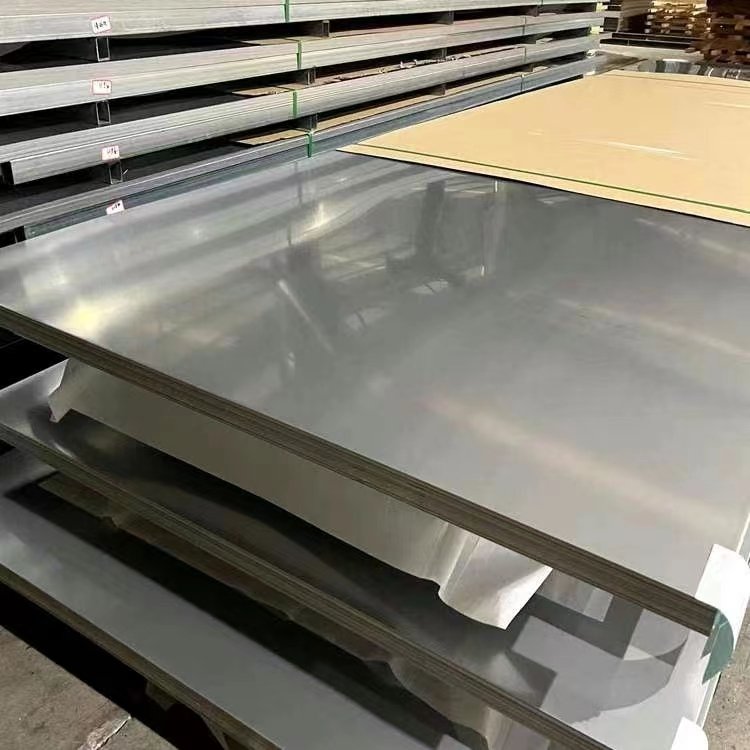
High-Performance Stainless Steel Sheets Built for Any Environment
ASME BPE Standards and Surface Finish Requirements
ASME BPE-2022 standards categorize surface finishes into SF0–SF6 designations based on Ra (Roughness Average) limits and treatment processes. These range from SF1 (≤ 20 µin Ra, mechanical polish) to the high-purity standard SF4 (≤ 15 µin Ra, electropolished), ensuring cleanability and minimizing bioburden in sterile environments.
| BPE Designation | Roughness Average (Ra) Max. | Finishing Method |
|---|---|---|
| SF1 | 20 µin (0.51 µm) | Mechanical Polish |
| SF2 | 25 µin (0.64 µm) | Mechanical Polish |
| SF3 | 30 µin (0.76 µm) | Mechanical Polish |
| SF4 | 15 µin (0.38 µm) | Mechanical Polish + Electropolish |
| SF5 | 20 µin (0.51 µm) | Mechanical Polish + Electropolish |
| SF6 | 25 µin (0.64 µm) | Mechanical Polish + Electropolish |
ASME BPE Surface Finish Classifications (SF0–SF6)
The ASME BPE-2022 standard defines specific coded designations (SF0 to SF6) to standardize surface quality across bioprocessing equipment, ensuring that manufacturers and engineers speak a common technical language. These classifications distinguish between different levels of smoothness and the processing steps used to achieve them. While SF0 is reserved for non-product contact utility services such as chilled water or steam and carries no specific Ra requirement, the higher designations are critical for maintaining the integrity of pharmaceutical processes.
The hierarchy is divided primarily by the finishing method: SF1, SF2, and SF3 represent purely mechanical polishing levels with Ra limits of 20 µin, 25 µin, and 30 µin respectively. Conversely, SF4, SF5, and SF6 require both mechanical polishing and electropolishing (EP) to achieve superior surface passivity and smoothness. SF4, which mandates a roughness of ≤ 15 µin Ra followed by electropolishing, remains the most widely utilized designation for high-purity pharmaceutical product-contact tubing, valves, and fittings due to its ability to minimize bioburden and facilitate effective Cleaning-in-Place (CIP).
Technical Ra Limits and Compliance Verification
Compliance with ASME BPE standards requires strict adherence to internal product-contact limits, such as the distinction between SF1 (≤ 0.51 µm / 20 µin Ra) and SF4 (≤ 0.38 µm / 15 µin Ra). Beyond the internal wetted surfaces, external non-product contact surfaces for SF1–SF6 components generally require a maximum roughness of ≤ 32 µin Ra (0.8 µm). These standards exceed generic “standard sanitary” 20 Ra requirements by imposing more stringent controls on material inclusions, surface pits, and overall morphology that could harbor contaminants.
Verification is a multi-step process mandated by the BPE certification framework. Methods include profilometer measurements to quantify Ra, liquid penetrant testing to detect surface-breaking defects, and detailed visual or borescope inspections for wetted areas. To ensure traceability and quality assurance, compliance is typically documented through Material Test Certificates (MTC) that explicitly reference ASME BPE Tables SF-1 and SF-2, providing process owners with the necessary documentation for regulatory audits in the biopharmaceutical industry.
Electropolishing and Passivation Protocols
Electropolishing and passivation are critical finishing protocols for 304/316L stainless steel that ensure surface smoothness and corrosion resistance. Governed by standards like ASTM B912 and A967, these processes remove microscopic imperfections and enrich the surface chromium-to-iron ratio (targeting >1.5:1) to prevent contamination and rouge formation in sterile environments.
The Science of Surface Smoothing and Chromium Enrichment
Electropolishing functions through the selective dissolution of surface high points using mixed phosphoric and sulfuric acid electrolytes. When operated at current densities of 5–25 A/dm², the process targets the microscopic “peaks” of the stainless steel surface, reducing surface roughness to a target of 15–25 µin Ra (0.38–0.64 µm Ra). This reduction is vital for eliminating microscopic crevices where contaminants and bacteria can reside, which are often left behind by traditional mechanical polishing.
The chemical transformation during these protocols is centered on the formation of a dense chromium-oxide passive film. By aiming for a Cr/Fe ratio of >1.5:1, engineers can significantly enhance corrosion resistance beyond the capabilities of the base alloy. This creates a featureless, inclusion-free topography on 304L and 316L alloys, which directly improves cleanability and reduces the potential for rouge formation—a common failure point in high-purity water and steam systems.
Governing Standards and Critical Process Parameters
Technical execution of finishing protocols is guided by rigorous industry standards to ensure repeatable results. Material removal requirements generally range from 0.0002 to 0.0005 inches (5–13 µm) per surface, a standard established by NASA PRC‑5009 for corrosion-resistant steels. For process control, ASTM B912 governs the electropolishing phase, while ASTM A967 or AMS 2700 provides the framework for chemical passivation treatments using nitric or citric acid systems.
To verify the efficacy of these treatments, engineers look to ASME BPE surface finish requirements and specialized specifications such as Swagelok SC-01 for ultrahigh-purity (UHP) components. Maintaining optimal bath temperatures between 40–70 °C during the electrolytic process is critical to ensure uniform metal removal and the desired surface brightness. When correctly combined, an electropolish followed by chemical passivation can double the corrosion resistance of the surface, meeting the highest standards for cleanroom and bioprocess hardware.
Maintenance Best Practices for Sterile Environments
Maintenance of sterile stainless steel environments relies on rigorous adherence to ASME BPE standards, involving scheduled Clean-in-Place (CIP) and Steam-in-Place (SIP) cycles. Key practices include post-installation chemical passivation to stabilize the chromium-oxide layer and periodic derouging to maintain surface roughness (Ra) within the 0.38–0.76 μm range.
Systemic Maintenance of Hygienic Piping and High-Purity Utilities
The implementation of a science-based preventive maintenance program aligned with ASME BPE standards is essential for preserving the integrity of both multi-use metallic and single-use systems. This systemic approach requires the coordination of scheduled Clean-in-Place (CIP) and Steam-in-Place (SIP) cycles for critical high-purity utilities, including Water for Injection (WFI) and clean steam, to ensure they support repeated sterilization without material degradation.
Operational protocols must also include the routine inspection of dead-legs, self-draining slopes, and weld integrity to mitigate the risk of microbial colonization over repeated thermal cycles. Furthermore, mandatory leak testing and rigorous filter replacement procedures are vital to maintaining the sterile envelope within wetted product contact areas, ensuring the infrastructure meets stringent biopharmaceutical manufacturing requirements.
Chemical Passivation and Surface Roughness (Ra) Management
To prevent biofilm formation and corrosion, post-installation cleaning and chemical passivation of 304L and 316L stainless steel are mandatory to remove fabrication debris and establish a stable, chromium-rich passive film. Internal wetted surfaces must be verified against ASME BPE SF series designations, with typical requirements maintaining surface roughness (Ra) values between 0.38–0.76 μm (15–30 μin).
For the most critical sterile services, the application of electropolished finishes is recommended to minimize particle entrapment and enhance cleanability. Long-term maintenance best practices also dictate the execution of periodic derouging and repassivation cycles whenever rouge or corrosion products are detected on wetted surfaces, thereby preserving the material’s finish and the system’s overall sterility.
Conclusion: Specifying the Right SS for Compliance
Achieving compliance in high-purity environments requires moving beyond generic ‘sanitary’ grades to ASME BPE-compliant 316L (UNS S31603). By specifying SF1 (≤ 20 μin Ra) or SF4 (electropolished) finishes and ensuring materials meet ASTM A270 S2 with 100% borescope inspection, facilities can guarantee cleanability and meet stringent GMP regulatory standards.
Transitioning from Generic Sanitary to ASME BPE Standards
For bioprocessing and cleanroom environments, the industry recommendation is to move away from generic 304 2B material logic toward formalized ASME BPE-driven specifications. Unlike standard sanitary tubing, which may have looser Ra targets and less stringent inspection protocols, ASME BPE (versions 2022/2024) formalizes the exact material grade and surface finish designations required to support validated CIP/SIP performance and microbial control. While ASME BPE-certified 316L tubing carries approximately a 13% cost premium at the 1-inch size compared to standard sanitary tubing, this cost is typically offset by significantly lower contamination risks and reduced inspection burdens. Adopting these standards ensures direct regulatory alignment with GMP requirements for the pharmaceutical, biotech, and food industries by utilizing hygienic designs recognized for superior cleanability.
Essential Technical Specifications for Material Validation
Engineering compliance for high-purity systems is not merely about selecting an alloy but about defining end-to-end technical specifications. Facility owners should mandate AISI 316L/UNS S31603 tubing certified to ASTM A270 S2, with internal surface finishes explicitly designated as SF1 (≤ 20 μin Ra) or SF4 (≤ 15 μin Ra plus electropolishing). Manufacturing processes must include bright annealing at temperatures ≥ 1900°F (1040°C) followed by rapid quenching to control carbide precipitation and maximize corrosion resistance. To ensure compliance, procurement documents must require 100% borescope inspection, Eddy Current testing, and cleaning validation per ASTM A632 S3. By specifying these parameters alongside compatible dimensional norms like DIN 11866 or DIN 11865 Row C, engineers can guarantee that every wetted component—from tubes to elbows and caps—meets the rigorous demands of validated bioprocess lines.
Final Thoughts
Choosing the correct grade of stainless steel for cleanroom environments is a critical intersection of material science and regulatory compliance. While Grade 304 remains a cost-effective and durable solution for secondary infrastructure like furniture and wall panels, it lacks the molybdenum required to survive the aggressive chemical regimes and high-chloride environments inherent to pharmaceutical manufacturing. For any wetted product-contact surfaces or high-purity utility systems, the industry mandate is clear: specifying 316L stainless steel—combined with ASME BPE-compliant surface finishes—is the only way to ensure long-term corrosion resistance and prevent microbial contamination.
Ultimately, investing in higher-grade materials and advanced finishing techniques like electropolishing is not just a matter of following standards; it is a strategy for facility longevity. By adhering to the stringent Ra limits and passivation protocols defined by ASME BPE and ASTM, facility managers can significantly reduce the risk of rouge formation, simplify Cleaning-in-Place (CIP) procedures, and facilitate easier regulatory audits. Prioritizing these technical specifications during the design and procurement phases ensures that the sterile environment remains truly sterile, protecting both the integrity of the bioprocess and the safety of the end-user.
Frequently Asked Questions
What is the ASME BPE standard?
ASME BPE (Bioprocessing Equipment) is the global standard for the design, materials, and certification of equipment used in high-purity industries like pharmaceuticals and personal care. The standard, which spans 380 pages in its 2019 edition, establishes strict requirements for cleanability, sanitization, and bioburden control.
Why is 316L stainless steel preferred over 304 in pharmaceutical applications?
316L is required for product-contact surfaces because its low carbon content (<0.03% C) minimizes carbide precipitation during welding, while its molybdenum content provides superior resistance to pitting and crevice corrosion during repeated CIP/SIP sterilization cycles. It allows for high-precision finishes (Ra ≤ 0.5 µm) essential for regulatory compliance.
What are the benefits of electropolishing for cleanroom equipment?
Electropolishing is an electrochemical process (per ASTM B912) that removes 5–10 μm (0.0002–0.0004 in) of surface metal. This process smooths, deburrs, and passivates the stainless steel, creating a high-purity surface that is easier to clean and highly resistant to microbial growth.
How is surface roughness (Ra) measured for cleanroom compliance?
Ra (arithmetical mean roughness) is measured using a profilometer per ASME B46.1 or ISO 21920. For biopharmaceutical cleanroom applications (ASME BPE SF4), an electropolished surface typically requires an Ra value of 0.38 µm (15 µin) or better to ensure cleanability.
What is ‘rouging’ and how does it affect stainless steel systems?
Rouging is the formation of a reddish-brown iron-oxide or iron-hydroxide film on austenitic stainless surfaces, commonly occurring in hot ultra-pure water (WFI) or clean steam systems. It occurs when the chromium-oxide passive layer is destabilized, categorized into Types I, II, and III based on the migration and color of the oxide deposits.
Are 304 stainless steel tables safe for cleanroom use?
Yes, 304 stainless steel tables are widely accepted for cleanroom furniture in low-corrosion or dry environments. They can withstand rigorous chemical cleaning and maintain structural integrity in environments with chloride content up to 200 mg/L; however, 316L is recommended for areas exposed to aggressive disinfectants or high-chloride concentrations.