Skip to content


Engineers and project managers often assume stainless steel is immune to rust, yet chloride-heavy environments or low oxygen levels quickly compromise standard alloys. When the self-healing chromium oxide film fails, localized pitting and crevice corrosion lead to expensive structural repairs and unexpected downtime. Selecting the right grade for marine or chemical service requires moving beyond general assumptions and focusing on the specific chemistry that maintains integrity under stress.
This guide examines practical strategies to ensure long-term durability, focusing on material selection, mechanical strength, and protective systems. We compare high-performance alloys like Duplex 2205, which provides a yield strength of 450-550 MPa, against standard 316L to highlight structural advantages. We also analyze how the Pitting Resistance Equivalent Number (PREN) helps predict performance, noting that Duplex 2205 maintains a PREN between 35-37, significantly higher than the 24-26 range found in 316L.
Top 8 Corrosion Prevention Strategies List
Quick Comparison: Top Picks
| Manufacturer | Location | Core Strength | Verdict |
|---|---|---|---|
| HnL STEEL | Wuxi, China (Global Shipping) | Stainless Steel Sheets, Plates & Coils, Custom Fabrication Services | Factory-direct pricing with high-level engineer-led quality control. |
| Strategic Grade Selection & PREN Optimization | Industry Wide | Duplex Stainless Steel, High-Alloy Materials | Data-driven material optimization for high-chloride environments. |
| Chemical Passivation Systems | Industry Wide | Nitric and Citric Acid Passivation | Essential post-fabrication process for restoring ‘rust-proof’ integrity. |
| MATCOR (Cathodic Protection Systems) | Global / Doylestown, USA | ICCP Rectifiers, MMO/Ti Anodes, HMWPE Cabling | Proven industrial technology for stopping electrochemical corrosion. |
| Industrial Coatings & Protective Organic Linings | Industry Wide | FBE Coatings, Polyurethane Linings, 3-layer PE/PP | Critical barrier protection for assets subject to atmospheric exposure. |
| Design for Longevity (Crevice Prevention) | Industry Wide | NACE SP0108 Design Guidelines | The most cost-effective prevention method via engineering best practices. |
| Pickling & Electropolishing Services | Industry Wide | ASTM A380 Pickling, Anodic Electropolishing | Superior finishing for high-hygiene pharmaceutical and food equipment. |
| Corrosion Inhibitor Management | Industry Wide | Azoles for Copper, Nitrites for Steel | Effective internal system protection without disrupting operations. |
HnL STEEL
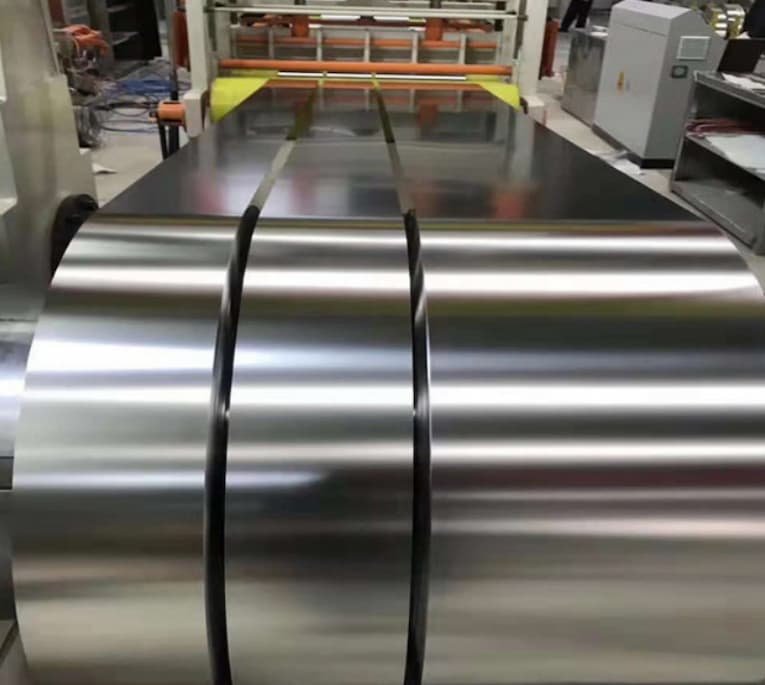
HnL STEEL operates as a direct factory supplier, bridging the gap between raw manufacturing and global industrial needs. The company specializes in stainless, carbon, and galvanized steel, focusing on materials designed to withstand harsh environments. By maintaining strict ISO 9001:2015 standards, they ensure every batch of metal meets international benchmarks for durability and structural integrity. This direct-to-factory model allows for transparency in the supply chain and provides clients with consistent material quality.
Beyond supplying raw coils and sheets, the team provides complete fabrication services such as precision laser cutting and specialized surface treatments. Their engineer-led quality control process reduces the risks often associated with international sourcing by verifying specifications before shipping. This one-stop approach simplifies logistics for industrial projects in sectors like oil, gas, and mining. Clients receive verified Material Test Certificates (MTC), so all products comply with rigorous safety and performance requirements.
At a Glance:
- 📍 Location: Wuxi, China (Global Shipping)
- 🏭 Core Strength: Stainless Steel Sheets, Plates & Coils, Custom Fabrication Services
- 🌍 Key Markets: Construction, Oil & Gas, Automotive, Mining
Why We Picked Them:
| ✅ The Wins | ⚠️ Trade-offs |
|---|---|
|
|
Strategic Grade Selection & PREN Optimization
This technical approach prioritizes long-term structural integrity by calculating the Pitting Resistance Equivalent Number (PREN) before procurement. Engineers use this formula to quantify how specific elements like chromium, molybdenum, and nitrogen shield the metal from localized corrosion. By targeting materials like Duplex stainless steel, which maintains a PREN between 35 and 40, project managers ensure their equipment survives the harsh realities of chloride-rich marine settings or aggressive chemical processing plants.
Implementing this strategy requires a shift from standard 316L grades to high-performance alloys. While 316L serves many purposes, its lower PREN range of 24 to 26 often leads to premature pitting in high-salinity zones. Choosing a higher-grade material early in the design phase reduces the risk of unexpected maintenance and extends the life of core infrastructure. This data-driven selection process aligns material costs with the specific corrosive threats of the environment, providing a reliable framework for risk reduction in oil and gas operations.
At a Glance:
- 📍 Location: Industry Wide
- 🏭 Core Strength: Duplex Stainless Steel, High-Alloy Materials
- 🌍 Key Markets: Marine, Chemical Processing, Oil & Gas
Why We Picked Them:
| ✅ The Wins | ⚠️ Trade-offs |
|---|---|
|
|
Chemical Passivation Systems
This post-fabrication process is a staple for industries like aerospace and medical device manufacturing where material integrity cannot be compromised. By utilizing nitric or citric acid baths, operators strip away free iron and other surface contaminants left behind during machining or welding. This chemical treatment forces the formation of a dense, transparent chromium oxide film that acts as the primary shield against environmental degradation.
Implementing these systems requires strict adherence to ASTM A967 standards to ensure the final product meets specific surface purity requirements. While the process effectively eliminates sites where rust could initiate, it involves managing concentrated acids and precise immersion times. Factories that integrate these systems gain total control over the finishing stage, reducing the risk of premature part failure in the field and ensuring compliance with healthcare and safety regulations.
At a Glance:
- 📍 Location: Industry Wide
- 🏭 Core Strength: Nitric and Citric Acid Passivation
- 🌍 Key Markets: Aerospace, Food Processing, Medical Devices
Why We Picked Them:
| ✅ The Wins | ⚠️ Trade-offs |
|---|---|
|
|
MATCOR (Cathodic Protection Systems)
MATCOR specializes in protecting critical infrastructure through advanced cathodic protection systems. By transforming metallic structures into cathodes within an electrochemical cell, the company prevents the oxidation that leads to rust and structural failure. This approach serves operators of energy pipelines, storage facilities, and offshore assets who need to safeguard their investments against harsh environmental conditions.
The company ensures project success by maintaining strict factory control over its proprietary components, including MMO anodes and sophisticated rectifiers. This internal oversight reduces technical risks during local execution and installation phases. By adhering to global standards, MATCOR provides reliable corrosion prevention that extends the service life of industrial assets while minimizing the chance of environmental leaks or mechanical breakdowns.
At a Glance:
- 📍 Location: Global / Doylestown, USA
- 🏭 Core Strength: ICCP Rectifiers, MMO/Ti Anodes, HMWPE Cabling
- 🌍 Key Markets: Pipelines, Storage Tanks, Offshore Platforms
Why We Picked Them:
| ✅ The Wins | ⚠️ Trade-offs |
|---|---|
|
|
Industrial Coatings & Protective Organic Linings
Industrial coatings and organic linings serve as the primary defense for critical infrastructure facing corrosive environments. By applying multi-layer barrier systems like fusion-bonded epoxy (FBE) or specialized PTFE, operators physically isolate metallic substrates from moisture and chemical electrolytes. This approach works best for stationary assets like water storage tanks and chemical vessels that remain exposed to the elements. Unlike electrical mitigation methods, these linings provide a persistent physical shield that prevents oxidation even in high-humidity or salt-rich coastal settings.
Success with these systems depends heavily on surface preparation and factory-controlled application environments. Applying 3-layer polyethylene or polyurethane linings requires grit-blasting to achieve the correct profile, which ensures the coating bonds permanently to the steel. While these systems offer decades of reliable service, maintenance teams must monitor for mechanical damage during transport or installation. Even a small chip in the barrier can lead to localized corrosion, so field inspectors prioritize holiday testing to verify the integrity of the lining before the asset goes into full service.
At a Glance:
- 📍 Location: Industry Wide
- 🏭 Core Strength: FBE Coatings, Polyurethane Linings, 3-layer PE/PP
- 🌍 Key Markets: Water Tanks, Chemical Vessels, Oil & Gas Pipelines
Why We Picked Them:
| ✅ The Wins | ⚠️ Trade-offs |
|---|---|
|
|
Design for Longevity (Crevice Prevention)
Design for longevity prioritizes structural integrity by identifying and removing potential corrosion sites before a project leaves the drawing board. This methodology serves engineers and architects in heavy industry who need to extend the life cycle of assets without relying solely on expensive coatings or alloy upgrades. By addressing the geometry of a build, teams prevent the accumulation of moisture and corrosive agents that typically settle in gaps or joints.
Practical implementation relies on specific technical adjustments such as replacing skip welds with continuous beads to seal off oxygen-deprived zones. Engineers also manage bimetallic couples and ensure aggressive drainage slopes to prevent liquid stagnation. These choices directly mitigate risks like localized pitting and Microbial Induced Corrosion (MIC), providing a foundation for long-term maintenance reduction and structural reliability across infrastructure projects.
At a Glance:
- 📍 Location: Industry Wide
- 🏭 Core Strength: NACE SP0108 Design Guidelines
- 🌍 Key Markets: Infrastructure, Architecture, Process Engineering
Why We Picked Them:
| ✅ The Wins | ⚠️ Trade-offs |
|---|---|
|
|
Pickling & Electropolishing Services
These advanced surface finishing techniques serve sectors where material purity and hygiene are non-negotiable, such as pharmaceutical manufacturing and semiconductor production. While standard mechanical polishing can leave tiny scratches or trap contaminants, pickling uses chemical processes to strip away high-temperature scale and oxides that form during welding. This ensures the base metal is entirely clean and ready for further refinement or immediate use in sterile environments.
Electropolishing acts as a secondary, more refined step by removing a thin layer of surface material through an anodic process. This action levels microscopic peaks and valleys, resulting in an ultra-smooth finish that actively resists bacterial growth and corrosion. Facilities opting for these treatments benefit from local execution and strict factory control, which reduces the risk of part failure in high-purity systems compared to traditional finishing methods.
At a Glance:
- 📍 Location: Industry Wide
- 🏭 Core Strength: ASTM A380 Pickling, Anodic Electropolishing
- 🌍 Key Markets: Pharmaceuticals, Semiconductors, Food Equipment
Why We Picked Them:
| ✅ The Wins | ⚠️ Trade-offs |
|---|---|
|
|
Corrosion Inhibitor Management
Corrosion inhibitor management provides a proactive defense for industrial infrastructure by introducing specific chemical agents like amines, phosphates, or molybdates into process fluids. These substances create a molecular-level barrier that shields metal surfaces from oxidative damage and degradation. Engineering teams in power plants and facility managers overseeing large-scale cooling loops rely on this approach to maintain system integrity. By focusing on internal environments where control is essential, this strategy ensures that critical assets remain operational without the need for aggressive physical interventions or costly structural replacements.
Effective implementation centers on precise chemical dosing tailored to the specific metals within a system, such as using azoles for copper components or nitrites for steel. Maintaining the protective film requires a consistent application schedule to prevent gaps in coverage that could lead to localized pitting or scaling. This method minimizes operational downtime since the treatment occurs during normal fluid circulation, though it necessitates regular water chemistry analysis. Technicians track concentration levels and adjust flow rates to optimize the film’s thickness and durability across the entire closed-loop network.
At a Glance:
- 📍 Location: Industry Wide
- 🏭 Core Strength: Azoles for Copper, Nitrites for Steel
- 🌍 Key Markets: Cooling Systems, Power Plants, Closed Loop Systems
Why We Picked Them:
| ✅ The Wins | ⚠️ Trade-offs |
|---|---|
|
|
The Science of Corrosion: Why Stainless Steel Isn’t Always “Rust-Proof”
Stainless steel resists oxidation through a chromium oxide passive film that self-heals in the presence of oxygen. This protection fails in environments with high chloride levels, low oxygen circulation, or extreme temperatures, triggering localized attacks like pitting and crevice corrosion. Engineers use the Pitting Resistance Equivalent Number (PREN) to match specific grades, such as 316 or Duplex, to environmental severity and prevent structural failure.
The Passive Film and Self-Healing Mechanism
Stainless steel relies on a chromium content of at least 10.5% to form a stable chromium oxide surface layer. This nanometer-scale passive film acts as a barrier against oxygen and moisture while remaining capable of self-healing if the surface sustains a scratch. Oxygen availability is necessary to maintain this protection. Stagnant or low-oxygen environments can cause the film to weaken and fail, as the material cannot regenerate its protective barrier without a consistent supply of oxygen from the surrounding air or water.
Localized Corrosion: Pitting and Crevice Attacks
Pitting occurs when the passive layer breaks down in small, specific areas, often leading to deep holes while the rest of the surface looks intact. These microscopic breaches can compromise the structural integrity of the metal without showing the uniform red rust common in carbon steel. Crevice corrosion develops in tight gaps or under deposits where moisture and corrosive ions become trapped and lack oxygen circulation. While grade 304 provides general resistance in mild conditions, grade 316 includes 2–3% molybdenum to specifically combat pitting in chloride-heavy environments.
Environmental Stressors and Material Selection
Chloride ions from seawater, de-icing salts, or industrial chemicals are the leading causes of surface staining and structural rust in stainless alloys. Higher operating temperatures and low pH levels accelerate the breakdown of the protective oxide layer, making even relatively mild environments more aggressive over time. In 2026, selecting specialized grades like duplex or super-austenitic steel is standard practice for severe chemical or marine service where 316 might fail. These high-performance alloys use elevated levels of chromium, molybdenum, and nitrogen to achieve a higher Pitting Resistance Equivalent Number (PREN), ensuring long-term reliability in harsh service conditions.
Advanced Comparison: Duplex vs. 316L for Severe Environments
Duplex stainless steel provides double the yield strength and significantly higher pitting resistance compared to 316L, making it the superior choice for high-salinity marine and desalination applications where long-term durability offsets higher initial material costs.
Microstructure and Yield Strength Advantages
Duplex stainless steel utilizes a dual-phase microstructure consisting of approximately 50% austenite and 50% ferrite, while 316L remains fully austenitic. This unique metallurgical balance allows Duplex 2205 to reach a yield strength between 450-550 MPa, effectively doubling the 200-250 MPa capacity of standard 316L. Such high mechanical strength enables engineers to reduce wall thickness by up to 50% in piping and pressure vessel designs, which lowers the total project weight without compromising structural integrity.
Corrosion Performance and PREN Ratings
The Pitting Resistance Equivalent Number (PREN) serves as a vital metric for comparing alloy durability in chloride-rich settings. Duplex 2205 maintains a PREN between 35-37, which far exceeds the 24-26 range typical of 316L. This higher rating translates to better protection against localized attack and chloride stress corrosion cracking, a frequent cause of failure for austenitic grades in offshore environments. Service records in subsea and desalination sectors confirm that Duplex components consistently reach a functional lifespan of over 15 years without significant pitting damage.
Temperature Limits and Economic Considerations
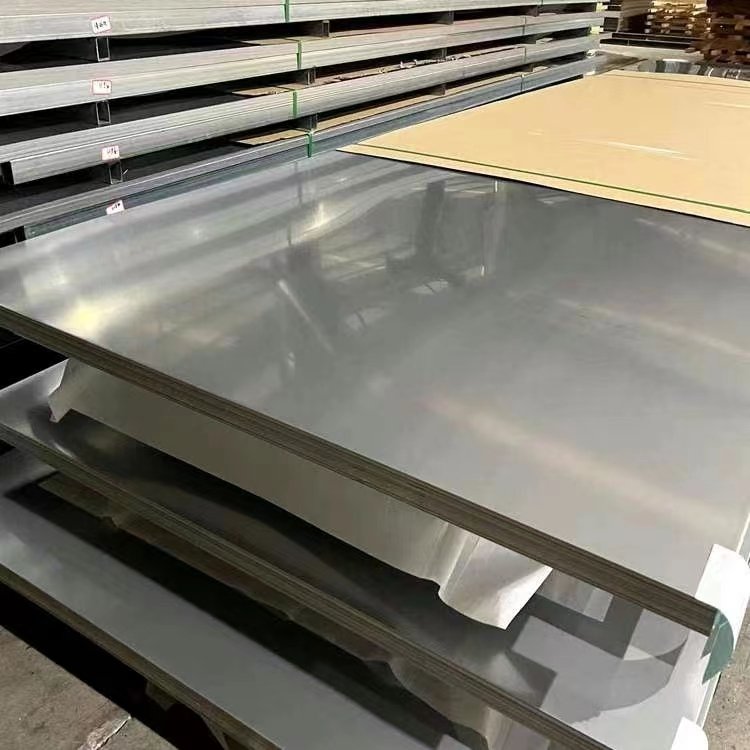
Thermal requirements often dictate the final material choice between these two grades. While 316L functions effectively in high-temperature operations up to 870°C, Duplex grades experience reduced impact toughness and potential embrittlement at temperatures exceeding 250-300°C. Although 316L features lower upfront costs, the extended service life of Duplex reduces the long-term expenses associated with maintenance and replacement in modern infrastructure. HnL STEEL provides factory-direct plates in both specifications, including full Material Test Certificates (MTC) to verify exact chromium, molybdenum, and nitrogen concentrations for site-specific engineering needs.
Premium Stainless Steel Sheets Tailored to Your Industry
Summary: Best Practices for Corrosion-Resistant Engineering
Effective corrosion engineering relies on high-performance material selection based on Pitting Resistance Equivalent Number (PREN) values, the application of multi-layer coating systems, and the implementation of active cathodic protection. Engineers must also eliminate crevice-prone details and maintain a strict biennial inspection schedule to prevent localized oxidation and structural fatigue.
Strategic Material Selection and Design Configuration
We prioritize duplex stainless steels and 316L variants for new construction to utilize their superior Pitting Resistance Equivalent Number (PREN). Duplex grades typically reach PREN values between 35 and 40, offering significantly higher resistance to chlorides than 316L, which ranges from 24 to 26. In immersion services, we replace standard carbon steel with non-metallic components like FRP pipes or Type 316 SST to avoid rapid degradation.
Design teams focus on eliminating crevice-prone details and water entrapment zones during the initial phase. These stagnant areas often trap moisture and corrosive ions, leading to localized oxidation even in high-grade alloys. We also incorporate non-conductive isolators when joining dissimilar metals. This breaks the electrical path and prevents the galvanic corrosion that occurs when two different metals interact within an electrolyte.
High-Performance Coatings and Concrete Mix Optimization
Steel bridge protection requires the deployment of three-coat systems. These systems feature zinc-rich primers for cathodic protection, epoxy intermediates for chemical resistance, and aliphatic urethane topcoats to withstand UV exposure. For carbon steel surfaces in wastewater environments, we use novolac epoxies and aromatic polyurethanes because they resist the aggressive chemical profiles common in these facilities.
Concrete durability improves when we design mixes with a maximum 0.45 water-to-cement ratio. Adding silica fume or fly ash creates a more dense matrix that blocks chloride intrusion. We also apply epoxy-coated reinforcing steel and penetrating sealers to concrete decks. These barriers inhibit moisture permeability and protect the internal steel structure from the “rust-bursting” effect caused by volume expansion during oxidation.
Cathodic Protection and Systematic Maintenance
Buried structures and marine assets require the installation of sacrificial anode systems or impressed current cathodic protection (ICCP). These systems actively drive the metal structure to a more negative potential, effectively halting the corrosion process. We adhere to the 2026 FHWA grout guidelines for steel tendons to maintain structural tension and prevent hydrogen embrittlement or stress corrosion cracking in post-tensioned members.
Maintenance crews execute biennial inspections to collect data for predictive repair and surface washing schedules. Regular cleaning removes environmental contaminants like salt and industrial pollutants, which extends the life of protective membranes and topcoats. By monitoring surface conditions through these regular cycles, we can address minor pitting before it develops into a major structural failure.
Frequently Asked Questions
Why is my stainless steel rusting?
Stainless steel rusts when its protective chromium oxide layer breaks down, allowing the underlying iron to react with oxygen and moisture. Common causes include exposure to chlorides like salt or bleach, contamination from carbon steel particles, and physical scratches that disrupt the passive film. Choosing the correct grade, such as 316 for marine environments, helps prevent this oxidation.
What is PREN?
PREN stands for Pitting Resistance Equivalent Number. It is a calculated value used to estimate the resistance of stainless steel or high-nickel alloys to pitting corrosion in chloride-rich environments. The formula weights the percentage of chromium, molybdenum, and nitrogen, where higher values indicate superior resistance.
How do I stop galvanic corrosion?
The most effective way to stop galvanic corrosion is to break the electrical path between dissimilar metals using non-conductive gaskets, bushings, or washers. Other strategies include selecting metals with similar electrochemical potentials, applying protective coatings to the noble metal, and installing sacrificial anodes like zinc or magnesium to protect the structure.
Does salt water affect 304 stainless steel?
Yes. 304 stainless steel is susceptible to pitting and crevice corrosion in chloride environments like salt water. While it can handle occasional splashes if cleaned regularly, it is not recommended for continuous immersion or coastal applications where 316 or duplex grades provide much better durability.
What is passivation?
Passivation is a chemical treatment that removes free iron and surface contaminants from stainless steel using acids like nitric or citric. This process facilitates the formation of a thin, stable chromium oxide layer, restoring the material’s natural corrosion resistance after it has been machined or welded.
Can chemicals dissolve stainless steel?
Yes. Strong mineral acids, including nitric and hydrofluoric acid mixtures, can attack the protective film and dissolve the underlying metal matrix. While stainless steel offers high chemical resistance, it can still experience severe corrosion or full dissolution in aggressive environments with high acid concentrations or elevated temperatures.
Final Thoughts
Selecting the right alloy requires a focus on PREN values and specific environmental chemistry. Duplex grades offer a reliable balance of mechanical strength and pitting resistance for marine or industrial sites. We build longevity into projects by matching material properties to the chloride concentrations and temperature levels of the application.
Long-term performance depends on a layered defense strategy. Combining high-performance coatings with active cathodic protection systems blocks corrosion at its source. Consistent maintenance schedules and surface cleaning preserve the self-healing chromium oxide film and extend the service life of critical infrastructure.