Skip to content


In heavy industry, the financial and operational burden of over-engineering piping systems and pressure vessels often stems from the mechanical limitations of standard 300-series stainless steels. While common grades like 316L are prone to chloride-induced stress corrosion cracking, Duplex Stainless Steel provides a high-performance solution with nearly double the yield strength—offering 450–600 MPa compared to the 280 MPa typical of austenitic steels. This mechanical superiority allows B2B procurement and engineering teams to specify lighter, more durable structures that perform reliably under the most aggressive industrial conditions.
This article explores the technical and economic advantages of transitioning to Duplex 2205 and Super Duplex 2507, providing a detailed comparison of their chemical compositions and Pitting Resistance Equivalent Numbers (PREN) which can reach as high as 45. We will analyze how these alloys enable a 30–50% reduction in wall thickness for pressure vessels, discuss critical fabrication and welding standards like ASTM A923, and demonstrate how a 50-year maintenance-free service life can lower your total project lifecycle costs by up to 30%.
What is Duplex Stainless Steel?
Duplex stainless steel is a family of alloys featuring a balanced two-phase microstructure of approximately 50% austenite and 50% ferrite. This engineered composition provides nearly double the yield strength of common 300-series stainless steels (like 304 and 316) and exceptional resistance to chloride-induced stress corrosion cracking.
Dual-Phase Microstructure and Chemical Composition
Duplex stainless steel is characterized by its unique metallurgical balance, typically featuring a grain structure of approximately 50% austenite and 50% ferrite by volume. To ensure phase stability and optimal performance, properly balanced grades require a minimum of 30% ferrite. This dual-phase nature is achieved through precise alloying, utilizing high levels of Chromium and Molybdenum for superior corrosion resistance, while Nitrogen is added to enhance both pitting resistance and mechanical strength.
The physical properties of these alloys offer distinct engineering advantages over traditional stainless steels. Duplex grades possess an engineered density of 7.80–7.81 g/cm³ and a thermal expansion coefficient of 13.5–13.7 × 10⁻⁶ m/m·K, which is lower than austenitic grades and closer to that of carbon steel, aiding in distortion control during welding. The family is categorized based on alloy content into Lean Duplex (e.g., S32101), Standard Duplex (e.g., 2205/S32205), and Super Duplex (e.g., 2507/S32750), each serving specific corrosion and strength requirements.
Mechanical Advantages and Engineering Standards
The most significant technical advantage of duplex stainless steel is its mechanical performance, offering a typical 0.2% proof stress of 450–550 MPa. This is roughly double the yield strength of common austenitic grades like AISI 304 or 316. In practice, this high strength-to-weight ratio enables engineers to specify significant wall-thickness reductions for pressure vessels and piping systems, leading to lighter structures and reduced material costs without sacrificing safety or integrity.
To maintain quality and safety in industrial applications, duplex components are governed by rigorous international standards, including ASTM A240 for plate and sheet, ASTM A790 for pipe, and ASTM A815 for fittings. For aggressive oil and gas environments, specific grades are certified under NACE MR0175 / ISO 15156 for sour service. However, designers must observe the usable service temperature range, which typically spans from −50 °C up to 300 °C, as higher temperatures can lead to 475°C embrittlement due to the ferritic phase.
Key Differences Between Duplex 2205 and Super Duplex 2507
The primary difference is the alloying intensity; Super Duplex 2507 features higher Chromium (24–26%) and Molybdenum (6–8%) compared to 2205, resulting in a PREN over 40. While 2205 is the workhorse for general corrosive environments, 2507 provides the extreme pitting resistance and higher yield strength (≥550 MPa) required for harsh seawater and subsea applications.
| Technical Specification | Duplex 2205 (UNS S32205) | Super Duplex 2507 (UNS S32750) |
|---|---|---|
| Chromium (Cr) Content | 21–23% | 24–26% |
| Molybdenum (Mo) Content | 2.5–3.5% | 6–8% |
| Pitting Resistance (PREN) | 35–37 | 40–45 |
| Min. Yield Strength | ≥450 MPa | ≥550 MPa |
| Nitrogen (N) Content | 0.10–0.22% | 0.24–0.32% |
Chemical Composition and Pitting Resistance (PREN)
The fundamental distinction between these two grades lies in their alloying intensity. Super Duplex 2507 contains 24–26% Chromium and 6–8% Molybdenum, which is significantly higher than the 21–23% Cr and 2.5–3.5% Mo found in Duplex 2205. This increased concentration directly correlates to the Pitting Resistance Equivalent Number (PREN). While 2205 offers a respectable PREN of 35–37, 2507 achieves a threshold of 40–45, making it suitable for direct contact with natural seawater (approximately 19,000 ppm Cl⁻). Furthermore, the increased Nitrogen content in 2507 (0.24–0.32%) compared to 2205 (0.10–0.22%) significantly enhances austenite stability and provides superior pitting resistance in highly acidic, chloride-rich environments.
Mechanical Properties and Industrial Applications
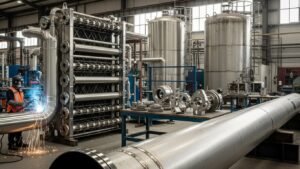
Mechanical performance varies notably, as 2507 provides a minimum yield strength of 550 MPa and a tensile strength of 800 MPa. This high strength allows engineers to specify thinner wall designs in pressure vessels and piping systems, effectively reducing overall project weight compared to the 450 MPa yield strength of 2205. However, there is a ductility trade-off; Duplex 2205 maintains better elongation (25–30%) and generally exhibits easier weldability than the more complex, highly alloyed 2507, which features 15–25% elongation. In terms of selection, 2205 remains the standard for petrochemical heat exchangers and desalination freshwater components, while 2507 is the mandatory specification for subsea oil and gas infrastructure, high-pressure injection systems, and concentrated brine environments.
High Yield Strength: Reducing Wall Thickness in Pressure Vessels
Duplex stainless steels like 2205 and super duplex grades like 2507 offer nearly double the yield strength (450–600 MPa) of 300-series austenitic steels (280 MPa). This mechanical advantage enables engineers to specify thinner wall sections for pressure vessels and piping, significantly reducing material weight and fabrication costs while meeting ASME code requirements.
| Material Grade | Min. Yield Strength (0.2% Offset) | Min. Tensile Strength |
|---|---|---|
| Type 304 Austenitic | 280 MPa (41 ksi) | 515 MPa (75 ksi) |
| Duplex 2205 (UNS S32205) | 450 MPa (65 ksi) | 620 MPa (90 ksi) |
| Super Duplex 2507 (UNS S32750) | 550 MPa (80 ksi) | 800 MPa (116 ksi) |
| Super Duplex F55 (UNS S32760) | 530-550 MPa (77-80 ksi) | 750-1000 MPa (108-145 ksi) |
Yield Strength Comparison: Duplex 2205 vs. 300-Series Stainless
Standard Duplex 2205 (UNS S32205, ASTM A240) provides a minimum 0.2% yield strength of 65 ksi (≈450 MPa), which is approximately 1.6× higher than Type 304 austenitic stainless steel (≈280 MPa / 41 ksi). This significant leap in proof strength allows for higher design stress limits in engineering applications. For more extreme environments, super duplex grades such as SAF 2507 (UNS S32750) and UNS S32760 (F55) deliver even greater minimum yield strengths of 530–550 MPa (77–80 ksi), with typical values often reaching as high as 600 MPa.
The mechanical superiority of super duplex plate is further demonstrated by tensile strengths ranging from 750–1000 MPa, which vastly outperform the 620 MPa (90 ksi) typical of standard duplex 2205. The dual-phase microstructure—consisting of roughly equal parts austenite and ferrite—ensures these high strength levels are achieved without sacrificing the necessary ductility. Elongation values for super duplex grades typically range from 15% to 25%, providing the toughness required for safe pressure-containing service.
Design Optimization: Impact on Wall Thickness and Material Costs
The increased allowable stress values recognized in major pressure vessel codes, such as ASME Section VIII, allow engineers to calculate a thinner required wall thickness for a given design pressure when utilizing duplex alloys. By moving from 304/316 stainless to super duplex UNS S32750 or 1.4501, aggressive wall-thickness reductions can be realized. This makes these alloys the preferred choice for high-pressure pipelines, heat exchangers, and offshore process equipment where minimizing weight is critical for structural integrity and platform capacity.
Beyond direct material savings, thinner wall sections contribute to substantial weight savings across the entire project, reducing the total tonnage of steel required and lowering both material and logistics costs. Fabrication efficiency is also improved; reduced thickness requires significantly less weld filler metal and shorter welding cycles. These optimizations lead to faster production times and lower labor costs, provided that the fabrication process is carefully managed to maintain impact toughness and meet code-specified tolerances.
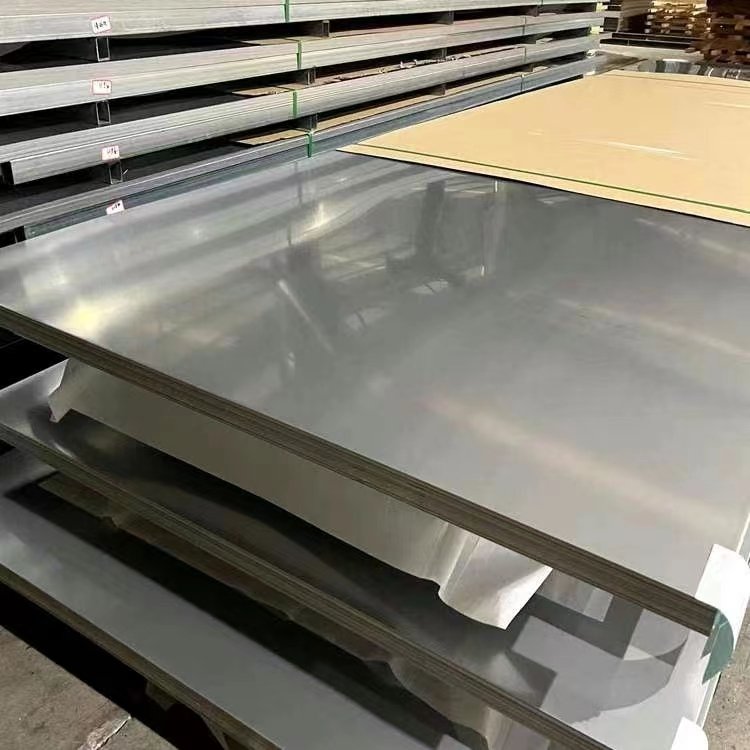
High-Performance Stainless Steel Sheets Tailored to Your Project
Corrosion Resistance in Extreme Heavy Industry Environments
Duplex stainless steel provides superior corrosion resistance due to its dual-phase microstructure and high chromium (22-25%) content. With a Pitting Resistance Equivalent Number (PREN) reaching up to 45, it forms a robust passive layer that resists chloride-induced pitting and stress corrosion cracking (SCC) far better than standard austenitic grades like 316.
The Dual-Phase Advantage: Chromium Stability and SCC Resistance
The exceptional performance of duplex stainless steel in aggressive industrial settings is primarily driven by its high chromium content, which typically ranges from 22% to 25%. This high concentration facilitates the formation of a significantly more stable and self-healing passive chromium oxide layer compared to the 16-18% found in standard austenitic grades like 304 or 316. This chemical stability ensures that the metal surface remains protected even when subjected to the harsh conditions of chemical processing and marine exposure.
A defining characteristic of these alloys is their dual-phase microstructure, consisting of approximately equal proportions of austenite and ferrite. This metallurgical balance provides a synergistic defense against localized corrosion. Specifically, the ferrite phase acts as a mechanical barrier that effectively blocks the propagation of Stress Corrosion Cracking (SCC) in high-chloride environments—a common failure mode for traditional stainless steels. Furthermore, because the mechanical strength is approximately twice that of austenitic grades, engineers can specify thinner wall sections in pressure vessels without compromising the safety or integrity of the structure.
PREN Benchmarks and Technical Performance Standards
To quantify resistance to localized chloride attacks, the industry utilizes the Pitting Resistance Equivalent Number (PREN). This scale ranges from 24 for lean duplex grades, such as LDX 2101, to as high as 38-45 for super duplex variants like UNS S32750 and S32760. Standard Duplex 2205 (UNS S32205) remains the most widely utilized grade for severe chloride exposure, providing a balanced PREN of 28-38. This grading system allows for precise material selection based on the specific chloride concentration and acidity of the operating environment.
Technical reliability is further ensured through adherence to strict operational limits and international standards. While duplex stainless steels offer excellent ductility down to -50°C, they are restricted to a maximum operating temperature of 300°C to avoid the risk of embrittlement caused by high chromium content. Compliance with international performance standards, including ASTM A484 and NACE MR0175, is essential for certifying the material’s reliability in oil, gas, and heavy chemical processing applications where failure is not an option.
Lifecycle Cost Benefits and Material Savings
Duplex stainless steels like 2205 and 2507 offer double the yield strength of standard austenitic grades, enabling a 30–50% reduction in wall thickness for tanks and pressure vessels. These material savings, combined with a maintenance-free service life of over 50 years, result in 15–30% lower total lifecycle costs compared to traditional steels.
Material Efficiency and Weight Reduction through High Yield Strength
Duplex grades such as EN 1.4462 / UNS S32205 provide over twice the yield strength of common austenitic grades like 316L. This superior mechanical profile allows engineers to specify a 30–50% reduction in wall thickness for storage tanks and pressure vessels while meeting the same design stresses. Similarly, high-strength super duplex alloys (UNS S32750/S32760) enable weight reductions of approximately 30% in structural applications while maintaining equivalent load-bearing capacity compared to conventional materials.
The use of increased allowable design stresses permits the fabrication of thinner shells and heads. This optimization does more than just reduce material tonnage; it significantly decreases the total length of welding required during fabrication, further lowering labor costs. In the case of structural hollow sections, lean duplex solutions offer weight savings that frequently offset the higher per-kilogram alloy price premium, making them a competitive choice even at the procurement stage.
Total Lifecycle Cost (LCC) and Maintenance-Free Longevity
Comprehensive lifecycle cost studies indicate that duplex solutions achieve 15–30% lower total costs than traditional steels when accounting for maintenance, downtime, and eventual replacement cycles. In corrosive environments, lean duplex structures are designed to remain maintenance-free for over 50 years. This longevity eliminates the recurring financial burden of repainting, recoating, and the frequent technical inspections that are mandatory for maintaining the integrity of carbon steel assets.
Economic analyses show that while duplex steel tonnage can be 80–125% more expensive than carbon steel, the total project-level cost—such as for bridge construction—is often only 20–31% higher initially. This is due to the drastic reduction in fabrication complexity and the removal of secondary coating requirements. For assets with long service lives of 25 to 50+ years, the maintenance savings typically allow operators to recover the initial material premium within the first 10 years of operation, ensuring superior long-term ROI.
Fabrication and Welding Considerations
Fabrication centers on maintaining a 40–60% ferrite-austenite balance by strictly controlling heat input (0.5–2.5 kJ/mm) and interpass temperatures (max 150°C). Using nitrogen-enhanced shielding gases and following ASTM A923/A1084 standards ensures the prevention of brittle intermetallic phases like sigma.
Welding Metallurgy and Phase Balance Control
The primary objective when welding duplex stainless steels, such as UNS S32205 or super duplex UNS S32750, is to maintain a stable metallurgical phase balance. Welders must target a ferrite-austenite ratio of 40–60% (extending to 65% in some specifications) within both the weld metal and the heat-affected zone (HAZ) to mirror base metal properties. Achieving this balance is critical for ensuring that the joint retains the alloy’s characteristic corrosion resistance and mechanical toughness, as excessive ferrite can lead to reduced ductility and increased susceptibility to chloride stress corrosion cracking.
Thermal management is the most critical variable in this process. Heat input must be strictly limited to a range of 0.5–2.5 kJ/mm for standard duplex grades, while super duplex requires a tighter window of 0.5–2.0 kJ/mm to avoid excessively slow cooling. Similarly, interpass temperatures must be kept below 150°C (300°F) for lean and standard grades, and below 100°C (210°F) for super duplex. These limits are essential to bypass the 300–1000°C temperature window where deleterious intermetallic phases, particularly sigma and chi phases, can precipitate and embrittle the material.
Process-specific parameters further refine the microstructure and prevent defects. For Gas Tungsten Arc Welding (GTAW), utilizing a shielding gas of Argon mixed with approximately 2% Nitrogen is highly recommended to promote austenite reformation during the cooling cycle. Conversely, hydrogen-containing shielding gases are strictly prohibited due to the significant risk of hydrogen embrittlement. Welders should employ stringer bead techniques with moderate travel speeds (typically under 45 cm/min) to control bead thickness and ensure optimal cooling rates while minimizing the risk of porosity.
Forming, Heat Treatment, and Quality Standards
Physical processing of duplex alloys requires adjustments to account for their high yield strength and work-hardening rates compared to standard austenitic grades. For cold forming of lean duplex alloys like UR™ 2202, a minimum bend radius of 3t is required for base metal, which must be increased to 4t for welded assemblies to prevent surface cracking. Hot forming operations should be performed at temperatures exceeding 950°C (1740°F), followed immediately by rapid cooling to prevent intermetallic formation. If a full solution anneal is required, protocols specify a temperature range of 980–1080°C (1800–1975°F) with a mandatory water quench to ensure a microstructure free of detrimental phases.
Compliance with industry standards is mandatory for pressure vessel and structural applications involving duplex steels. Fabrication and design typically follow the ASME BPVC Section VIII framework, with welding procedure qualifications (WPS) governed by ASME Section IX or AWS D1.6. To verify the integrity of the weldment, metallurgical testing is required, including ASTM A923 for the detection of intermetallic phases in standard duplex or ASTM A1084 for lean grades. Furthermore, ASTM G48 ferric chloride pitting tests and Charpy V-notch impact tests are frequently specified to ensure that the weld toughness and corrosion performance meet the rigorous demands of aggressive chemical or offshore environments.
Conclusion: Making the Switch to Duplex
Switching to duplex stainless steel provides a 50% reduction in wall thickness and material weight due to its superior yield strength (≥450 MPa). This transition enhances durability through exceptional stress corrosion cracking resistance and ensures safety compliance with ASME BPVC standards, ultimately lowering fabrication costs and extending service life.
Maximizing ROI Through Structural Weight Reduction
Transitioning to duplex stainless steel offers a significant economic advantage by enabling up to a 50% reduction in wall thickness compared to standard 316L or mild steel. This reduction is driven by the material’s high yield strength, which typically reaches ≥450 MPa (65 ksi). By reducing the total material volume required for fabrication, project managers can lower total costs while maintaining the structural integrity necessary for pressure vessels up to 120″ in diameter.
For more demanding environments, high-strength grades such as Super Duplex 2507 provide a yield strength of 80 ksi. This allows for optimized design flexibility in heavy-duty pressure vessel fabrication, where minimizing structural weight is critical for reducing both material expenses and secondary costs such as shipping and foundation requirements.
Technical Reliability and Global Compliance Standards
Adopting duplex alloys ensures long-term operational safety through strict adherence to the ASME Boiler and Pressure Vessel Code (BPVC). It is essential to manage temperature limits effectively; for instance, grade S32900 requires monitoring to stay at or below 260°C (500°F) to prevent material embrittlement. This technical discipline ensures that the vessel remains robust under high-pressure conditions throughout its intended service life.
Furthermore, the dual-phase microstructure of duplex steel eliminates frequent downtime caused by chloride-induced stress corrosion cracking (SCC) and pitting, which are common failure points in traditional 300-series steels. To guarantee material integrity, all fabrications must be verified through ISO 9001:2015 quality management systems, supported by comprehensive Material Test Certificates (MTC) to provide full traceability from the mill to the final installation.
Final Thoughts
In conclusion, duplex stainless steels 2205 and 2507 represent a transformative engineering solution for heavy industry, successfully bridging the gap between high mechanical strength and extreme corrosion resistance. By leveraging a balanced dual-phase microstructure, these alloys offer nearly double the yield strength of traditional 300-series stainless steels. Whether you are utilizing the versatility of the 2205 “workhorse” for chemical processing or the extreme pitting resistance of Super Duplex 2507 for subsea infrastructure, these materials provide a level of structural integrity and resistance to stress corrosion cracking that is essential for modern, high-pressure environments.
The transition to duplex grades is more than just a material upgrade; it is a strategic financial decision. The ability to reduce wall thickness by up to 50% significantly lowers total material weight, logistics costs, and fabrication time, while a maintenance-free service life of over 50 years ensures a superior long-term return on investment. By adhering to strict fabrication standards and thermal controls, engineers can utilize these advanced alloys to build lighter, safer, and more durable assets that meet the most rigorous international compliance standards.
Frequently Asked Questions
What is duplex stainless steel?
Duplex stainless steel is a family of steels defined by a two-phase microstructure of roughly 50% austenite and 50% ferrite. This dual structure provides approximately double the 0.2% proof (yield) strength of 300-series austenitic steels—typically ≥ 450 MPa for grade 2205 compared to 200 MPa for 316L—and significantly higher resistance to chloride stress corrosion cracking.
Is 2205 stainless steel better than 316L?
In most engineering contexts, yes. Grade 2205 offers double the yield strength and superior resistance to chloride pitting and crevice corrosion compared to 316L. It allows for a 30-50% reduction in wall thickness for pressure-containing components. However, 316L is still preferred for applications requiring superior cold forming or operating at temperatures below 250°C.
Can you weld duplex stainless steel?
Yes, duplex grades like UNS S32205 and S32750 are routinely welded using standard processes such as TIG (GTAW), MIG (GMAW), and SAW. To maintain the 50/50 phase balance, heat input must be strictly controlled between 0.5–2.5 kJ/mm, with interpass temperatures kept below 150°C for standard duplex or 100°C for super duplex.
Why is it called “duplex”?
It is called “duplex” because its metallurgical microstructure consists of two different phases—austenite and ferrite—in nearly equal proportions (roughly 50% each). This dual-phase nature allows the material to inherit the high strength of ferritic steel and the corrosion resistance of austenitic steel.
Is duplex stainless steel magnetic?
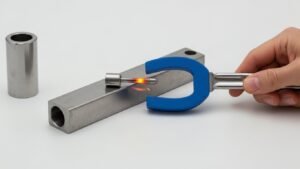
Yes. Due to the presence of the ferritic phase in its microstructure, duplex stainless steels are ferromagnetic. They typically exhibit a relative magnetic permeability of approximately 50, whereas non-magnetic austenitic grades like 316L have a permeability of less than 1.05.
What are the disadvantages of duplex stainless steel?
Key disadvantages include lower ductility and toughness compared to austenitic grades, more difficult machinability and formability due to high yield strength, and temperature limitations. They become brittle at very low temperatures and are susceptible to harmful phase precipitation (like sigma phase) if exposed to temperatures between 700-955°C.