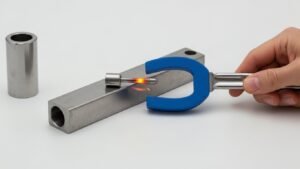
Skip to content


Machining & CNC operations involving stainless steel present a critical challenge for B2B manufacturers: how to maintain high-volume throughput without sacrificing tool life to rapid work-hardening. Because demanding alloys like austenitic 316 exhibit a machinability rating of just 36% relative to free-machining steel, standard cutting strategies often lead to premature edge failure, scrapped parts, and blown production budgets.
This guide provides a technical roadmap for optimizing your stainless steel production, from calculating precise SFM and IPM formulas to selecting specialized TiAlN coatings. We will examine critical thermal management strategies for environments where cutting zone temperatures reach 800°C and explain why maintaining a runout tolerance of ≤0.01mm is non-negotiable for achieving the micron-level precision required in modern OEM components.
Understanding Stainless Steel Machinability
Stainless steel machinability is a relative rating compared to free-machining 1212 steel (100%). Ratings typically range from 36% for austenitic 316 to 85% for martensitic 416. Factors like low thermal conductivity and high work-hardening rates make austenitic grades more challenging to machine than ferritic or sulfur-enhanced free-machining variants.
Key Factors Affecting Stainless Steel Machining Performance
Machining stainless steel requires an understanding of its unique thermal and mechanical properties. Unlike carbon steels, stainless alloys exhibit exceptionally low thermal conductivity, which causes heat to concentrate at the cutting edge rather than dissipating through the workpiece or chips. This thermal concentration necessitates specialized cooling strategies and significant speed reductions to prevent premature tool failure and catastrophic edge wear. Furthermore, high work-hardening rates, particularly in austenitic families like the 300 series, mean the material becomes significantly harder as it is deformed by the cutting tool, requiring constant feed rates to ensure the tool continues to bite into the material rather than rubbing against a hardened surface.
Maintaining a successful machining environment also depends heavily on the rigidity of the setup and tool geometry. Any vibration or tool deflection can lead to surface glazing and rapid work hardening, which quickly degrades cutting edges. Sharp tools with positive rake angles are essential to ensure the material is cut cleanly. In contrast to standard grades, sulfur-enhanced free-machining variants like 303 are engineered to produce brittle, easily broken chips, which reduces the mechanical load on the equipment and improves overall chip evacuation in high-volume CNC environments.
Machinability Ratings and Technical Specifications by Grade
Machinability benchmarks vary significantly across the different stainless steel families. Austenitic grades like 304 and 316 represent the most common yet challenging materials. Type 304 typically carries a machinability rating of 40-48% relative to 1212 steel, requiring turning speeds around 600 SFM (180 mm/min). Type 316, due to its molybdenum content for improved corrosion resistance, is more demanding, resulting in a lower rating of approximately 36% and necessitating more conservative parameters to manage tool life.
Higher production efficiency is often achieved using martensitic and specialized free-machining alloys. Martensitic 416 is widely considered the easiest stainless steel to machine, offering an 85% rating due to its high sulfur content which acts as an internal lubricant and chip breaker. Similarly, free-machining grades like 303 and 430F achieve ratings near 75%, allowing for turning speeds up to 920 SFM (280 mm/min). These grades are ideal for complex components where high-speed material removal is prioritized over maximum corrosion resistance.
Technical specifications such as hardness and tensile strength further dictate the necessary tooling approach. Common stainless alloys exhibit Brinell hardness ranges from 160 to 350, with tensile strengths spanning from 77,000 PSI to 170,000 PSI depending on the specific heat treatment. For example, precipitation hardening grades like 17-7 PH (S17700) offer machinability comparable to annealed 304 (around 45%) but can reach significantly higher strength levels after aging, requiring a balanced approach to feed and speed optimization to maintain tool integrity.
Speeds and Feeds: Technical Specifications for Success
Speeds and feeds are the programmed cutting parameters—Surface Feet per Minute (SFM) and Chip Load—governed by ISO 229:1973. Proper calculation using RPM and IPM formulas ensures tool longevity, prevents work hardening in stainless steel, and optimizes cycle times by matching tool geometry to material hardness.
| Material Type | Cutting Speed (SFM) | Recommended Tooling & Notes |
|---|---|---|
| Aluminum & Alloys | 200–300 SFM | Standard HSS; up to 1000 SFM for carbide in 6061. |
| Mild Steel (0.2–0.3% C) | 80–110 SFM | Baseline for Norseman HSS drill benchmarks. |
| 304/316L Stainless Steel | 150–200 SFM | Carbide tooling; maintain chip load to prevent hardening. |
| Tool Steel (~1.2% C) | 50–60 SFM | Reduction required to manage heat in high-carbon alloys. |
| Deep-Hole Drilling (>4×D) | 45–50% Reduction | Derating factor for both speed and feed rates. |
Foundational Formulas and ISO Standards
The engineering foundation for CNC programming is anchored by ISO 229:1973, which standardizes the expression of machine-tool speeds as revolutions or strokes per minute and feeds as linear displacement per revolution. This global standard ensures that cutting conditions are communicated consistently across different machine architectures. To translate manufacturer-recommended Surface Feet per Minute (SFM) into programmable Spindle Speed (RPM), engineers utilize the formula: RPM = (SFM × 3.82) / Tool Diameter. For metric applications, the calculation shifts to (SMM × 318.06) / Tool Diameter in millimeters.
Translating these speeds into lateral movement requires the Feed Rate calculation, expressed as Inches Per Minute (IPM). The formula—IPM = RPM × Number of Flutes × Chip Load (IPT)—is critical for maintaining proper chip thickness. When the calculated RPM for micro-tooling, such as 0.047″ diameter cutters, exceeds the physical limits of the machine spindle (often requiring >80,000 RPM), the established strategy is to operate the machine at its maximum RPM while strictly maintaining the manufacturer’s recommended chip-load-per-tooth to prevent tool breakage.
Material-Specific Cutting Data and Operational Adjustments
Material hardness is the primary driver for SFM selection. While mild carbon steels (0.2–0.3% C) are typically processed at 80–110 SFM using High-Speed Steel (HSS), higher-carbon tool steels require a reduction to 50–60 SFM to mitigate thermal degradation of the cutting edge. In high-volume production of 304 or 316L stainless steel, carbide tooling allows for increased efficiency at 150–200 SFM. Utilizing specialized carbide grades, such as BNX20, provides the necessary heat resistance for high-speed finishing passes in these austenitic alloys.
Operational adjustments are mandatory for complex geometries, particularly in deep-hole drilling scenarios where the hole depth exceeds four times the drill diameter (4×D). In these instances, both the speed and feed must be derated by 45–50% to facilitate effective chip evacuation and manage heat buildup at the drill point. Furthermore, industry-standard tool life is defined by a 0.25 mm flank or notch wear limit; once this threshold is reached, tool geometry is compromised, leading to dimensional drift and poor surface finish.
Precision process control also dictates the use of a minimum 1-second dwell at the initiation of drilling cycles. This ensures the spindle reaches 100% of the programmed RPM before the tool engages the workpiece, preventing the “skating” or “walking” that occurs when a tool enters a material at sub-optimal rotational velocities. Adhering to these documented SFM benchmarks and derating factors forms the technical backbone for both short-run prototyping and optimized high-volume manufacturing.
Tooling Guide: Choosing the Right Cutters and Coatings
Optimizing machining performance requires matching tool geometry and coatings to the specific workpiece. Key variables include helix angles (35°-45° for soft metals), flute counts (2-3 for chip removal; 4-6 for finishing), and heat-resistant coatings like TiAlN for stainless steel. Maintaining runout tolerances of ≤0.01mm is essential for precision.
| Workpiece Material | Geometry Specifications | Recommended Coating |
|---|---|---|
| Aluminum & Non-Ferrous | 35°–45° Helix / 2–3 Flutes | DLC (Diamond-Like Carbon) |
| Stainless Steel (316L) | 20°–30° Helix / 4–6 Flutes | TiAlN / AlTiN |
| Hard Tool Steels (D2/A2) | Low Helix / Honed Edges | AlTiN (High Heat) |
Tool Geometry: Helix Angles and Flute Optimization
The physical architecture of a CNC cutter, specifically its helix angle, determines the efficiency of chip evacuation and the quality of the final surface finish. High-helix angles, typically ranging from 35° to 45°, are the industry standard for softer materials like aluminum because they facilitate a shearing action that produces smoother finishes. In contrast, hard metals require low-helix angles of 20° to 30° to provide a more robust cutting edge capable of withstanding the higher cutting forces without premature edge degradation.
Flute configuration must be balanced against the material’s chip-forming characteristics. For non-ferrous materials, 2 to 3 flutes provide the necessary gullet space for large chips to escape, preventing the “clogging” that often leads to tool breakage. For high-strength alloys and stainless steel, 4 to 6 flutes are required to improve surface finish and distribute wear across more cutting edges. Furthermore, ensuring structural rigidity through shorter tool lengths and specialized chip-breaking geometries is critical for reducing vibration and preventing tool deflection during high-volume production cycles.
Performance Coatings and Precision Standards
Advanced surface treatments such as Titanium Aluminum Nitride (TiAlN) and Aluminum Titanium Nitride (AlTiN) are vital for machining heat-sensitive alloys. These coatings provide a thermal barrier that allows tools to operate at higher spindle speeds while maintaining edge hardness, which is particularly essential for stainless steels like 316L. For non-ferrous applications, Diamond-Like Carbon (DLC) is the preferred choice to reduce friction and prevent built-up edge (BUE), a common failure mode where material welds itself to the cutter.
Maintaining strict mechanical tolerances is the final pillar of precision fabrication. Cutters must adhere to a runout tolerance of ≤0.01mm to ensure a uniform chip load across all flutes; exceeding this limit causes localized overheating and uneven wear. When working with extremely hard substrates like D2 tool steel (up to 65 HRC), carbide substrates with honed edges are necessary to retain structural integrity at operating temperatures up to 425°C. These standards ensure that CNC operations remain predictable and cost-effective over long production runs.
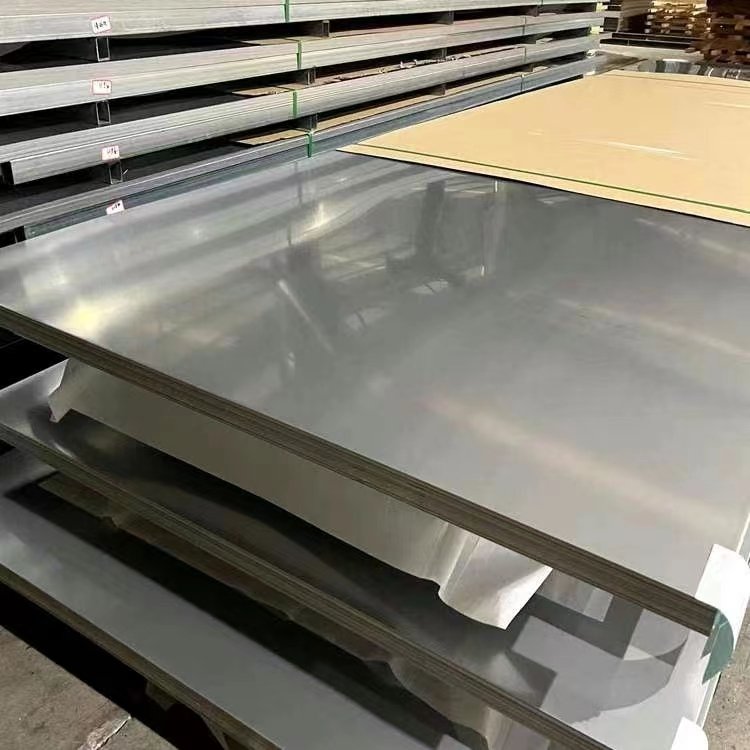
High-Performance Stainless Steel for Every Industry
Coolant and Lubrication for Heat Resistance
Effective coolant strategies manage cutting zone temperatures reaching 800°C, extending tool life by 30–200%. By utilizing high-pressure systems (up to 200 bar) and techniques like MQL or Through-Spindle Coolant, manufacturers maintain edge integrity in low-conductivity alloys while reducing cycle energy consumption by up to 15%.
Thermal Budget Control and Delivery Modalities
Cutting zone temperatures in high-speed CNC operations often reach 800°C at the tool–workpiece interface, driving rapid tool softening and degradation of the substrate’s mechanical properties. To prevent premature edge failure, manufacturers employ multi-modal delivery systems tailored to specific operation geometries. These include flood cooling for bulk heat removal, Through-Spindle Coolant (TSC) for high-aspect-ratio cuts where external nozzles cannot penetrate, and Minimum Quantity Lubrication (MQL) for targeted interface lubrication that reduces frictional heat generation.
The integration of engineered fluid systems typically extends tool life by 30–50% in standard production environments, but optimized configurations in demanding applications report tool life gains exceeding 200%. Beyond preservation of the cutting edge, advanced lubrication strategies effectively manage the thermal budget to minimize friction, resulting in a measurable decrease in per-cycle energy consumption of up to 15%.
Precision Pressure Standards and Material-Specific Requirements
Technical pressure standards are critical for effective chip management and heat dissipation at the cutting interface. Standard precision coolant pressures for steels generally range from 7–10 bar (100–150 psi), while tougher materials require 70–80 bar to facilitate reliable chip breaking. For high-performance materials like duplex stainless steel and heat-resistant superalloys (HRSA), industry leaders such as Sandvik Coromant recommend high-pressure systems operating at 150–200 bar to keep cutting zones stable and prevent crater wear.
The thermal conductivity of the workpiece material dictates the specific requirements for the metalworking fluid. Alloys with low thermal conductivity, such as Ti-6Al-4V (≈6.7 W/m·K), concentrate generated heat at the tool’s cutting edge and demand high-capacity emulsions to carry that energy away. In contrast, highly conductive alloys like 6061-T6 aluminum (≈167 W/m·K) allow heat to flow more readily into the chip and workpiece, shifting the technical priority toward lubricity to prevent chip welding and the formation of a built-up edge (BUE).
Optimizing 316L for High-Volume OEM Runs
Optimizing 316L for high-volume OEM production requires managing its low thermal conductivity (15 W/m·K) and work-hardening tendencies. Success depends on using machinability-enhanced grades like Project 70+ or Prodec, maintaining constant heavy feeds to stay beneath the work-hardened skin, and adhering to ISO M group cutting parameters (155–195 m/min for turning).
Managing Work-Hardening and Thermal Dynamics
To ensure the longevity of cutting tools during high-volume production, manufacturers must address the “work-hardening” tendency of UNS S31603. By employing constant, heavy feeds, the cutting edge is forced to stay below the hardened surface layer created by previous passes. This prevents the tool from rubbing against a localized hardened skin, which would otherwise lead to rapid edge degradation and inconsistent part geometry.
The low thermal conductivity of 316L, approximately 15 W·m⁻¹·K⁻¹, presents a significant challenge as it traps heat at the tool-part interface rather than dissipating it through the chips. To mitigate this, OEMs should utilize sharp carbide edges and high-pressure flood coolant systems. These tools and techniques work together to evacuate heat effectively, maintaining the thermal stability necessary for continuous production runs.
Implementing ISO M group baseline speeds is critical for process optimization. Specifically, turning operations should target 155–195 m/min (510–640 SFM), while milling should be maintained between 95–125 m/min (310–410 SFM). Adhering to these parameters balances cycle time with edge life, ensuring that tool changes do not compromise the throughput of large-scale OEM batches.
Effective chip management is another cornerstone of high-volume success. Utilizing advanced chip breakers is necessary to clear the stringy austenitic swarf characteristic of 316L. By preventing the re-cutting of chips and surface marring, these breakers ensure that the surface finish remains within specification throughout the duration of the continuous run.
Machinability-Enhanced Grades and OEM Quality Standards
One of the most effective strategies for reducing per-part costs in OEM environments is specifying machinability-enhanced variants of 316L. Grades such as CarTech 316/316L Project 70+, ATI MINIMISER, or Prodec 316/316L are engineered for higher feeds and reduced tool wear. These materials maintain the corrosion resistance of standard 316L while providing a significant boost to machining efficiency.
High-precision components require rigorous inspection protocols to maintain quality standards across thousands of units. OEMs should target dimensional tolerances as tight as ±0.002 mm, verified via Coordinate Measuring Machine (CMM) inspection in accordance with ASME Y14.5 GD&T standards. This level of precision is essential for components used in medical, aerospace, and semiconductor applications.
Material integrity must be validated through standardized testing to ensure consistency. This includes density verification per ASTM B311, with a target of ≥7.85 g/cm³ for structural components, and tensile strength testing per ASTM E8 to confirm the material meets the 480–600 MPa range. These mechanical benchmarks ensure that the finished parts perform reliably under service loads.
Finally, maintaining ISO 9001:2015 traceability and leveraging factory-direct Material Test Certificates (MTC) is mandatory for large-scale production. Comprehensive documentation ensures that every batch of material used in the OEM run is consistent in chemistry and mechanical properties, providing a reliable foundation for high-volume CNC machining processes.
Why Outsource to a Professional Machining Partner?
Outsourcing machining allows companies to bypass massive capital investment in multi-axis equipment while gaining access to specialized engineering expertise and micron-level precision. Professional partners ensure production consistency through certifications like ISO 9001, AS9100, and IATF, facilitating material traceability and compliance for highly regulated sectors like aerospace, medical, and automotive.
Access to Specialized Technology and Engineering Scalability
Partnering with a professional machining firm provides immediate access to high-tier Swiss CNC capabilities and multi-axis turning centers without the requirement for significant internal capital expenditure. These facilities are equipped to handle intricate, small-diameter components and complex geometries that demand large-bore milling or specialized technical setups. By leveraging external technology, manufacturers can focus on core development while utilizing advanced machinery specifically designed for high-precision, multi-axis output.
Beyond equipment, external partners offer critical engineering support for material selection—specifically for difficult-to-machine alloys like Titanium and Inconel—and Design-for-Manufacturability (DFM) optimization. This collaborative approach ensures that parts are engineered for maximum efficiency, reducing waste and accelerating lead times. This technological scalability allows for seamless transitions between initial prototyping phases and full-scale manufacturing runs, providing the production agility needed to manage fluctuating market demands.
Ensuring Regulatory Compliance and Precision Quality Control
In sectors such as medical device manufacturing and heavy machinery, achieving micron-level tolerances is essential for the functionality and safety of complex assemblies. Professional partners utilize sophisticated metrology and quality control systems to ensure every component meets these stringent precision metrics. Adherence to AS9100 standards is particularly vital for aerospace and defense applications, where rigorous quality management and defect reduction are mandatory for mission-critical components.
Operational excellence is further reinforced through ISO 9001:2015 certification and TS/IATF compliance, the latter of which is crucial for supporting automotive Just-In-Time (JIT) delivery and lean manufacturing protocols. These certifications guarantee full material traceability and a systematic approach to risk mitigation across the entire supply chain. By prioritizing partners with proven regulatory expertise, organizations ensure consistent output and long-term reliability for high-volume or highly complex parts.
Final Thoughts
Successfully machining stainless steel is less about raw speed and more about a calculated synergy between tool geometry, thermal management, and rigid process control. By understanding the specific machinability ratings of different alloys—from the free-machining 416 to the demanding 316L—engineers can implement the precise SFM and chip load parameters required to prevent work-hardening and premature tool failure. This disciplined approach, grounded in ISO 229 standards and advanced TiAlN coating technology, is essential for maintaining dimensional accuracy and surface integrity across even the most challenging austenitic families.
As manufacturing requirements for the aerospace, medical, and semiconductor sectors become increasingly stringent, the implementation of optimized feeds and specialized coolant strategies is a fundamental requirement for operational profitability. Utilizing machinability-enhanced grades like Project 70+ and leveraging high-pressure delivery systems ensures that high-volume OEM runs remain predictable and scalable. Ultimately, whether through in-house optimization or partnering with a certified machining expert, adhering to these technical benchmarks is the only way to achieve micron-level precision while maximizing tool life and throughput.
Frequently Asked Questions
Why is stainless steel so difficult to drill compared to carbon steel?
Stainless steel grades like 304 and 316 have high tensile strength (485–620 MPa) and low thermal conductivity (~16 W/m·K). This causes heat to concentrate at the cutting edge rather than dissipating, leading to rapid work-hardening. To prevent tool failure, drilling speeds for HSS tools must be restricted to 10–20 m/min.
What are the recommended milling speeds and feeds for 304 stainless steel?
For milling 304 stainless, industry standards recommend surface speeds of 45-106 SMM (100-350 SFM). Depending on the tool diameter and material (HSS vs. carbide), chip loads should be maintained between 0.0005 and 0.006 IPR to ensure efficient material removal without overloading the tool.
When should I use carbide tools instead of HSS for stainless machining?
Solid carbide end mills are the industry standard for high-volume CNC runs involving demanding grades like 316L. Carbide provides the necessary hardness and wear resistance to handle high-speed cutting, particularly when utilizing specialized coatings with thicknesses of 3 to 20 microns.
How can I prevent work hardening during the machining process?
To minimize the Depth of Work Hardening (DWH), maintain cutting speeds between 40-80 m/min and use climb milling with sharp carbide tools. Additionally, always leave 0.01-0.02 mm of finishing stock to ensure the final cutting pass stays below the surface layer hardened by previous operations.
What is the best coolant concentration for machining stainless steel?
A water-soluble oil emulsion is ideal, but it must be mixed to a concentration of at least 8–9%, which is double the typical 3–4% used for carbon steel. For heavy roughing or deep drilling in 316L, high-pressure delivery (500–1000 psi) or straight oil-based fluids with extreme-pressure (EP) additives are recommended.
What is the most effective way to tap holes in 304 or 316 stainless?
Tapping should be done at speeds of 5-15 m/min using specialized taps like SP-VA. To prevent tap breakage and welding, it is recommended to drill to the maximum minor diameter; for an M8x1.25 hole, using a 6.9 mm drill instead of the standard 6.8 mm reduces cutting volume by 15%.