Skip to content


For B2B procurement specialists and engineers, sourcing stainless steel sheet metal is a high-stakes balance between chemical precision and structural reliability. Identifying the right material requires more than a cursory glance at grades; it demands a deep understanding of metallurgical standards like ASTM A240, where a minimum of 10.5% chromium defines the very threshold of corrosion resistance. In an industry where a single miscalculation in the Manufacturers’ Standard Gauge (MSG) system can result in a 10% thickness discrepancy, mastering these technical specifications is essential for project integrity.
This guide serves as a definitive resource for industrial buyers, mapping out the critical differences between sheet and plate—marked by the 0.1875-inch (3/16 inch) thickness threshold—and detailing the rigorous flatness tolerances governed by ASTM A480. We explore everything from the chemical envelopes of 304 and 316 grades to the strategic importance of Material Test Reports (MTRs), ensuring your procurement process is backed by data-driven quality assurance and global compliance standards.
Understanding Stainless Steel Grades and Chemical Composition
Stainless steel is defined by a minimum of 10.5% chromium and a maximum of 1.2% carbon by mass. The specific performance of sheet metal grades like 304, 316, and 430 is determined by their chemical envelopes—ranges of chromium, nickel, and molybdenum—defined by global standards such as ASTM A240 and ISO 15510.
Core Chemical Definitions and Governing Standards
Stainless steel is metallurgically defined by a minimum chromium content of 10.5% and a maximum carbon content of 1.2% by mass, as established by ISO/EN 10088 and global industrial standards. For B2B fabrication and procurement, the primary regulatory framework is ASTM A240, which serves as the official chemistry specification for chromium and nickel stainless steel plate, sheet, and strip used in pressure vessels and general applications. This standard provides the benchmark for chemical ranges that other specifications, such as SAE J405, reference for consistency across the supply chain.
International grade chemistries are further tabulated under ISO 15510 and BS EN 10088-3 to ensure traceability across global markets. For quality assurance, the industry relies on Mill Test Reports (MTC) to verify that the specific heat chemistry of a delivered coil or sheet falls within the strict UNS/AISI composition bands. By locking the chemistry to a governing standard, engineers can reliably derive downstream mechanical properties, flatness tolerances per ASTM A480, and corrosion design curves.
Comparative Chemistry of Common Sheet Metal Grades
The performance of stainless sheet metal is primarily driven by incremental chemistry changes within its composition envelope. Austenitic 304, often referred to as 18/8, contains 18–20% chromium and 8–10.5% nickel, offering a balance of ductility and general corrosion resistance. In contrast, Austenitic 316 introduces 2–3% molybdenum alongside 16–18% chromium and 10–14% nickel, specifically to provide protection against chloride-induced pitting in marine or chemical environments.
For cost-sensitive applications, Ferritic 430 provides a nickel-free alternative with 16–18% chromium, ideal for indoor decorative use. Higher-performance requirements may necessitate Duplex 2205, which balances roughly 22% chromium and 5% nickel to achieve superior strength and stress-corrosion resistance. Specialty “L-grades,” such as 304L and 316L, restrict carbon to a maximum of 0.03% to prevent sensitization and intergranular corrosion during welding processes.
Beyond standard fabrication grades, martensitic alloys like 410 and 440C increase carbon content up to 1.2% to facilitate hardening for cutting tools and wear parts. For the most aggressive environments, high-alloy austenitics like 904L utilize approximately 25% nickel and 5% molybdenum to resist severe acid and chloride exposure where standard grades would fail.
Stainless Steel Sheet Metal Gauge and Thickness Chart
Stainless steel thickness is measured via the Manufacturers’ Standard Gauge (MSG), where higher gauge numbers represent thinner sheets. For instance, common industrial sizes range from 12 gauge (0.1046 in) for structural frames to 16 gauge (0.0598 in) for cabinets, with weights calculated per square foot to ensure structural accuracy.
| Gauge (MSG) | Thickness (Inches / mm) | Weight (lb/ft² / kg/m²) |
|---|---|---|
| 10 Gauge | 0.1350 in (3.429 mm) | 5.512 lb/ft² (26.912 kg/m²) |
| 12 Gauge | 0.1046 in (2.657 mm) | 4.267 lb/ft² (20.834 kg/m²) |
| 14 Gauge | 0.0747 in (1.897 mm) | 3.047 lb/ft² (14.879 kg/m²) |
| 16 Gauge | 0.0598 in (1.519 mm) | 2.440 lb/ft² (11.911 kg/m²) |
| 20 Gauge | 0.0359 in (0.912 mm) | 1.464 lb/ft² (7.148 kg/m²) |
Understanding the Manufacturers’ Standard Gauge System
The gauge system for stainless steel is uniquely based on weight per unit area rather than uniform metric increments. This means that thickness decreases non-linearly as the gauge number increases. Because the system is derived from the historical weight of a sheet of steel, a 10% discrepancy in thickness can often occur if regional standards or rounding errors are applied incorrectly during the specification phase.
It is vital to distinguish between different metal types, as stainless steel follows the Manufacturers’ Standard Gauge while non-ferrous metals like aluminum do not. For instance, a 10 gauge stainless sheet is approximately 0.135 inches thick, whereas a 10 gauge aluminum sheet measures only 0.102 inches. This significant 0.033-inch difference is critical for engineering calculations where structural load and material compatibility are paramount.
Furthermore, the physical drop between gauges varies drastically across the spectrum. The transition from 3 gauge to 4 gauge involves a thickness reduction of 0.0149 inches, while the difference between ultra-thin 36 and 37 gauge sheets is only 0.0019 inches. Understanding this non-linear logic is essential for B2B procurement and ensuring that fabrication tolerances are met during production.
Standard Thickness, Weight, and Application Reference
Common industrial applications rely on specific gauge benchmarks to ensure longevity and performance. 12 gauge stainless steel, measuring 0.1046 inches (2.657 mm), is typically utilized for heavy-duty structural frames. Moving to 14 gauge (0.0747 inches), the material is ideal for industrial enclosures and heavy equipment panels, providing a balance of weight and impact resistance.
For cabinetry and appliance manufacturing, 16 gauge is the standard choice, offering a thickness of 0.0598 inches (1.519 mm) and a weight of 2.440 lb/ft². However, precision-focused brands like RMFG may report slight deviations, such as 12 gauge measuring 0.10937 inches. These variations emphasize the necessity of Material Test Certificates (MTC) to verify the exact specifications of the raw material before starting a project.
Finally, engineering tolerances frequently reference ASTM A480 to ensure that flatness and strength requirements are maintained. These tolerances are especially important during laser cutting and bending processes, where even minor deviations in thickness can affect the final assembly’s fit and structural integrity. Using weight metrics aids in accurate load calculations, preventing failure in large-scale industrial installations.
ASTM A480 Flatness and Dimensional Tolerances
ASTM A480 establishes the general requirements for flat-rolled stainless steel, dictating that flatness is measured using a 36-inch straightedge on the concave side. Typical thickness tolerances allow a maximum minus deviation of 0.010 inches, while flatness limits vary based on material thickness and yield strength, often increasing by 1.5x for high-strength alloys.
| Material Thickness Range | Measurement Method | Maximum Allowable Gap |
|---|---|---|
| Under 6.35 mm (< 0.250 in.) | 36-inch (914 mm) Straightedge | 11.11 mm (0.4375 in.) |
| 6.35 mm to 12.7 mm (0.250–0.500 in.) | 36-inch (914 mm) Straightedge | 7.94 mm (0.3125 in.) |
| Over 12.7 mm (≥ 0.500 in.) | 36-inch (914 mm) Straightedge | 6.35 mm (0.250 in.) |
Flatness Measurement Standards and Yield Strength Adjustments
The ASTM A480 specification provides a standardized methodology for quantifying flatness in stainless steel plates and sheets. Flatness is assessed by placing a 36-inch (914 mm) straightedge on the concave side of the material; the resulting gap between the straightedge and the material surface determines compliance. The allowable gap is strictly dependent on the thickness of the product, with thinner plates generally permitting larger deviations than heavier-gauge materials. For example, plates exceeding 12.7 mm in thickness are held to a tighter maximum gap of 6.35 mm.
A critical variable in these tolerances is the yield strength of the alloy. For materials with a specified minimum yield strength of 35 ksi (240 MPa) or greater—a common threshold for high-performance austenitic and duplex grades—the standard flatness tolerances are increased by a factor of 1.5x. This adjustment acknowledges the increased internal stresses and spring-back characteristics inherent in high-strength metals. It is important to note that these mill standards apply specifically to full-size quarto plates rather than secondary cut-to-size pieces, which may require additional leveling to meet precision fabrication requirements.
Dimensional Tolerances for Stainless Sheet and Plate
Beyond flatness, ASTM A480 governs the dimensional precision of thickness, width, and camber. For standard stainless plates up to 10 inches thick, the industry maintains a consistent minus tolerance of 0.010 inches (0.25 mm). This measurement is traditionally taken at a distance of 3/8 to 3 inches from the longitudinal edge to ensure uniform structural integrity across the width of the product. This rigorous control applies to a wide spectrum of alloys, including commodity grades like 304 and 316, as well as specialized heat-resistant alloys such as RA 253 MA and RA330.
There is also a significant distinction in flatness expectations between cold-rolled and hot-rolled products. Cold-rolled sheets, typically governed by ASTM A666 for structural applications, maintain much tighter flatness ranging from 0.010 to 0.030 inches per foot. In contrast, Hot Rolled Annealed and Pickled (HRAP) plates allow for looser deviations, often reaching up to 0.0625 inches per foot. To navigate these standards correctly, fabricators must also adhere to the technical definition of “sheet,” which classifies products as being less than 3/16 inch (5.00 mm) thick and at least 24 inches (600 mm) in width.
High-Performance Stainless Steel Sheets for Industrial Excellence
Differences Between Stainless Steel Sheet and Plate
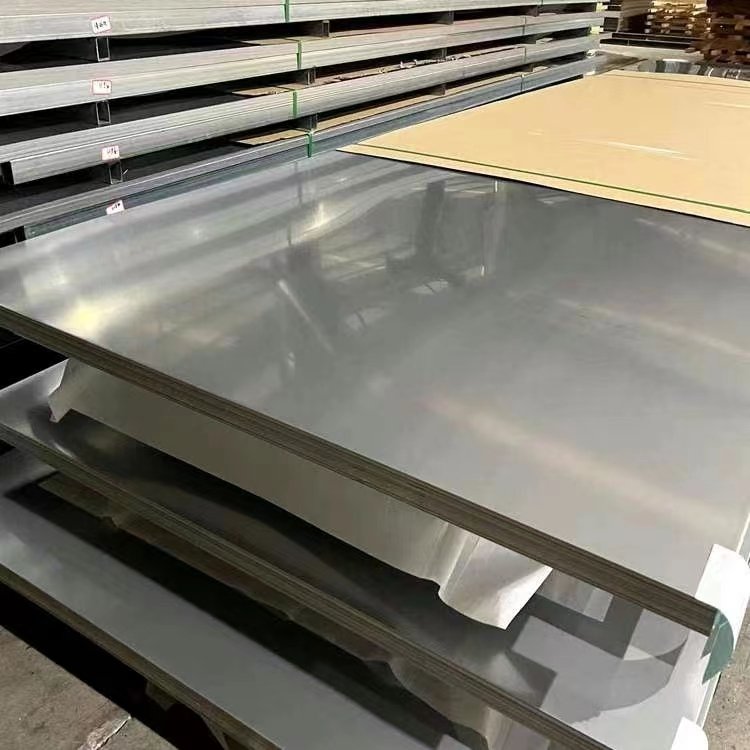
The primary difference lies in thickness: stainless steel sheet is thinner than 0.1875 inches (6 mm or 3/16 inch) and is used for lightweight fabrication, while stainless steel plate is 0.1875 inches or thicker, engineered for structural load-bearing and heavy-duty industrial applications.
Thickness Thresholds and Dimensional Standards
The fundamental engineering distinction between stainless steel sheet and plate is defined by specific thickness boundaries. Stainless steel sheet is categorized as material measuring less than 0.1875 inches (6 mm or 3/16 inch). This form factor typically ranges from 0.5 mm up to the 6 mm cutoff. In contrast, stainless steel plate begins at 0.1875 inches and can exceed 3 inches in thickness for heavy-duty industrial applications, providing the mass required for extreme durability.
Dimensional consistency for both forms is governed by ASTM A480 standards. These standards dictate strict flatness tolerances and physical properties, ensuring that both sheets and plates meet the precision requirements of modern manufacturing. While the chemical composition may be identical across grades like 304 or 316, the manufacturing standards ensure that sheets maintain the flexibility needed for forming, while plates maintain the rigidity required for structural alignment.
Size and supply formats also differ based on these dimensions. Stainless steel sheets are often supplied in continuous rolls or standard widths of 4 to 6 feet, facilitating high-speed automated processing. Plates, however, are typically provided in discrete sections with widths ranging from 48 to 120 inches. This increased width is essential for large-scale structural projects, such as bridge construction or the fabrication of massive storage tanks, where minimizing seams is a priority.
Mechanical Properties and Performance Applications
The structural performance of the material is intrinsically linked to its thickness and processing method. Stainless steel plates offer significantly higher load-bearing capacities, with yield strengths often ranging from 50 to 100 ksi. This makes them the preferred choice for high-stress environments, including pressure vessels, heavy machinery components, and industrial infrastructure where material deflection under load must be minimized.
Malleability and rigidity represent the primary functional divide between these two forms. Sheets prioritize fabrication ease and malleability, making them ideal for the intricate bending and stamping required for kitchen appliances, architectural facades, and automotive body panels. Plates, which are frequently hot-rolled to achieve their thickness, provide the robustness and impact resistance necessary for harsh industrial environments, such as mining equipment or marine hardware.
While common grades like 304 and 316 are utilized in both formats, specific industrial applications often dictate the use of thicker plate forms for specialized alloys. High-temperature grades such as 310 and 321 are frequently specified in plate form for use in industrial furnaces and chemical processing units. These thicker sections are capable of maintaining mechanical integrity under extreme thermal cycling and corrosive pressure, where thinner sheets would lack the necessary service life.
Common Surface Finishes for Industrial Use
Industrial surface finishes are quantified by Roughness Average (Ra), measured in micrometers (μm) or microinches (μin). Governed by standards like ISO 1302 and ASME B46.1, these finishes range from economical machined surfaces (3.2 μm Ra) to precision-polished textures (<1 μin Ra) to optimize friction, wear resistance, and corrosion protection.
Quantifying Surface Texture: Ra Values and Global Standards
Roughness Average (Ra) serves as the primary metric for industrial components, where standard machined finishes are typically categorized by their functional application: 3.2 μm Ra for heavy loads, 1.6 μm Ra for economical manufacturing, and 0.8 μm or 0.4 μm Ra for high-precision fits requiring controlled stress distribution.
Technical specifications for surface textures adhere to rigorous international frameworks. ISO 1302 defines micrometer indications for global markets, while US-based engineering projects frequently utilize ASME B46.1 or ASME Y14.36M for microinch-based measurements to ensure consistency across the supply chain.
For stainless steel sheet metal applications, standards such as ASTM A480 provide essential guidance on surface flatness and compatible roughness parameters, ensuring that specific industrial grades meet both functional performance and material integrity requirements.
The N-system, ranging from N1 to N12, functions as a universal shorthand for Ra values. This classification facilitates seamless global communication in B2B engineering contracts, allowing manufacturers to specify tolerances without unit-based ambiguity.
Mechanical and Chemical Finishes for Functional Performance
Mechanical finishing processes are engineered to meet specific performance data points. Precision grinding typically yields textures between 2–4 μin Ra for powertrain gears, while specialized polishing can achieve finishes below 1 μin Ra to minimize friction-induced heat and mechanical noise.
Advanced textures are often required for specialized environments. Honing processes create a 15–20 μin Ra finish optimized for oil retention in engine cylinder walls, whereas shot peening generates a textured surface of approximately 100 μin Ra to enhance the fatigue life of jet turbine blades through compressive stress.
Chemical and electrochemical coatings provide critical layers of protection. Anodizing Type III, or “hard coat,” delivers a thick protective layer up to 125 μm for extreme wear and corrosion resistance, significantly surpassing the 25 μm thickness provided by standard Type II coatings.
In high-performance sectors like aerospace, hard chrome plating is frequently applied to landing gear components. This process maintains a specific roughness range of 16–64 μin Ra, which is necessary to balance effective lubricant retention with the high wear resistance required for safety-critical hardware.
Procurement and Quality Assurance for Industrial Buyers
Procurement of stainless steel requires strict adherence to ASTM standards (such as A240 for sheets) and verification of ISO 9001 certifications. Essential quality assurance involves reviewing Material Test Reports (MTRs) for chemical and mechanical properties, ensuring full heat traceability, and matching specific grades like 316L or Duplex 2205 to environmental demands.
Material Standards and Mandatory Certification
Industrial procurement of stainless steel is fundamentally governed by the ASTM A240/A240M standards. These specifications define the mandatory chemical compositions and mechanical properties for chromium and chromium-nickel stainless steel plate, sheet, and strip, specifically for use in pressure vessels and general applications. Beyond chemical makeup, buyers must verify flatness tolerances according to ASTM A480. Precise flatness is a critical technical requirement for successful precision laser cutting, CNC bending, and ensuring structural alignment in complex assemblies.
To ensure material integrity, procurement protocols must mandate the delivery of comprehensive Material Test Reports (MTRs). These reports, alongside original ASTM or EN warranties, provide the necessary heat traceability required for high-stakes engineering projects. Quality assurance is further bolstered by auditing suppliers for ISO 9001:2015 quality management compliance. For critical infrastructure, the utilization of optional third-party inspections from agencies such as SGS or BV is recommended to validate supplier reliability and certify that the material meets the specific project data sheets.
Regulatory Compliance and Strategic Grade Selection
Regulatory frameworks play a decisive role in procurement strategy, particularly for government-funded projects. Buyers must navigate the Buy American Act for federal purchases exceeding $10,000, which requires that at least 50% of the component costs originate domestically. Even stricter is the Buy America mandate (FHWA) for infrastructure projects, which requires 100% U.S.-made iron and steel. Failure to adhere to these mandates can result in project disqualification, making it essential for procurement specialists to analyze the origin of melt and manufacture for every batch of stainless steel.
Strategically selecting material grades is the primary method for balancing performance with cost-efficiency. In non-pressure or indoor applications, substituting Grade 304 with Grade 201 can yield cost savings of 15-20%. However, engineering logic must prevail in harsher conditions; high-performance alloys like 316L or Duplex 2205 are required for coastal or chemical environments to mitigate the risk of pitting and stress corrosion cracking. For extreme thermal applications, Grade 310S should be specified. By matching the alloy’s corrosion resistance and mechanical strength to the specific operational environment, buyers can optimize the total cost of ownership and ensure long-term equipment reliability.
Final Thoughts
Successfully navigating the complexities of stainless steel procurement requires more than a basic understanding of alloy names; it demands a rigorous focus on technical specifications, from ASTM A240 chemical envelopes to the non-linear logic of the Manufacturers’ Standard Gauge system. By prioritizing material traceability through Mill Test Reports and verifying compliance with ASTM A480 flatness standards, industrial buyers can ensure that whether they are specifying 16-gauge sheet for cabinetry or heavy-duty plate for pressure vessels, the material will perform predictably under structural and environmental stress.
Ultimately, the distinction between a successful installation and a costly failure lies in the details of grade selection and quality assurance. Mastering these variables—such as the specific Ra values required for surface friction or the regulatory mandates of the Buy American Act—empowers procurement specialists to optimize their supply chains for both cost-efficiency and longevity. In an industry where a fraction of an inch or a slight chemical deviation can compromise structural integrity, adhering to these global standards is the only way to guarantee long-term reliability in aggressive industrial environments.
Frequently Asked Questions
What is the difference between stainless steel sheet and plate?
The primary distinction is thickness. In international mill practice, stainless steel up to 6 mm (0.25 in) thick is classified as sheet, while any material 6 mm (0.25 in) or thicker is classified as plate.
What are the standard sizes for stainless steel sheets?
The baseline industry standard size is 4 ft x 8 ft (1220 x 2438 mm). Other common stocked sizes include 4 ft x 10 ft (48″ x 120″) and 5 ft x 10 ft (60″ x 120″), with custom widths available up to 72 inches.
How do I calculate the weight of a stainless steel sheet?
You can calculate the weight using the formula: Weight (kg) = Length (m) × Width (m) × Thickness (mm) × 8. This is based on a standard material density of approximately 7.93 g/cm³.
Is 16 gauge stainless steel thicker than 18 gauge?
Yes. In the gauge system, a lower number indicates a thicker material. 16 gauge stainless steel is approximately 0.0625 inches (1.59 mm) thick, whereas 18 gauge is approximately 0.05 inches (1.27 mm).
What is a mill edge?
A mill edge is the natural, untrimmed edge of a sheet or coil as it comes off the rolling mill. It features a rounded shape with minor imperfections and a width tolerance of roughly ±0.125 inches (3.2 mm).
What are the industry standards for sheet flatness?
Flatness is defined by ASTM A480/A480M. Typical mill flatness for cold-rolled stainless sheet is 0.010–0.030 inches per foot of length, while hot-rolled annealed and pickled (HRAP) sheet typically allows for 0.030–0.060 inches per foot.